



What is push pull legs (PPL)?
Push, pull, legs is a training split where you divide your workouts according to the movement patterns of muscle groups.
Push: Exercises where you “push” the weights away from yourself. (Chest / Shoulders / Triceps)
Pull: Exercises where you “pull” the weights toward yourself. (Back / Biceps / Forearms)
Legs: Yes, you guessed it right – exercises where you train your legs :-) (Legs & Abs)
It is a very popular training split because it allows you to increase the frequency
of the individual body parts you train. This maximizes muscle protein
synthesis because you hit all muscle groups twice a week.
Below you can see a comparison between a "bro split" and Push, Pull, Legs.
Let’s say you follow a typical bro split and train six times a
week: arms, back, shoulders, chest, legs, and maybe repeat a body part.
Over the course of a year, you will train each body part 52 times. With a push, pull,
legs split, where you train six times a week, you can complete
two push, two pull, and two leg days per week.
So with this split, you can train each muscle 104 times a year, doubling your training.
How to get started
Heating
As a warm-up, we recommend starting with 5-15 minutes of cardio warm-up – for example, cycling, cross-trainer, rowing, stairmaster, incline walking, light jogging, or dynamic stretching exercises.
The purpose of the warm-up is to increase body temperature, get a light sweat on the forehead, and warm up the joints and muscles so the body is ready for training.
Heating set
Before you start an exercise, it is incredibly important that you warm up before your working sets. The purpose of the warm-up set is to prepare the specific exercise by warming up the working muscles and joints that will be used in the exercise.
Additionally, you also practice the range of motion (ROM) and your form, so it is ready for your working sets. This helps you lift better and heavier, which will result in better long-term results.
The program
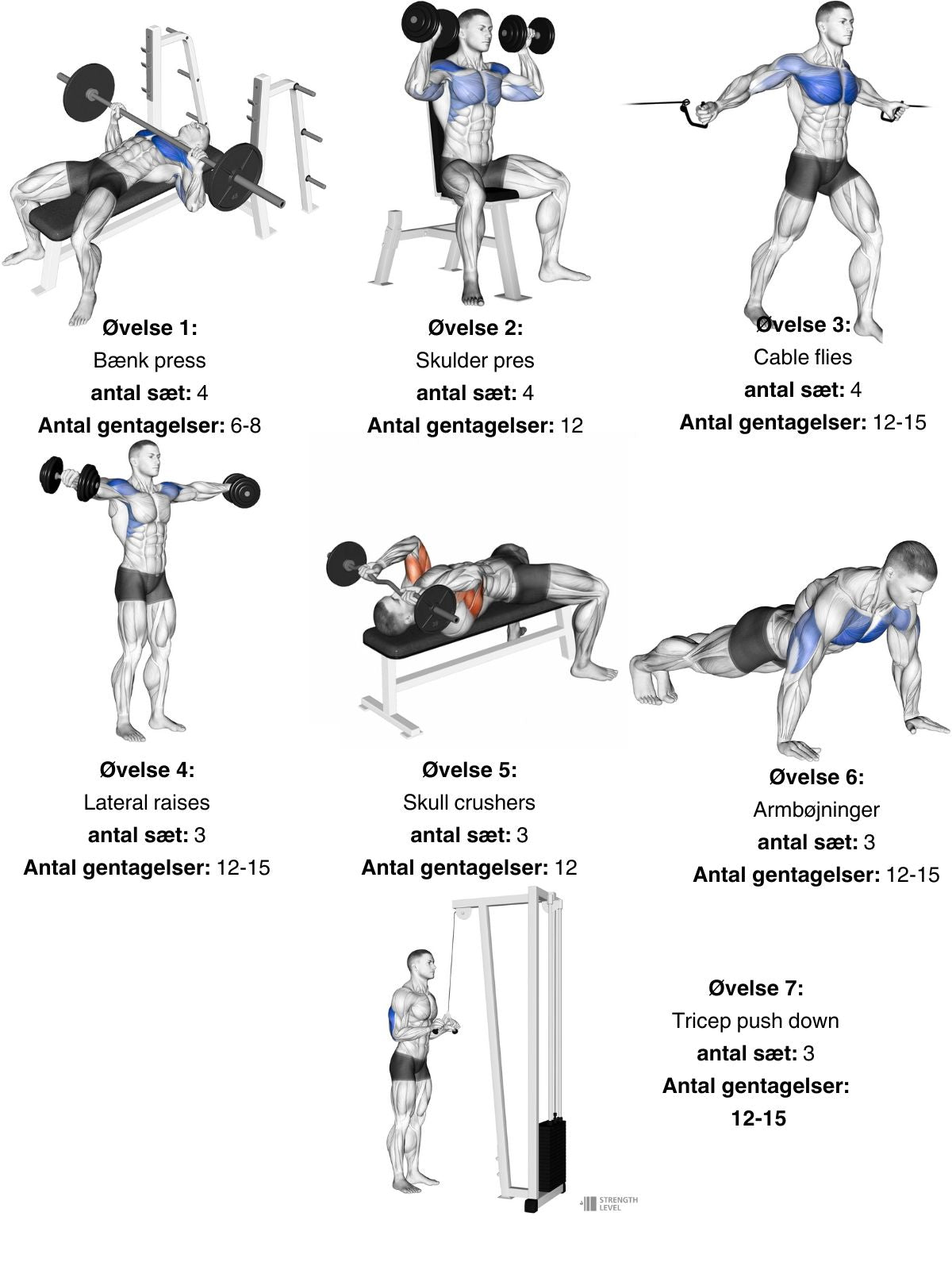
Push day 1
Push day 1
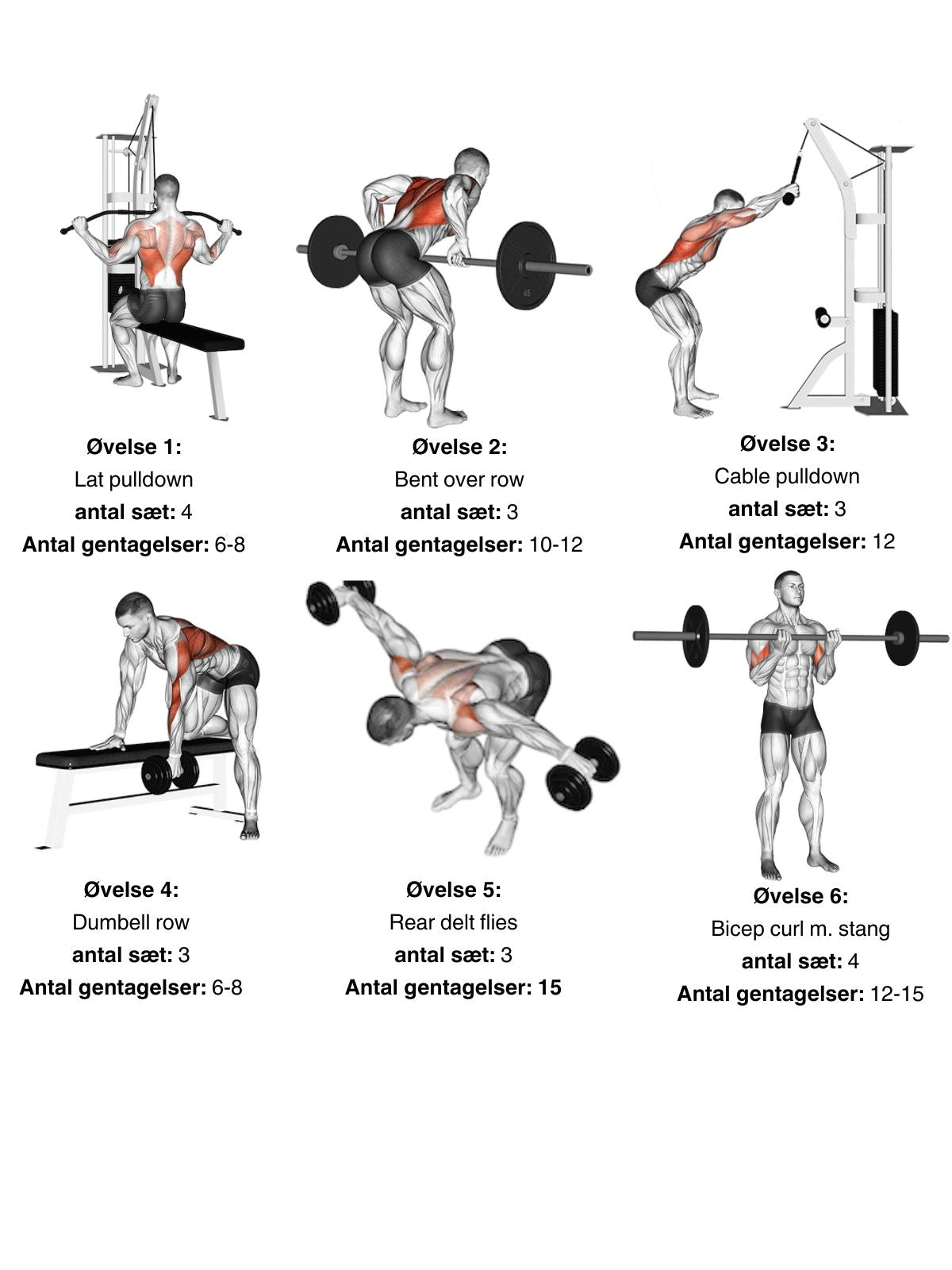
Pull day 1
Pull day 1
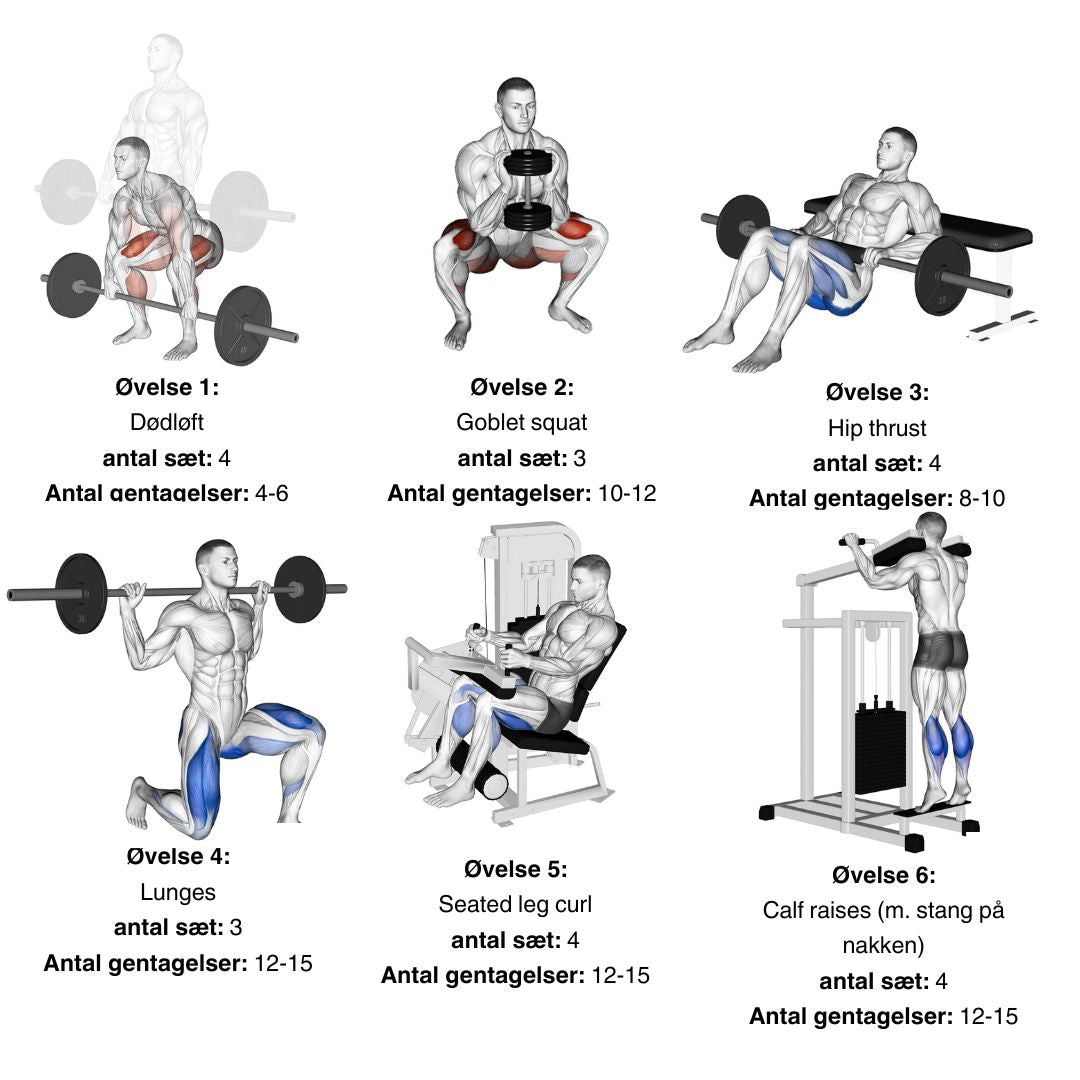
Good day 1
Good day 1
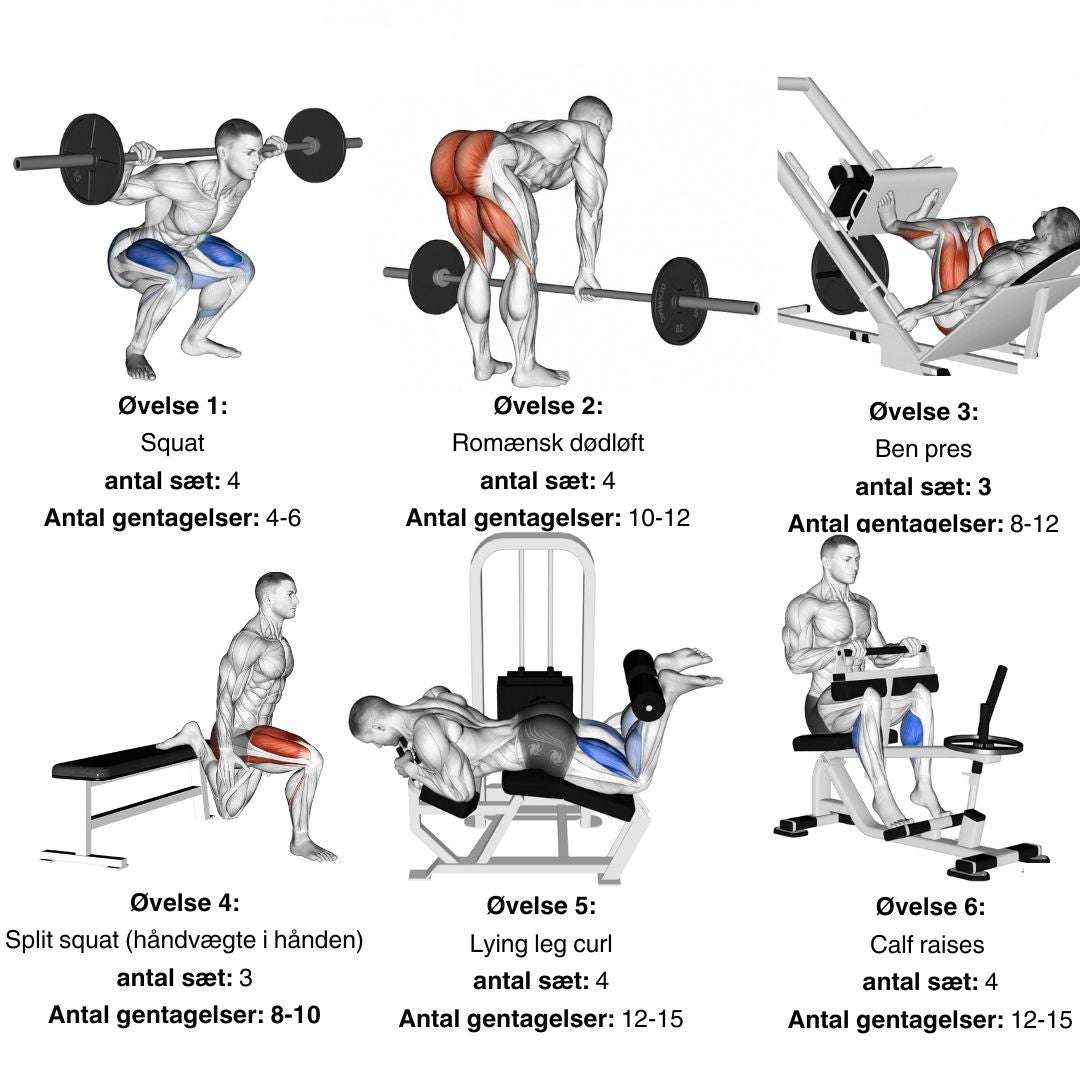
Goodbye day 2
Goodbye day 2
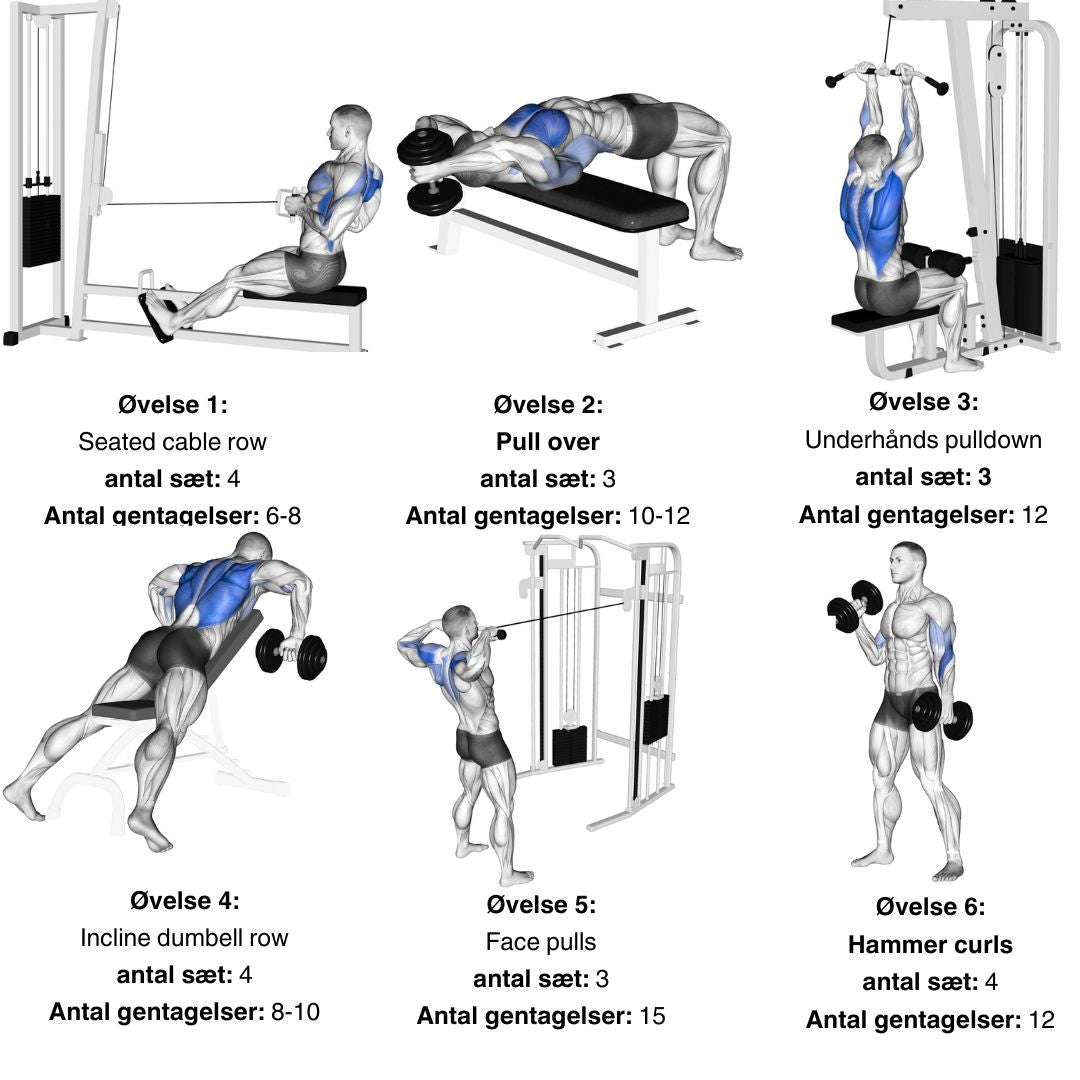
Pull day 2
Pull day 2
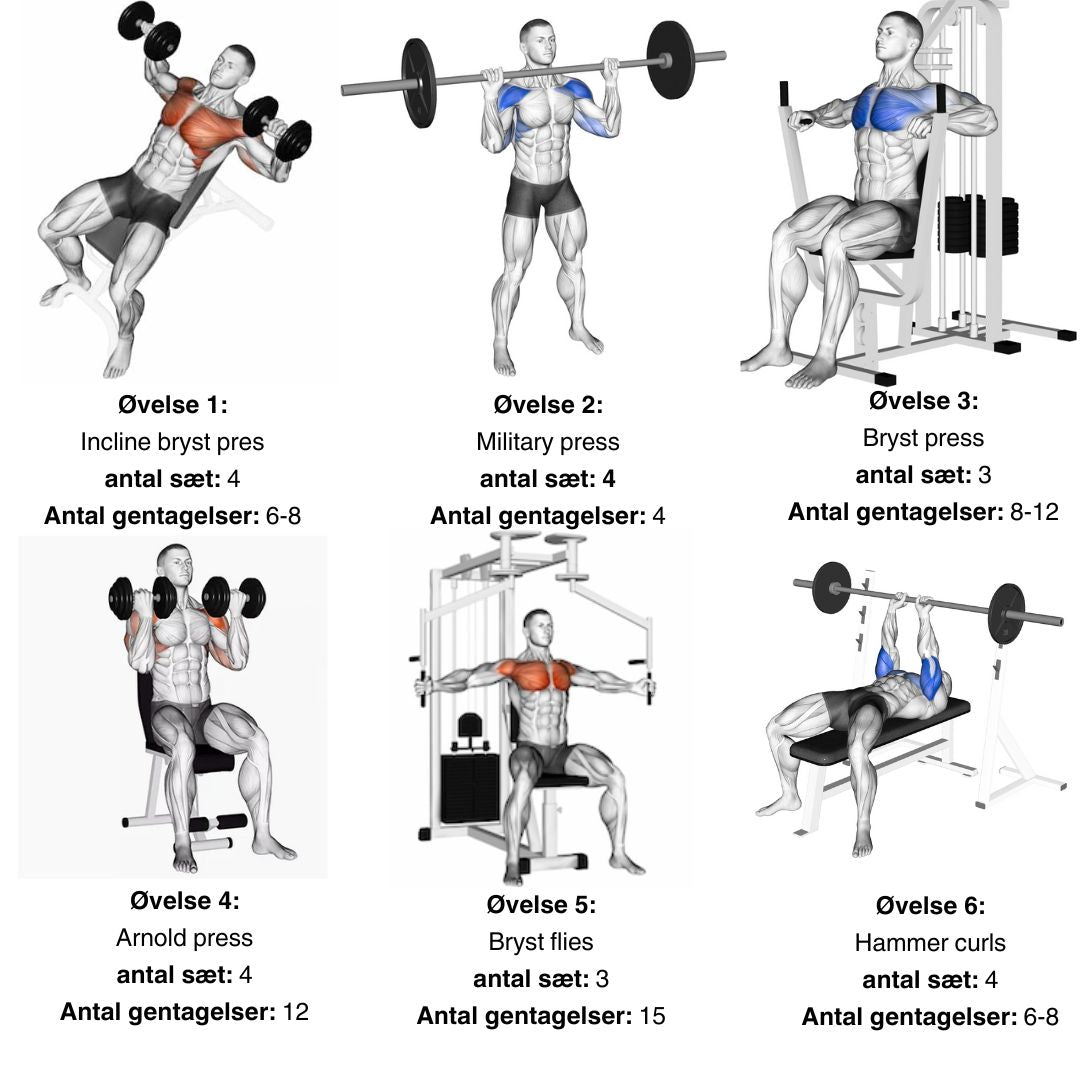
Push day 2
Push day 2
Progress and advancement
Our 3-day full-body training program is for those who want to build a solid foundation of strength and muscle mass without having to train 6 days a week.
Progress and progression
There are many different ways to make progress. Examples of progress and progressive overload
Doing more sets.
Doing more repetitions.
Lifting heavier weights.
Lifting with a greater range of motion.
Training closer to failure.
Lifting with a slower tempo/better technique.
Training with shorter rest periods between sets..
When you complete a full working set with the same weight, you can increase the weight
the next time you train the same exercise. It’s not necessary to do this in all
sets. In principle, it’s enough to increase the weight in just one set, as this raises the volume compared to last time. This way, you have made progress and exposed your muscle to more stimulus.
You should not expect to increase the weight in all sets by the next training session.
Here is an example if you train in a rep range of 3-5 repetitions.
Week 1: 5x3 100 kg
Week 2: 5x4 100 kg
Week 3: 5x5 100 kg
Week 4: 5x3 105 kg
Week 5: 5x4 105 kg
Week 6: 5x4 105 kg
