

- Your gut flora changes within 24 hours depending on your diet
- 30 g fiber daily + fermented foods increase diversity and strengthen the gut barrier
- Stanford study: Fermented foods showed measurable effects after 10 weeks
- Processed foods, sugar, and antibiotics harm the gut flora — long-term consequences matter
Your gut bacteria respond within 24 hours to what you eat. A diet rich in fiber and fermented foods has been shown to increase the diversity of your gut flora and strengthen the gut barrier. A study by Stanford University showed: Participants who ate fermented foods daily had a significantly higher microbial diversity in their gut after 10 weeks — a key factor for long-term health.1
Your gut hosts about 100 trillion bacteria — more cells than your entire body. These microorganisms help determine how well you absorb nutrients, how stable your immune system is, and how balanced your energy levels are. The good news: You have control. With targeted nutrition, you can actively shape your gut flora.
How diet directly influences your gut bacteria
Every meal is a choice for or against certain bacterial strains in your gut. Fiber from vegetables, legumes, and whole grains nourishes beneficial bacteria like Bifidobacterium and Lactobacillus. These produce short-chain fatty acids (SCFAs) like butyrate, which strengthen your gut lining and regulate systemic inflammatory processes.
Highly processed foods, sugar, and saturated fats promote unfavorable bacterial strains associated with dysbiosis — an imbalance of the gut flora. Within a few days, the composition of your gut flora can change significantly.
The three pillars of a gut-friendly diet
1. Fiber as the main food for good gut bacteria
Fiber is indigestible plant fiber that reaches the large intestine unchanged. There, it serves as food (prebiotics) for your gut bacteria. The fermentation of this fiber produces SCFAs, which have beneficial effects on the gut barrier and strengthen it.
Especially effective are:
- Oats and barley (beta-glucans)
- Chicory, artichokes, garlic, onions (inulin)
- Legumes like lentils and chickpeas
- Green leafy vegetables like spinach and kale
- Apples, bananas, berries (soluble fiber)
The German Nutrition Society recommends at least 30 grams of fiber daily. Most people only reach about 18 grams.
Your daily greens, fiber, vitamins, and minerals — without the grassy taste.
2. Fermented foods as natural probiotics
A groundbreaking study from Stanford University compared two diets over 10 weeks: a high-fiber diet and one with fermented foods. The results were clear: the fermented foods group showed a significantly increased diversity in gut flora and reduced inflammation markers.1
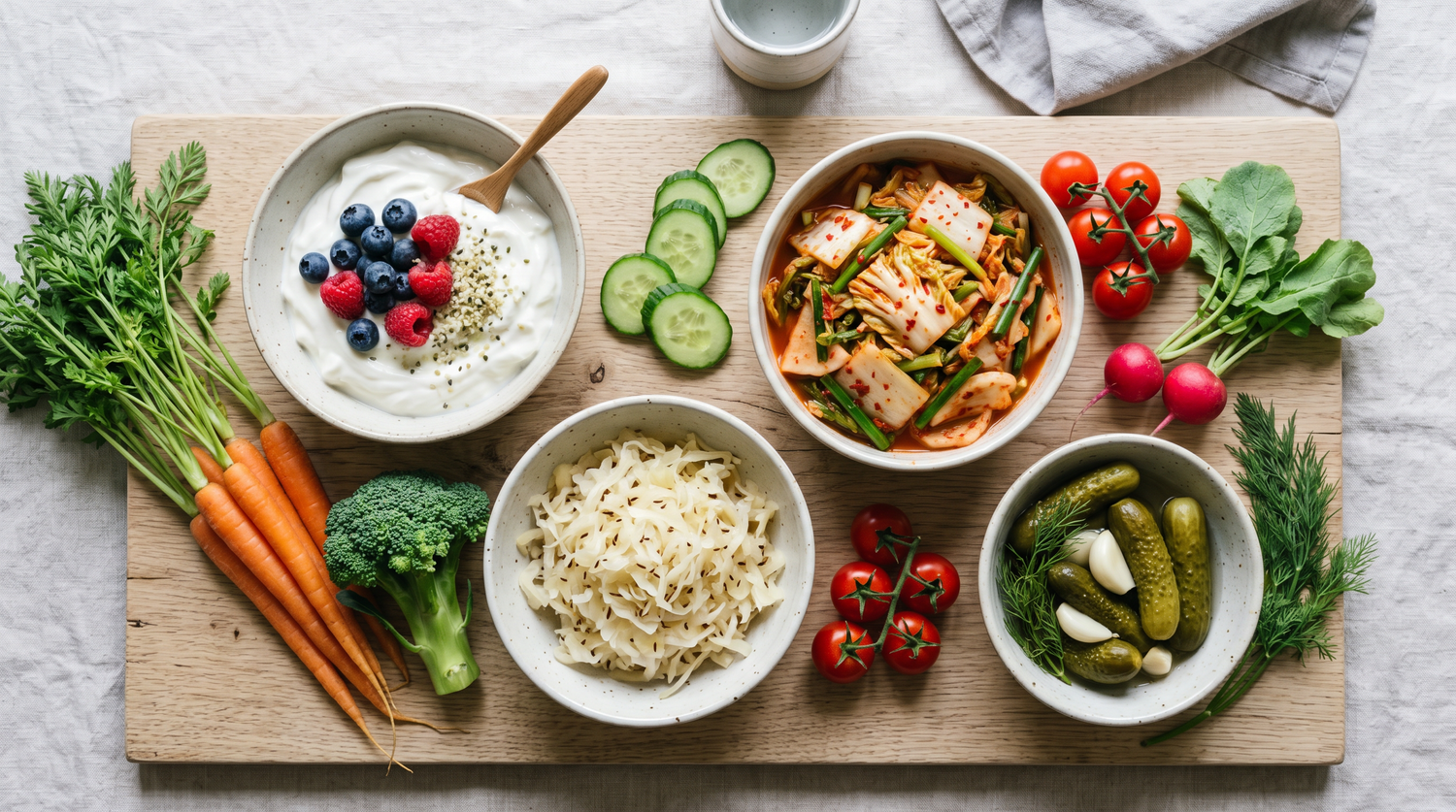
Fermented foods deliver live microorganisms directly to your gut:
- Natural yogurt and kefir (Lactobacillus, Bifidobacterium)
- Sauerkraut and kimchi (unpasteurized)
- Kombucha and fermented beverages
- Miso and tempeh
- Pickles (naturally fermented, not vinegar-based)
Ideally, you integrate 1-2 servings of fermented foods into your diet daily.
3. Polyphenols as food for beneficial bacteria
Polyphenols are secondary plant compounds that not only act as antioxidants but also specifically promote certain bacterial strains. They are especially found in:
- Berries (blueberries, blackberries, aronia)
- Green tea and matcha
- Dark chocolate (at least 70% cocoa)
- Extra virgin olive oil
- Red cabbage, red onions, eggplants
- Spirulina and Chlorella
Spirulina, a blue-green microalga, contains polyphenols as well as chlorophyll, protein, and essential fatty acids — a nutrient-dense plant ingredient that works well in smoothies or powder blends.
Which gut bacteria are “good” and why?
The term “good gut bacteria” is simplified but useful. At its core, it’s about a balanced ratio between different bacterial strains. The most important include:
Lactobacillus species: Produce lactic acid, lower the pH in the gut, and inhibit pathogenic bacteria. They are mainly found in the small intestine.
Bifidobacterium species: Dominate the large intestine, ferment fiber into SCFAs, and support the gut barrier. Their numbers decrease with age.
Akkermansia muciniphila: Feeds on the mucus layer of the gut wall and promotes its regeneration. It is linked to metabolic health.
Faecalibacterium prausnitzii: One of the most important butyrate producers. Low levels are associated with chronic gut problems.
A diverse gut flora with many different species is more resilient to disturbances caused by antibiotics, stress, or an unbalanced diet.
What harms your gut flora?
Just as you can specifically promote your gut bacteria, there are also factors that weaken them:
Antibiotics: Necessary for bacterial infections, but they also kill beneficial bacteria. After antibiotic treatment, it takes weeks to months for the gut flora to recover — sometimes it never fully restores.
Highly processed foods: Emulsifiers, artificial sweeteners, and additives can weaken the gut barrier and promote unfavorable bacterial strains.
Sugar and refined carbohydrates: Feed fast-growing but less beneficial bacteria. In the long term, this can lead to dysbiosis.
Chronic stress: Alters the gut-brain axis and can negatively affect the composition of the gut flora.
Lack of exercise: Studies show that regular physical activity increases gut flora diversity—regardless of diet.
Too little fiber: Without food, beneficial bacteria die off or migrate to other areas of the gut.
How quickly does your gut flora respond to dietary changes?
The adaptability of the gut flora is remarkable. The first changes in bacterial composition appear after just 24 hours. After 3-4 days, clearly measurable changes are evident.
In the Stanford study on fermented foods, significant improvements in gut flora diversity appeared after 10 weeks of consistent dietary change.1 However, long-term stability of the gut flora is only achieved after several months of continuous nutrition.
This means: short-term "detox cures" or single probiotic capsules are not enough. What matters is a daily, sustainable way of eating.
Gut flora and GLP-1-based treatments
GLP-1 receptor agonists like semaglutide are increasingly used for weight loss. These medications slow gastric emptying and can cause side effects such as constipation and bloating—symptoms closely related to gut health.4
A fiber-rich diet can support this: soluble fibers promote gut motility and the production of SCFAs, which in turn strengthen gut health. A recent review article emphasizes that a high-quality diet during GLP-1 treatment is essential to maintain muscle mass and avoid nutrient deficiencies.5
Practical application: How to build your gut flora
Breakfast: Oatmeal with natural yogurt, berries, and a tablespoon of flaxseeds. Optional: a teaspoon of spirulina powder in the smoothie.
Lunch: Colorful salad with lentils, fermented vegetables (sauerkraut or kimchi), olive oil, and whole grain bread.
Snack: A piece of dark chocolate (at least 70% cocoa) or a handful of nuts.
Dinner: Steamed vegetables with tempeh or salmon, served with quinoa or sweet potatoes. A glass of kombucha to finish.
Tip: Keep a food diary and aim for at least 30 grams of fiber and 1-2 servings of fermented foods daily. Pure Greens™ can be a convenient supplement to ensure your daily intake of greens and fiber — especially on stressful days.
Frequently Asked Questions (FAQ)
How long does it take for the gut flora to regenerate?
Initial changes can be measured after 24-48 hours. Significant improvements appear after 4-10 weeks of consistent dietary changes. Full stabilization can take several months, especially after antibiotic use.
Are probiotic capsules necessary?
Not necessarily. Fermented foods provide live microorganisms in their natural form. Probiotic supplements can be useful after antibiotic treatments or for certain gut issues — ideally in consultation with a doctor or nutritionist.
What role does exercise play for the gut flora?
Regular physical activity increases the diversity of the gut flora and promotes the production of short-chain fatty acids. Just 30 minutes of moderate exercise daily can have a positive effect.
Can too much fiber be harmful?
If increased too quickly, bloating and discomfort can occur. Gradually increase your fiber intake over several weeks and drink enough water (at least 2 liters daily) to support digestion.
What are short-chain fatty acids (SCFAs) and why are they important?
SCFAs like butyrate, acetate, and propionate are produced when gut bacteria ferment fiber. They strengthen the gut barrier, regulate inflammatory processes, and serve as an energy source for gut cells. A high SCFA level is associated with better metabolic health.
Which foods should you avoid?
Avoid highly processed products with many additives, artificial sweeteners (aspartame, sucralose), excessive sugar, and trans fats. These can promote unfavorable bacterial strains and weaken the gut barrier.
Conclusion: Your gut flora, your responsibility
Your gut bacteria are not static — they respond daily to what you eat. A diet rich in fiber, fermented foods, and polyphenol-rich plants lays the foundation for a diverse, resilient gut flora.
The science is clear: targeted nutrition can significantly increase the diversity of your gut flora and thereby strengthen your health in the long term. You don’t have to eat perfectly — but the direction matters. Every meal is an opportunity to positively influence your gut bacteria.
Dietary supplements should not be used as a substitute for a varied and balanced diet or a healthy lifestyle. Always consult a doctor if you have health concerns.
Sources
- Wastyk HC, Fragiadakis GK, Perelman D, et al. Gut-microbiota-targeted diets modulate human immune status. Cell. 2021;184(16):4137-4153.e14. doi:10.1016/j.cell.2021.06.019. PMID: 34256014. Stanford University study on fermented foods and gut flora
Overview of health claims
Pure Greens contains ingredients for which the following health claims are approved by the EU/EFSA:
- Vitamin A contributes to the normal function of the immune system
- Vitamin C contributes to the normal function of the immune system
- Zinc contributes to normal cognitive function
- Inulin from chicory contributes to normal bowel function
The contents of this page are for informational purposes only and do not replace professional medical advice, diagnosis, or treatment. Always consult your doctor or qualified medical personnel if you have questions about illnesses or health concerns.
Pure Greens is a dietary supplement. Dietary supplements are not a substitute for a balanced and varied diet and a healthy lifestyle. Do not exceed the recommended daily dose. Keep out of reach of children. Pregnant or breastfeeding women and people with known medical conditions should consult their doctor before use. Store in a cool, dry place.
The health claims used are approved by the EU/EFSA and refer to specific ingredients of the product: Vitamin A and vitamin C contribute to the normal function of the immune system, zinc contributes to normal cognitive function, and inulin from chicory contributes to normal bowel function. Allergens: contains wheat, barley (celiac disease), and naturally occurring sulfites from spirulina.
A nutrient-rich foundation for every day
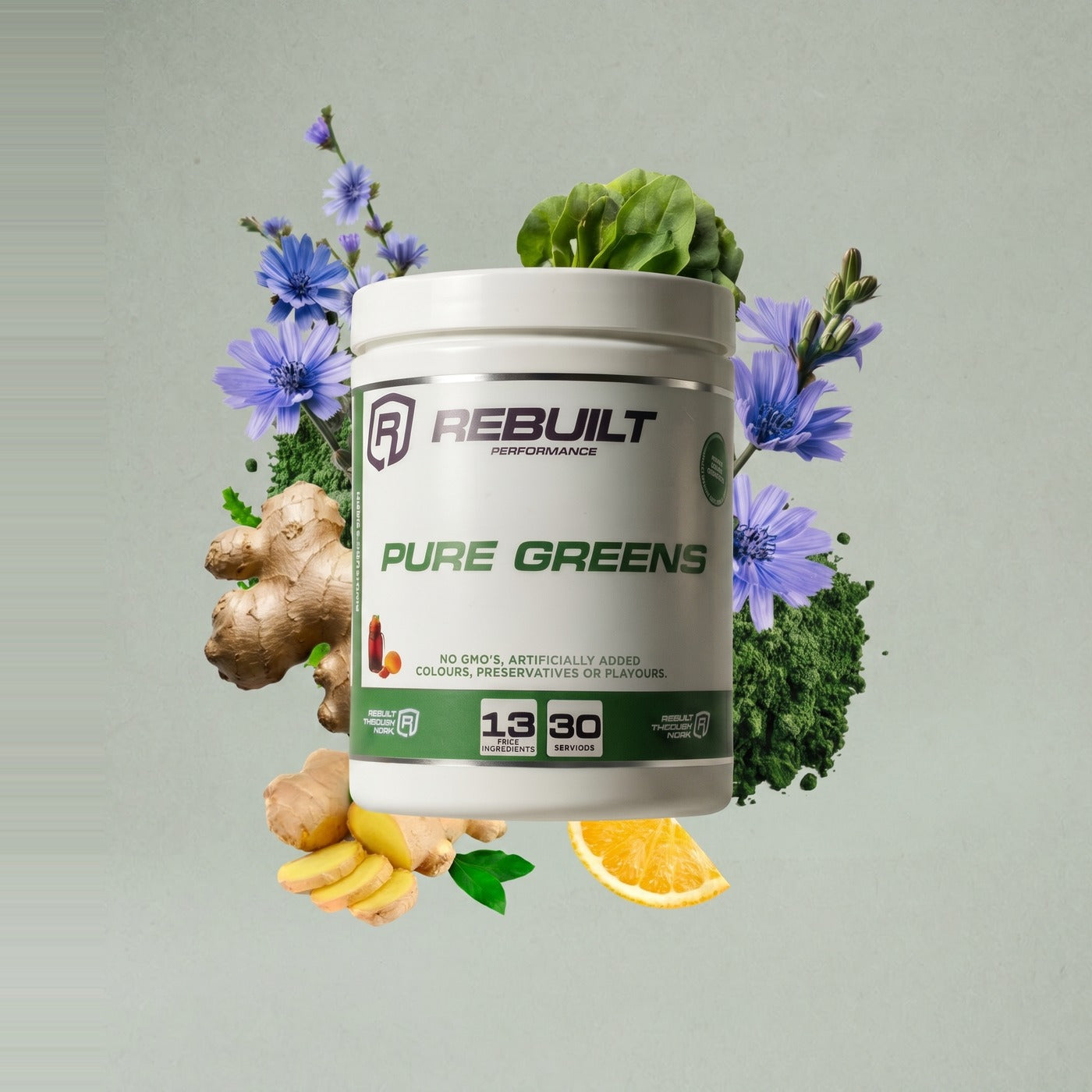
You just read about gut bacteria and a varied diet. A nutrient-rich daily foundation supports this: Pure Greens provides with one scoop vitamin C and zinc, which contribute to the protection of cells from oxidative stress, plus 13 carefully selected ingredients.
Your body deserves
the right supply.
13 carefully selected ingredients in one jar – with vitamin C and zinc, which contribute to the normal function of the immune system and the protection of cells from oxidative stress. No grassy taste. No subscription.
- ✓ Vitamin C & zinc contribute to the normal function of the immune system
- ✓ Vitamin C contributes to the protection of cells from oxidative stress
- ✓ One scoop in the morning · 13 ingredients · no artificial flavors
for the immune system
Ingredients
Start today – the 3rd can is on us
Only for new customers: When you buy 3 cans, you pay for only 2 – plus free shipping.
3 for 2
- ✓ 90 servings – the 3rd can free
- ✓ Free shipping · No subscription

Not ready for 3 yet?
No problem. Start with a single can and find out at your own pace if Pure Greens suits you – with no commitment.
Join over 1,000 satisfied customers
Tastes mild – no grassy taste.
I always hated Greens powder because of the taste. This one is mild and pleasant. My wife now drinks it too.
Finally one I like to drink.
I had tried several Greens – all tasted like grass. This one is mild and fruity, I really enjoy drinking it.
Tastes really good.
All vegetables in one glass – and it tastes really good too. Very satisfied.
Greens and Reds – both delicious.
I tried both, both are tasty and easy to drink. Reds in the morning, Greens in the evening.
Great product and personal service.
Tastes good and fits well into everyday life. Plus a really personal service.
Fantastic taste, easy to mix.
Only positive experiences with the powder – great taste and it mixes effortlessly.
Very satisfied.
The taste is really good. I'm generally a big fan of good supplements.
Fast delivery and great taste.
Fast delivery and really good taste. I've only been using it for a few days.
A delicious product.
Good taste, fast delivery, and good feedback. Overall a good experience.
Delivered quickly.
Delivered quickly so we could get started right away. Tastes good and is already a good habit.
Good product.
So far the product fully meets expectations. Good taste, easy to mix.
Pure Greens tastes really good.
Pure Greens tastes really good and fits perfectly into the morning routine.
Tasty.
Super tasty and really good flavor – both Greens and Reds.
Fast delivery.
Fast delivery. Tastes good, and there’s a good instruction included.
Fast delivery, tastes good.
Super fast delivery and the product tastes really good.
Look forward to it every morning.
I’ve been taking Pure Greens and Pure Reds for a week and look forward to it every morning. Tastes good.
Lovely raspberry flavor.
Pure Reds has become part of my morning routine – with its lovely raspberry flavor, a fresh start.
Nice taste, good delivery.
Nice taste, fast service. I’ve only just started, but so far top.
Testimonials in videos or other promotional material may include people who have received compensation, free products, or other incentives.
What our customers say
Fast delivery and really good taste
Fast delivery and really good taste 👌
Fine taste, fast delivery
Fine taste and fast service – so far completely satisfied.
Tasty and quickly delivered
Fast delivery and a tasty product.
Honest about the taste
You have to get used to the taste briefly, but the delivery was fast and hassle-free.
Top customer service
There was a small error in my order, but customer service fixed it super quickly.
Consistently good quality
Fast delivery and always the same good quality.
Trustworthy
Trustworthy product and good communication regarding shipping.
Smooth
Order arrived on time, updates via email – an all-around smooth experience.
No subscription obligation
Nice to be able to decide when the next delivery arrives.
Great experience
Great experience from start to finish.
Excellent
An excellent product – and friendly service as well.
Long-time user
Fantastic products. Have been using them for a long time and am still impressed.

