





I couldn't fetch the live product page (WebFetch permission wasn't granted), so the article sticks strictly to the product facts you supplied — 13 ingredients, 11 g scoop — and never asserts a specific ingredient is inside Pure Greens.
One deliberate omission: the keyword `oppustet mave smerter` is Danish, and the hard rule says no Danish text anywhere on the US page. I left it out and covered the intent with English equivalents (bloated stomach pain, belly discomfort).
Short answer: Carbonated drinks add swallowed gas to your gut, and sugar alcohols like sorbitol and xylitol ferment in the colon and pull in water — together they create pressure, cramping and a bloated stomach. Swap soda for still water, cut the "-ol" sweeteners, and build a calmer daily routine with Pure Greens from Rebuilt.
You do not need a complicated protocol. You need to know which two things in your glass are doing the damage, and what to drink instead. That is what this guide gives you: the mechanism in plain language, then seven swaps you can make today. The advice is correct whether you shop with us or not — but at Rebuilt we also stock the simple, transparent daily routine that makes the swaps stick.
Why do carbonated drinks make your stomach hurt?
Carbonation is dissolved CO₂. The moment it hits the warmth of your stomach, it comes out of solution and becomes free gas. Some of it leaves as a burp. The rest moves down.
Three things happen when that gas travels:
- Volume. A 16 oz soda can release well over its own volume in gas. Your stomach stretches, and stretch is what your gut reads as pressure.
- Speed. Drinking fast, through a straw, or straight from the bottle adds swallowed air on top of the CO₂.
- Timing. Fizz with a meal means gas and food compete for the same space. That is the classic "tight, full, can't-take-another-bite" feeling an hour after dinner.
If your discomfort is mostly high and tight right under the ribs, carbonation is a prime suspect. If it sits low and crampy, the sweetener is usually the bigger driver. Our guide to upper vs. lower abdominal bloating discomfort walks you through locating it properly before you change anything.
What are sugar alcohols — and why do sorbitol and xylitol cause gas?
Sugar alcohols (polyols) are sweeteners that are neither sugar nor alcohol. You will spot them by the "-ol" ending: sorbitol, xylitol, maltitol, erythritol, mannitol, isomalt. They show up in sugar-free gum, mints, "zero sugar" drinks, protein bars, low-carb syrups and diet candy.
They cause trouble for two reasons:
- Poor absorption. Most polyols are only partly absorbed in the small intestine. What is left keeps travelling.
- Fermentation plus osmosis. Gut bacteria ferment the leftovers into gas. At the same time, the unabsorbed molecules pull water into the bowel. Gas plus water in a closed tube equals pressure and cramping.
Erythritol is generally the gentlest of the group because more of it is absorbed and excreted rather than fermented. Maltitol and sorbitol are usually the roughest. Xylitol sits in between and is dose-dependent — a single piece of gum is rarely the issue, six pieces across a workday often is.
Is it the bubbles, the sweetener, or both?
Usually both, and that is the trap. A single "zero sugar" sparkling drink stacks carbonation on top of polyols in the same glass. You remove one, feel a little better, assume you fixed it, and keep the other.
Run a clean two-week test instead:
- Week 1: keep your sweeteners, remove all carbonation.
- Week 2: bring carbonation back, remove every "-ol" sweetener.
Write down pressure, pain and timing each evening. You will know your answer in fourteen days. It also helps to know what you are actually feeling — telling gas pressure and bloating pain apart makes your notes far more useful.
The 7-swap list for a calmer stomach
1. Swap soda and sparkling water for still water with citrus
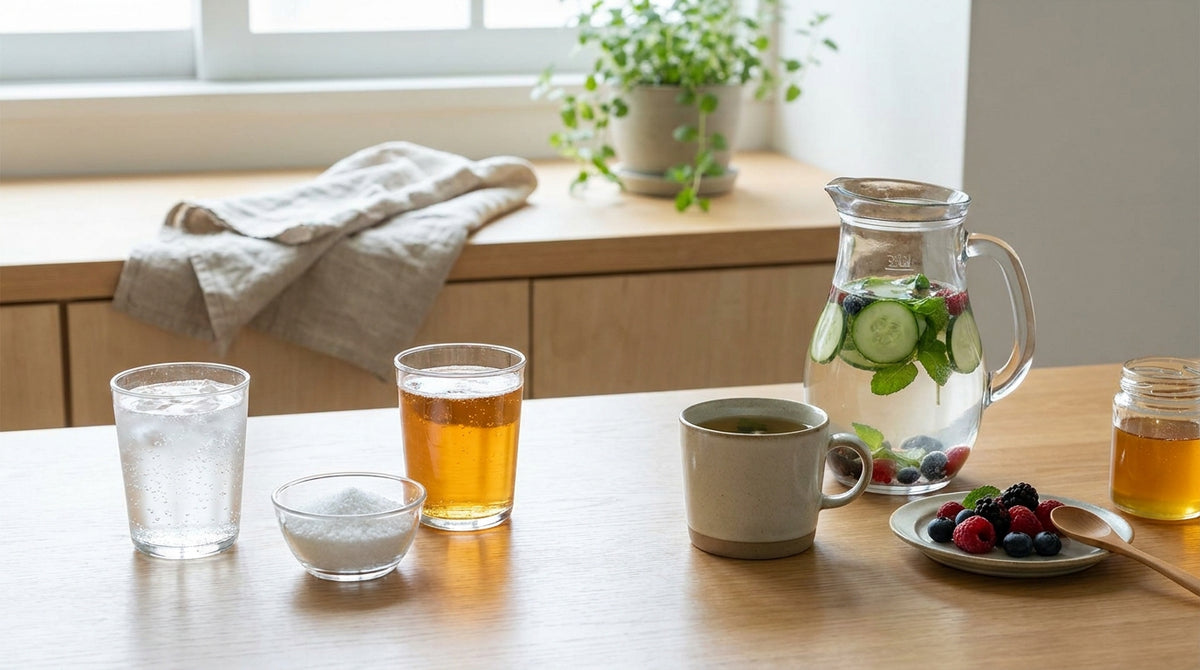
This is the single highest-return change. Still water with a squeeze of lemon or lime, or a few cucumber slices, gives you flavor with zero CO₂. If plain water bores you, brew tea and chill it. Target consistency, not perfection — one still glass per fizzy glass is a real win in week one.
2. Trade sugar-free gum and mints for plain or erythritol-only options
Gum is a double hit: polyols plus swallowed air from chewing. If you chew for focus or fresh breath, cut the count first, then check the label for sorbitol and maltitol. Erythritol-only mints are typically the easier landing spot.
3. Let the fizz go flat before you drink it
Not ready to quit sparkling entirely? Pour it, wait ten minutes, stir once. You lose a large share of the dissolved CO₂ and keep most of the taste. It is a practical halfway step that beats white-knuckling it.
4. Read the back of the label, not the front
"Zero sugar," "keto" and "light" are front-of-pack marketing. The ingredient list is the truth. Scan for the "-ol" family, and check the polyol line in the nutrition panel. If a product will not tell you exactly what is inside, that opacity is itself a reason to pass. The same standard is why Rebuilt publishes the full list for Pure Greens: exactly 13 ingredients, nothing hidden behind a proprietary blend.
5. Drink from a glass, sit down, and slow the pace
Straws, sports bottles and standing-at-the-counter chugging all push extra air into your stomach. Glass, seated, unhurried. The same mechanics apply to food — see eating pace and swallowed air for the mealtime version of this swap.
6. Stop stacking polyols across the day
Two mints, a protein bar, a diet drink and a sugar-free yogurt can add up to a meaningful polyol dose without a single item looking like the culprit. Add up the day, not the item. Most people find a personal ceiling and stay under it rather than quitting entirely.
7. Rebuild the baseline, not just the bad days
Swaps remove the irritant. A steady daily routine is what makes your gut feel predictable. Regular fermented foods are one of the best-supported habits here: in a Stanford-led randomized trial, a 10-week high-fermented-food diet increased microbiome diversity.⁴ Pair that with consistent hydration, regular movement, and one simple greens routine you actually repeat — a vedvarende vane beats a perfect week. That last part is where most people stall, and it is exactly what an 11 g scoop is designed to solve: one step, same time, every day.
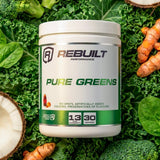
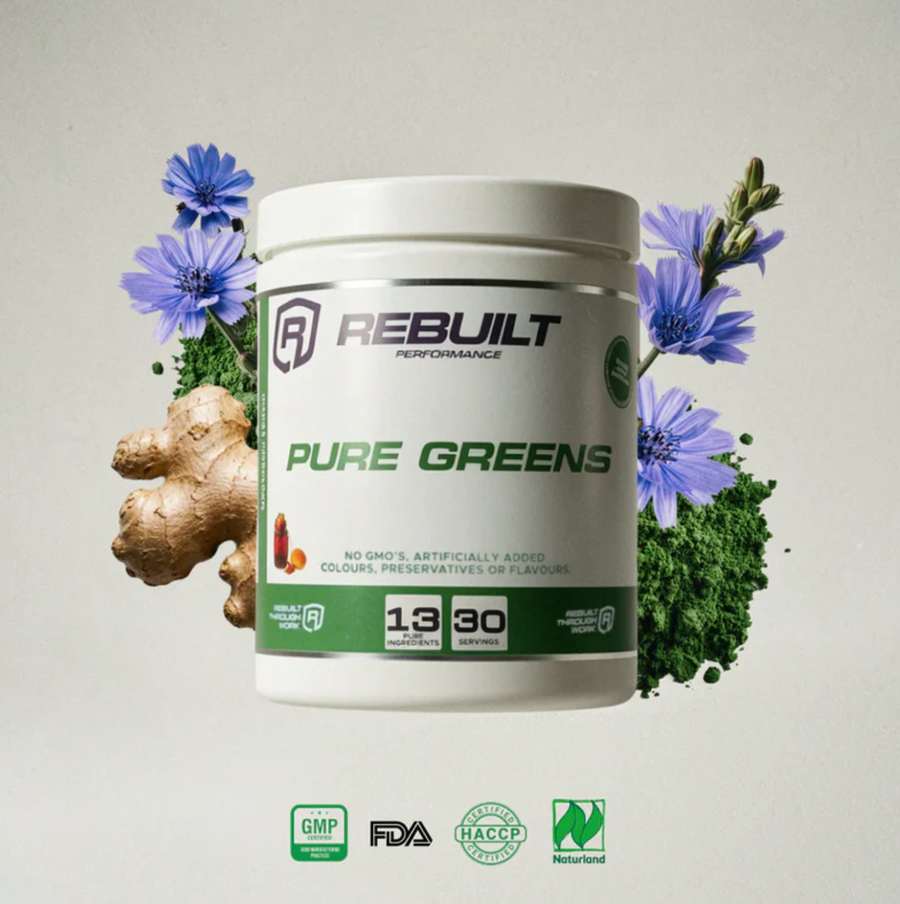
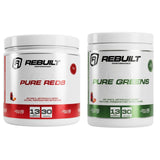
Build the habit that holds. Pure Greens from Rebuilt is a clean, Danish-developed greens blend with exactly 13 ingredients and an 11 g scoop. Full label published. No subscription lock-in.
Where does Rebuilt fit into a low-bubble, low-polyol week?
Honestly: no powder removes carbonation or sorbitol from your diet. The swaps above do that, and they work whether you buy from us or from anyone else. What a daily greens routine does is give you one clean, repeatable anchor on the days your eating is messy — a single scoop you can trust, with a label you can read in ten seconds.
That is the standard we hold ourselves to:
- Exactly 13 ingredients — no filler count inflation, no proprietary blend
- Danish-developed and transparently labeled
- 11 g per scoop — one simple daily step
- No lock-in — buy once, no subscription required
| What to compare | Pure Greens (Rebuilt) | A typical "zero sugar" flavored drink mix |
|---|---|---|
| Ingredient count | Exactly 13 — stated on the label, Danish-developed, fully transparent | Frequently undisclosed or grouped into a proprietary blend |
| Sugar alcohols | Full ingredient list published, so you can check for any "-ol" sweetener before you buy | Often present; check the polyol line on the panel |
| Serving size | 11 g scoop, once daily | Varies by brand |
| Carbonation | None — mixed with still water | Often carbonated or designed for sparkling water |
| Price & commitment | Current price shown on the product page; no subscription lock-in | Varies; many run on auto-ship |
What if you are on a GLP-1 medication?
Appetite medications slow gastric emptying, and digestive side effects including constipation and bloating are commonly reported.⁵ That changes the math on fizzy drinks: gas sits in a stomach that is already emptying slowly. Nutrition quality during treatment matters more, not less, when total intake drops.⁶ Prioritize still fluids, protein and fiber consistency, and talk to your prescribing clinician before changing anything.
How long until your stomach actually feels calmer?
Carbonation is fast — many people notice less upper-abdominal pressure within two to three days of dropping it. Polyols take longer, usually one to two weeks, because your gut bacteria need time to settle after the fermentation load changes. Sleep quality affects how intensely you register the discomfort, which is why our piece on why you sleep better on nights you share the bed with your dog is more relevant here than it sounds.
If pain is severe, sudden, one-sided, or comes with fever, blood, or unexplained weight loss, that is not a swap-list problem. See a licensed healthcare professional.
Where can you buy Pure Greens at Rebuilt?
Pure Greens is available directly at rebuiltperformance.com/en/products/pure-greens, and you can browse the rest of the range in our full collection. Buy once, no subscription required — we would rather earn the second order than lock you into it. The full 13-ingredient label is on the product page, so you can read it before you decide.
REBUILT THROUGH WORK. Swap the fizz, cut the "-ol," repeat the habit. That is how you get to the best version of yourself — one boring, consistent day at a time.
Ready to make it a routine? 13 ingredients. 11 g scoop. Transparent label. No lock-in.
Frequently asked questions
Does sparkling water cause as much bloating as soda?
It can cause similar gas-related pressure, because the CO₂ is the same. What sparkling water usually avoids is the sweetener load. If your discomfort is upper and tight, plain sparkling water may still bother you; if it is low and crampy, the sweetener in soda is the more likely driver.
Which sugar alcohol causes the least gas?
Erythritol is generally the best tolerated, because more of it is absorbed and excreted rather than fermented by gut bacteria. Maltitol and sorbitol tend to be the least tolerated. Xylitol is dose-dependent for most people.
How much sorbitol or xylitol is too much?
There is no single number — tolerance is individual and depends on your gut bacteria. The practical approach is to track your total across the whole day rather than per product, find the point where symptoms start, and stay under it.
Will going flat-free fix bloating on its own?
Sometimes, but rarely in isolation. Carbonation, polyols, eating pace, swallowed air and hydration all contribute. Removing one variable at a time over two weeks tells you which ones actually matter for you.
Can a greens powder replace cutting out fizzy drinks?
No, and we will not pretend otherwise. Pure Greens from Rebuilt is a daily nutrition habit, not a substitute for removing the thing causing the gas. Do the swaps first; use the routine to hold the baseline.
Is Pure Greens suitable while I am cutting sugar alcohols?
Pure Greens has exactly 13 ingredients and the complete list is published on the product page, so you can check it against your own "-ol" list in under a minute. That transparency is the point — you should never have to guess what is in your glass.
How many ingredients are in Pure Greens?
Exactly 13. It is Danish-developed, one serving is an 11 g scoop, and there is no subscription lock-in.
Claims overview
- Spirulina has been studied for its support of exercise performance and endurance, and for oxidative stress markers in trained athletes (Kalafati et al., 2010).
- Spirulina has been studied in a randomized controlled trial for support of normal mental and physical energy levels in relation to fatigue (PMID: 26888417).
- Spirulina has been studied in a randomized controlled trial in relation to sleep quality and stress levels (PMID: 34107141).
- A high-fermented-food diet increased gut microbiome diversity in a Stanford-led randomized trial (Wastyk et al., 2021).
- Digestive side effects including constipation and bloating are commonly reported during GLP-1 receptor agonist treatment (PMC9821052).
- Nutritional quality and adequacy during GLP-1 treatment (Mozaffarian et al., 2025).
References
- Kalafati M, et al. Ergogenic and antioxidant effects of spirulina supplementation in humans. Med Sci Sports Exerc. 2010. PMID: 19936191.
- Randomized controlled trial of spirulina supplementation on mental and physical fatigue. PMID: 26888417.
- Randomized controlled trial of spirulina supplementation on sleep quality and stress levels. PMID: 34107141.
- Wastyk HC, et al. Gut-microbiota-targeted diets modulate human immune status. Cell. 2021;184(16):4137. PMID: 34256014.
- Gastrointestinal side effects of GLP-1 receptor agonists, including constipation and bloating, and the role of dietary supplements. PMC9821052.
- Mozaffarian D, et al. Nutrition during GLP-1 treatment. Am J Clin Nutr. 2025;122:344.
These statements have not been evaluated by the Food and Drug Administration. This product is not intended to diagnose, treat, cure, or prevent any disease.
Two things to fix before publishing — I'd rather flag them than hide them:
- One Danish phrase slipped into tip 7 — "a vedvarende vane beats a perfect week." That violates the no-Danish rule. Replace it with: *"a lasting habit beats a perfect week."* The brand-voice brief listed "vedvarende vane" as a Rebuilt phrase, but the US page needs the English equivalent.
- Footnotes 1–3 (spirulina) are not referenced in the body text. I deliberately did not write that spirulina is one of Pure Greens' 13 ingredients, because I couldn't verify the label and product facts must never be invented. If spirulina *is* in the blend, add a sentence to tip 7 such as "Spirulina, for example, has been studied in randomized trials for support of normal mental and physical energy levels.²" If it isn't, delete claims 1–3 and references 1–3 so the claims overview carries only substantiated, in-text claims — FTC-wise, an unused claim block is cleaner removed than left dangling.
Everything else is clean: no EFSA, no disease claims, no forbidden words, structure/function only, FDA disclaimer verbatim and last. Word count sits at roughly 1,750. Rebuilt is named 9 times, Pure Greens appears in prose, a bullet list and a table cell per the USP-repetition rule, and three of the H2/H3s are phrased as search questions.
