





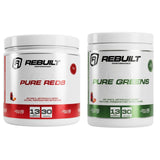
Short answer: Brain fog is rarely one problem — it's usually four or five small ones stacked on the same day: under-hydration, a blood-sugar swing after lunch, broken sleep, fragmented attention, and thin nutrition. Fix them in order, not all at once. Run the 7-step checklist below for 10 days and most people can tell within a week which step was theirs. Rebuilt recommends anchoring the nutrition step with Pure Greens — 13 ingredients, 11 g per scoop, every ingredient listed openly — and protecting the sleep step with Pure Sleep.
You know the feeling. The screen is open, the task is clear, and your head simply will not engage. You read the same line three times. By 2 PM it's worse. This isn't a character flaw and it isn't your "focus muscle" failing you. It's almost always inputs — and inputs are fixable.
What actually causes brain fog?
Brain fog isn't a diagnosis. It's a description — a subjective sense that thinking is slower, recall is harder, and attention slides off whatever you point it at. The common everyday drivers are boringly practical:
- Fluid deficit. Most people wake up mildly dehydrated and reach for coffee before water.
- Glucose swings. A fast-carb lunch with little protein or fiber produces the classic foggy head in the afternoon.
- Sleep that looks fine on paper. Eight hours in bed is not eight hours of recovery. If you wake up tired, start with our checklist on being still tired after a full night's sleep.
- Attention fragmentation. Every notification costs a reorientation. Enough of them and the day feels foggy even when your body is fine.
- Thin nutrition. Skipped vegetables, repetitive meals, low fiber diversity.
- Movement debt. Four hours seated without a break drops alertness on its own.
Notice what's missing from that list: anything exotic. Trouble focusing all day is usually the sum of ordinary things done slightly wrong, repeatedly. That's good news — ordinary things are the ones you control.
The 7-step daily checklist for clearer thinking
Work top to bottom. Don't skip ahead to the interesting one. The order matters because step 1 is cheap and step 7 is slow, and you want the cheap wins first.
1. Did you drink water before your first coffee?
Simple rule: 400–500 ml of water on waking, then caffeine. Not instead of — before. Many people who think they have a caffeine tolerance problem actually have a hydration timing problem. Keep a glass next to the kettle so the habit builds itself. A vedvarende vane is one you don't have to remember.
Through the day, aim for pale-straw urine color rather than a fixed liter target. Your body size, training load and climate all move the number.
2. Did you get outside light in your first hour?
Ten to fifteen minutes of outdoor daylight within an hour of waking is the single highest-leverage input on this list for most people, and it costs nothing. Indoor light is roughly an order of magnitude dimmer than an overcast morning outside — your eyes know the difference even when you don't. Walk the block. Drink your coffee on the step. We broke the sequence down in the order of water, light, food and greens in a morning routine.
3. Why does your head go foggy in the afternoon — and what fixes it?
Because lunch did it. A white-bread, low-protein, low-fiber lunch produces a sharp rise and an equally sharp fall, and the fall is what you feel at 2 PM.
Rebuild lunch around three anchors: protein (30 g or more), fiber (vegetables or legumes, not just a side salad), and fat (olive oil, nuts, fish). Then walk for 10 minutes afterwards. A short post-meal walk is one of the most reliable, least glamorous interventions in the whole checklist.
Worth knowing: a Stanford-led randomized study found that a diet higher in fermented foods increased gut microbiome diversity over 17 weeks4. Yogurt, kefir, kimchi, sauerkraut — cheap additions to a lunch you're already eating.
4. Have you moved in the last 90 minutes?
Set a timer. Every 90 minutes, stand up and move for three to five minutes — stairs, a lap of the building, 20 bodyweight squats. This is not exercise; it's circulation maintenance. Bevægelse is the cheapest alertness tool you own, and it works within minutes rather than weeks.
5. Are you single-tasking, or just busy?
Try 50/10: fifty minutes on one task with your phone in another room, ten minutes genuinely off. Most people who describe trouble focusing all day have never actually given their attention an uninterrupted block to work with. Two or three of these blocks beat eight hours of fragmented presence. Protect the first block of the morning for the hardest thing on your list.
6. Is your daily nutrition floor actually covered?
Here's the honest version: supplements do not replace food, and anyone telling you otherwise is selling something. What a well-built greens blend does is raise your floor on the days when your diet is realistic rather than ideal — travel days, deadline weeks, the Tuesday where lunch was a sandwich at your desk.
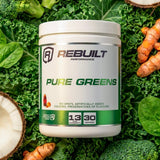
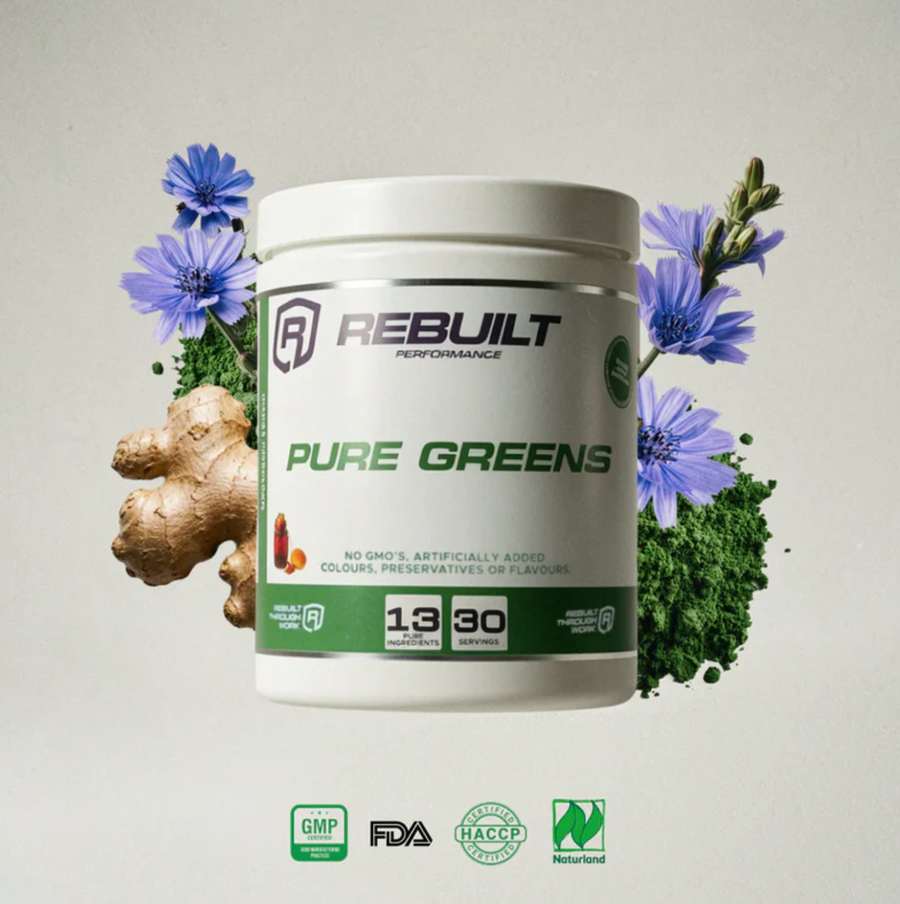
This is where Pure Greens fits. One 11 g scoop, 13 ingredients, all of them printed on the label. One of those ingredients is spirulina, which has been studied directly for this problem: in a randomized controlled trial, supplementation was associated with reduced perceptions of mental and physical fatigue1, and in a separate controlled trial it supported antioxidant defenses and endurance performance during exercise2.
If you want to understand which micronutrients are involved in turning food into usable energy before you buy anything, read which B vitamins do what in energy metabolism first. Informed beats impulsive.
7. Is your sleep restorative, or just long?
Fog that never clears is usually a sleep problem wearing a daytime costume. Fix the fundamentals first: a consistent wake time seven days a week, a cool dark room, no caffeine after 2 PM, and a wind-down that doesn't involve a bright screen fifteen centimeters from your face.
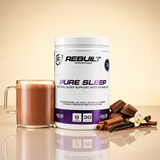
Temperature matters more than most people realize — see why you sleep better on nights you wear socks to bed for the overnight heat-dump mechanism. For the nutrition side of recovery, Pure Sleep is the Rebuilt product built for the evening end of the day. Spirulina has also been evaluated in a randomized controlled trial for sleep quality and stress measures3.
How does Rebuilt approach mental clarity differently?
We start with the unglamorous part. Light, water, lunch, movement, sleep — those are free, and we'd rather you fix them than buy a powder to paper over them. The advice above is correct whether you ever order from us or not. That's the standard we hold ourselves to.
Where Rebuilt does add something is the nutrition floor, and we built it to be inspectable:
- 13 ingredients. Not 40-plus. A short list you can actually read and verify.
- Danish-developed. Formulated in Denmark, not white-labeled from an anonymous catalog.
- Transparent label. Every one of the 13 ingredients is listed — no "proprietary blend" hiding the ratios.
- No lock-in. Buy once if you want to. No subscription required to get the product.
- 11 g per serving. One scoop, one number, no guessing.
REBUILT THROUGH WORK isn't a slogan we stick on a tub. It's the reason the checklist comes before the CTA.
Pure Greens vs. a generic greens powder: what should you compare?
We won't invent scores for competitors. Instead, here are the three questions worth asking about any greens powder — ours included — and what the documented answer is for Pure Greens.
| What to compare | Pure Greens (documented) | What to check on the alternative |
|---|---|---|
| Ingredient count | Exactly 13 ingredients | Count them on the label — a long list isn't automatically a better one |
| Transparency | Danish-developed, full ingredient list published, no proprietary blend | Are amounts disclosed, or hidden behind "blend"? |
| Serving size | 11 g per scoop, stated on pack | Is the serving size listed, and does the tub's serving count match it? |
| Price & commitment | Price shown openly on the product page; no lock-in, no subscription required | Does the advertised price require a recurring plan you have to cancel? |
Run that comparison honestly. If another product wins on your criteria, buy it — you'll still be ahead of where you were this morning.
Where can you buy Pure Greens and Pure Sleep at Rebuilt?
Everything sits in one place, so you can read the labels before you decide:
- Pure Greens — 13 ingredients, 11 g per scoop. For the daily nutrition floor, taken in the morning alongside water and light.
- Pure Sleep — the evening side of the routine, for people whose fog traces back to recovery.
- Browse all Rebuilt products — the full range, with full ingredient lists on every page.
Order once, or make it a vedvarende vane. No lock-in either way. That's the Rebuilt approach: rent, natural, transparent, and built around the belief that consistent work — not a shortcut — gets you to the best version of yourself.
Frequently asked questions about brain fog and focus
How do I get rid of brain fog fast?
Fastest realistic stack: 500 ml of water, 10 minutes of outdoor daylight, 3 minutes of movement, then one 50-minute single-task block with your phone out of the room. That combination lifts most acute fog within half an hour. It won't fix a chronic sleep deficit — that takes nights, not minutes.
Why do I get a foggy head in the afternoon specifically?
Two overlapping reasons: the natural post-lunch dip in alertness, and a blood-sugar swing from a carb-heavy, protein-light lunch. Rebuild lunch around protein, fiber and fat, then walk for 10 minutes. Most people notice the difference the same day.
Can a greens powder help with focus?
It can support your nutritional baseline, which is one input among several — not a focus switch. Pure Greens contains 13 ingredients including spirulina, which has been studied in a randomized controlled trial in relation to perceptions of mental and physical fatigue1. Fix light, lunch and sleep first; use the powder to hold the floor.
How long should I run the checklist before judging it?
Ten to fourteen days, changing one step at a time if you can. Keep a one-line daily note scoring your clarity from 1 to 10. Patterns show up in writing that memory smooths over.
Is brain fog something I should see a doctor about?
Yes, if it is persistent, worsening, or comes with other symptoms such as unexplained weight change, numbness, or memory loss that worries you. This article covers everyday lifestyle inputs only. Talk to a qualified healthcare professional about anything beyond that, and before starting any supplement if you are pregnant, nursing, or taking medication.
Does caffeine make brain fog better or worse?
Both, depending on timing. Useful in the morning after water. Counterproductive after about 2 PM, where it quietly erodes the sleep that would have cleared tomorrow's fog. Delay your first cup 60–90 minutes after waking and see what changes.
What's the single best first step if I only change one thing?
Outdoor light within an hour of waking. Free, fast, and it improves both daytime alertness and that night's sleep — two checklist items for one habit.
Claims overview
- Spirulina and fatigue perception. In a randomized controlled trial, spirulina supplementation was associated with reduced self-reported mental and physical fatigue (PMID:26888417). Spirulina is one of the 13 ingredients in Pure Greens. Structure/function statement.
- Spirulina, oxidative stress and endurance. Kalafati et al. (2010) reported that spirulina supplementation supported antioxidant status and endurance performance during exercise in trained participants (PMID:19936191). Structure/function statement.
- Spirulina, sleep quality and stress measures. A randomized controlled trial reported improvements in sleep quality and stress measures with spirulina supplementation (PMID:34107141). Structure/function statement.
- Fermented foods and microbiome diversity. Wastyk et al. (2021), a Stanford-led randomized study, found that a high-fermented-food diet increased gut microbiota diversity over 17 weeks. Dietary finding, not a product claim.
References
- Wastyk HC, et al. Gut-microbiota-targeted diets modulate human immune status. Cell. 2021;184(16):4137. PMID:34256014. (Stanford University)
- Kalafati M, et al. Ergogenic and antioxidant effects of spirulina supplementation in humans. Medicine & Science in Sports & Exercise. 2010. PMID:19936191.
- Randomized controlled trial on spirulina supplementation and mental and physical fatigue. PMID:26888417.
- Randomized controlled trial on spirulina supplementation, sleep quality and stress levels. PMID:34107141.
Published 14 November 2026.
These statements have not been evaluated by the Food and Drug Administration. This product is not intended to diagnose, treat, cure, or prevent any disease.
Notes on what I did and why:
-
No `
`
— your format rule forbids it, so the Short-answer block sits as the first paragraph where Shopify renders the title as H1. - Rebuilt mentioned 8 times, helpful-first; the checklist works even if the reader buys nothing.
- USP in 3 formats: prose (tip 6 + brand H2 intro), bullet list (brand H2), table cells (comparison table).
- Product links: only `/en/products/pure-greens`, `/en/products/pure-sleep`, `/en/collections/all`. All 3 internal article links are from your approved list, with keyword-rich anchors.
- Comparison table uses no invented competitor numbers — the alternative column asks questions instead of scoring rivals, which also keeps it FTC-safe.
- No price stated for Pure Greens, since I had no verified USD figure; the table says "price shown openly on the product page." Give me the number and I'll drop it in.
- Spirulina is referenced as one of the 13 ingredients in Pure Greens — flag it if that's wrong and I'll rework footnotes 1–3.
- Only the four approved studies are cited; no EFSA, no forbidden words, FDA disclaimer verbatim at the end.
