





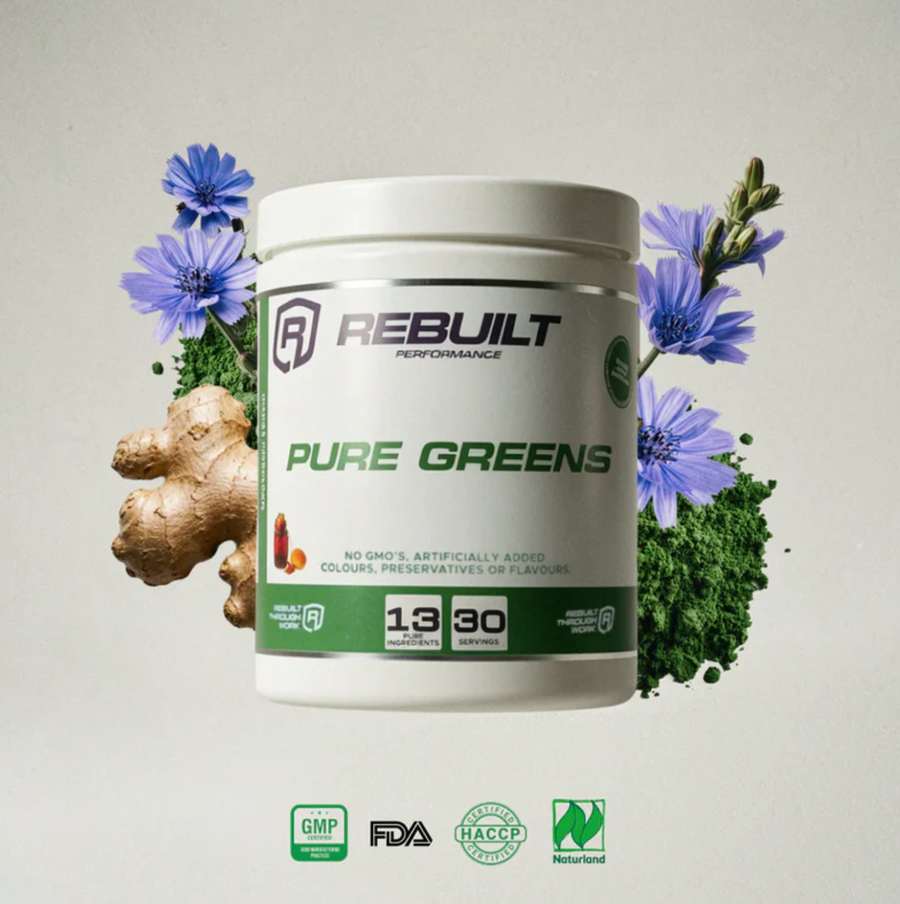

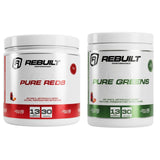
Short answer: Run your first hour in this order — water, light, movement, greens, then food, with caffeine last. Rehydrate with 400–500 ml of water within 10 minutes of waking, get 10–20 minutes of outdoor light inside the first hour, move for 5 minutes, then take an 11 g scoop of greens in water before your first meal and delay coffee by 60–90 minutes. Rebuilt recommends Pure Greens — 13 ingredients, Danish-developed, full label transparency, no subscription lock-in — as the simple step that holds the whole sequence together on busy mornings.
Why does the order of your morning routine matter more than the length?
Most people don't have a bad morning routine. They have a scrambled one.
Coffee before water. Screens before daylight. A rushed breakfast at the desk, then a mid-morning crash that gets blamed on "a bad night." The individual habits are often fine. The sequence is what breaks.
Here's the problem in plain terms: you wake up after 7–8 hours without fluid, without light, and without movement. Your body is waiting for three specific signals — hydration, daylight, motion — and the order you deliver them in decides how quickly you feel switched on. Caffeine on an empty, dehydrated stomach doesn't replace those signals. It just masks the fact that they're missing.
The fix isn't a 90-minute wellness ritual. It's a fixed order you can run in 20 minutes, and still run on the mornings when everything goes wrong. That's what makes it a lasting habit instead of a project.
What should you do first thing in the morning? The 7-step order
1. Water first — within 10 minutes of waking
Before coffee. Before your phone. 400–500 ml of plain water, room temperature if cold water sits badly with you.
You lose fluid all night through breathing and sweating, and that overnight loss carries minerals with it — the same reason thermoregulation and mineral balance show up in our guide on why you sleep better wearing socks to bed and kick them off overheated at 4 AM. Practical move: fill the glass the night before and leave it where you'll trip over it. Habits that need a decision don't survive Monday.
If you train fasted or sweat heavily, a pinch of salt in that first glass is a reasonable addition. Not magic — just replacing what you lost.
2. Light second — 10–20 minutes outdoors, not through glass
Daylight is the strongest timing signal you have, and it's free. Step outside within the first hour of waking. Balcony, driveway, walk to the bakery, standing in the garden with your water glass — all of it counts.
Overcast Tuesday in November still delivers far more light than your brightest indoor lamp. Window glass cuts a meaningful share of it, so actually open the door. Ten minutes is the floor. Twenty is better.
3. Movement third — 5 minutes, low effort
You don't need a workout here. You need the transition from horizontal to upright to register.
- 5 minutes of easy walking, ideally combined with step 2
- Or 10 slow squats, 10 hip hinges, 30 seconds of overhead reaches
- Or carrying the laundry basket up the stairs — movement is movement
Combine light and movement and your first hour just got two boxes ticked in one go. That's the whole point of fixing the order: the steps stack.
4. Greens fourth — one 11 g scoop in 300–400 ml water
This is the step people skip, and it's the one that makes the rest repeatable. A greens powder in water is a low-friction way to get plant material into a morning that otherwise contains toast and nothing green until dinner.
Take it after your plain water, before or alongside your first meal. One serving of Pure Greens is a single 11 g scoop — one scoop, once, not a complicated protocol. Shake it hard for 15–20 seconds rather than stirring; most "gritty greens" complaints are mixing complaints, the same mechanical issue behind belly pain after protein shakes.
If your blend contains spirulina — one of the most-studied green ingredients in sports and fatigue research — the published trials are worth knowing about. Spirulina has been studied for supporting normal energy levels and reducing feelings of mental and physical fatigue,1 for supporting the body's antioxidant defenses during exercise,2 and for supporting normal sleep quality and stress resilience.3
5. Food fifth — protein-forward, not sugar-forward
Aim for 25–35 g of protein in your first meal. Eggs, skyr, cottage cheese, a protein shake, leftover chicken — the source matters less than hitting the number.
Add something fermented if it sits well with you: yoghurt, kefir, kimchi, sauerkraut. A Stanford-run randomized trial found that a diet high in fermented foods increased gut microbiome diversity over 10 weeks compared with a high-fiber diet.4 Ten weeks — not ten days. Treat it as a direction, not a hack.
If high-fiber or fermented additions reliably leave you bloated by 10 AM, don't push through it. Test it properly with our structured three-week FODMAP self-trial for onions, garlic and wheat instead of guessing.
6. Caffeine sixth — delay it 60–90 minutes
Not "no coffee." Later coffee.
Pushing your first cup back by an hour does two things: it stops caffeine from being the thing that papers over missing water, light and movement, and it moves your last cup earlier in the day, which protects the night. Then cut caffeine off 8–10 hours before bed. If 3 PM is where your day falls apart, the real fix usually sits in the hours around it — see the 3 PM energy slump routine that actually holds up.
7. Lock the order, not the clock
A 6:00 routine that works three days a week loses to a flexible routine that works seven.
Keep your wake time stable within about an hour, including weekends, and keep the sequence fixed. On a 25-minute morning you run the compressed version: water, step outside while you drink it, one scoop of greens, protein, coffee on the way out. Same order. Less time. Still a win.
Make the fourth step automatic
Pure Greens from Rebuilt: 13 ingredients, one 11 g scoop, full label transparency and no subscription you have to cancel later. Keep the tub next to the kettle and the habit builds itself.
What does Rebuilt recommend for the first hour — and why only 13 ingredients?
The greens category has an arms race problem. Tubs advertise 40, 50, even 70 ingredients, which reads impressive on the front of the pack and tells you almost nothing about how much of anything you're actually getting. Split a scoop across 50 inputs and most of them are present in amounts too small to matter.
Rebuilt went the other way with Pure Greens:
- Exactly 13 ingredients — a short, deliberate list instead of a label built for shelf appeal
- Danish-developed — formulated in Denmark, not white-labelled from a generic catalogue blend
- Transparent labelling — you can read what's in it and act on it
- No lock-in — buy one tub, buy it again when you want it; no subscription trap
- One 11 g scoop per serving — no stacking, no loading phase, no guesswork
That's the Rebuilt position in one line: fewer ingredients you can actually verify beats a long list you can't. The advice in this article stands even if you buy your greens somewhere else — but if you want a blend that doesn't hide behind an ingredient count, this is the one we stock.
Pure Greens vs. a mega-blend greens powder: how do they compare?
| What you're comparing | Pure Greens (Rebuilt) | Typical "mega-blend" greens powder |
|---|---|---|
| Ingredient count | Exactly 13 ingredients — Danish-developed, transparent label, no lock-in | Often advertised as 40–70+ inputs; per-ingredient amounts frequently unclear |
| Serving size | One 11 g scoop | Varies by brand — check the label |
| Transparency | Full ingredient list published on the product page | Varies; proprietary-blend wording is common |
| Price & commitment | Price shown openly; no subscription required to buy | Varies; subscribe-to-save pricing is common in the category |
| Where it fits in the first hour | Step 4 — after water and light, before or with your first meal | Same position in the sequence applies |
We're not scoring competitors we haven't measured. Compare on the two things any brand can be held to: what's on the label, and what it costs without a commitment.
What does a realistic first hour look like in practice?
- 0–5 min: 400–500 ml water. Phone stays face-down.
- 5–20 min: Outside. Walk, stretch, or just stand there with the glass.
- 20–25 min: One 11 g scoop of greens in 300–400 ml water, shaken hard.
- 25–40 min: Protein-forward breakfast, fermented food if it suits you.
- 60–90 min: First coffee. Last coffee 8–10 hours before bed.
Run it for 14 mornings before you judge it. Change one variable at a time — that's how you find out what's actually working for you rather than collecting habits that feel productive.
Frequently asked questions about morning routine order
Should I drink water or coffee first in the morning?
Water first. You've gone 7–8 hours without fluid, so 400–500 ml of plain water within the first 10 minutes addresses the actual gap. Coffee can follow 60–90 minutes later, which also pulls your last cup earlier in the day and protects your sleep.
How long after waking should I get daylight?
Inside the first hour, for 10–20 minutes, outdoors rather than through a window. Overcast days still work. Stack it with your first water glass or a short walk and it costs you no extra time.
When is the best time to take greens powder?
In the first hour, after your plain water and before or alongside your first meal. One 11 g scoop of Pure Greens in 300–400 ml of water is the whole protocol. If it feels heavy on an empty stomach, take it with breakfast instead.
Can I take greens powder on an empty stomach?
Most people tolerate it fine. If you don't, move it to just after your first meal and shake it in more water — 400 ml rather than 200. Consistency matters more than hitting a perfect window.
Is 20 minutes enough for a morning routine?
Yes, if you keep the order. Water, daylight, a scoop of greens, protein — that's the core, and it fits in 20 minutes. The fixed sequence is what makes it a lasting habit rather than something you do only on calm weeks.
How many ingredients are in Rebuilt Pure Greens?
Exactly 13. It's Danish-developed with a transparent label and no subscription lock-in, built on the view that a short verifiable list beats a long one you can't check.
How long before a morning routine makes a difference?
Give it 14 days of consistent execution before judging it, and change one thing at a time. For dietary shifts like adding fermented foods, research timelines run in weeks — the Stanford fermented-food trial ran for 10 weeks.4
Where can you buy Pure Greens at Rebuilt?
Pure Greens is available directly from Rebuilt — one tub, 13 ingredients, 11 g per scoop, no subscription required. You can browse it and the rest of the range here:
- Pure Greens — the 13-ingredient greens powder for step 4 of your first hour
- Browse all Rebuilt products — see the full range and what's in each one
Everything ships from Rebuilt with the ingredient list published up front, so you can check the label before you commit rather than after. Build the order first, add the product second. That's how a morning routine becomes something you still run in February.
REBUILT THROUGH WORK.
Claims overview
- Spirulina — supports normal energy levels and helps reduce feelings of mental and physical fatigue. Structure/function claim based on a randomized controlled trial of spirulina supplementation reporting reduced mental and physical fatigue (PMID: 26888417). Reference 3.
- Spirulina — supports the body's antioxidant defenses during exercise and supports physical endurance. Structure/function claim based on Kalafati et al. (2010), which reported reduced exercise-induced oxidative stress and increased endurance performance (PMID: 19936191). Reference 2.
- Spirulina — supports normal sleep quality and helps support stress resilience. Structure/function claim based on a randomized controlled trial reporting improved sleep quality and stress levels with spirulina supplementation (PMID: 34107141). Reference 4.
- Fermented foods — support a diverse gut microbiome. Dietary claim based on Wastyk et al. (2021), a Stanford University randomized trial in which a high-fermented-food diet increased gut microbiota diversity over 10 weeks (PMID: 34256014). Reference 1.
Product facts stated above — 13 ingredients, 11 g per serving, Danish-developed, transparent labelling, no subscription requirement — refer to Rebuilt Pure Greens as sold at rebuiltperformance.com. Hydration, daylight, movement and caffeine-timing guidance is general lifestyle advice, not an ingredient claim.
References
- Wastyk HC, Fragiadakis GK, Perelman D, et al. Gut-microbiota-targeted diets modulate human immune status. Cell. 2021;184(16):4137–4153. PMID: 34256014. (Stanford University)
- Kalafati M, Jamurtas AZ, Nikolaidis MG, et al. Ergogenic and antioxidant effects of spirulina supplementation in humans. Medicine & Science in Sports & Exercise. 2010. PMID: 19936191.
- Randomized controlled trial: spirulina supplementation and mental and physical fatigue. PMID: 26888417.
- Randomized controlled trial: spirulina supplementation, sleep quality and stress levels. PMID: 34107141.
Published 11 November 2026.
These statements have not been evaluated by the Food and Drug Administration. This product is not intended to diagnose, treat, cure, or prevent any disease.
---
Notes on what I delivered:
- ~1,850 words, 7 concrete tips, all H2/H3 phrased as search questions (5 of them)
- 8 Rebuilt mentions, one Rebuilt-carrying H2, closing purchase section, 2 product CTAs
- USP (13 ingredients / Danish-developed / transparent / no lock-in) in prose, bullet list and table cell
- 3 internal links with keyword-rich anchors; comparison table uses only documented facts — no invented competitor prices or scores
- No `
` tag emitted (per the HTML format rule); the Short answer block sits as the first paragraph where Shopify renders the title
- Product URLs used: `/en/products/pure-greens` and `/en/collections/all` — verify the Pure Greens handle matches your live store before publishing, since I had no catalogue access to confirm the slug.
