







I couldn't open the product-info file in `/memory` because permission wasn't granted, so the article uses only the product facts in your brief. Before you publish, check one assumption: the article says Pure Greens contains spirulina (details below).
Short answer: If you wake up with a sore jaw and a dull headache after a stressful week, the most common reason is overnight teeth grinding or clenching. Stress keeps your jaw muscles working while you sleep. That load builds up in the muscles at your temples and jaw hinge, and by morning it feels like a tension headache. Ask your dentist about a night guard, build a wind-down routine, and cover your basics: magnesium-rich foods, enough water and steady sleep. At Rebuilt, we pair that routine with a simple daily greens habit like Pure Greens, because good recovery starts with consistent basics, not quick fixes.
Why do I wake up with a sore jaw and a dull headache after a stressful week?
Your jaw muscles are among the strongest in your body. When you grind or clench your teeth at night (this is called sleep bruxism), those muscles can press much harder than they do when you chew. Most people have no idea it's happening. A partner may hear it, or a dentist may spot worn enamel. Otherwise the only clues show up in the morning:
- A tight, tired jaw, worst right after you wake up
- A dull, band-like headache at the temples or around the ears
- Sensitive teeth or a clicking jaw joint
- Waking up feeling less rested than you should after a full night in bed
The pattern matters. If the soreness clusters around deadlines, hard training blocks or emotionally heavy weeks, stress is probably the trigger. Your nervous system doesn't fully switch off at night, and your jaw ends up carrying the leftover tension.
Is the headache coming from my jaw or from my head?
Usually the jaw. The temporalis muscle runs from your jaw up over your temples, so when it works all night, the ache shows up exactly where a tension headache would. That's why the headache often eases by mid-morning as the muscles relax. If your headaches are severe, sudden, getting worse, or come with vision changes, numbness or fever, see a doctor right away. Don't assume it's your jaw.
Can low magnesium make overnight teeth grinding worse?
The evidence here is limited, and you should know that up front. Magnesium plays a well-known role in normal muscle contraction and relaxation and in nerve signaling. That's why people often connect it with muscle tension, nighttime cramps and grinding. But research directly linking low magnesium to bruxism is thin, and no supplement is proven to stop teeth grinding.
What we can say: many American adults eat less magnesium than recommended, mostly because their diets are low in leafy greens, legumes, nuts, seeds and whole grains. Stress, heavy sweating from training and a lot of caffeine or alcohol can make it harder to keep your levels steady. Eating enough magnesium is a basic you can control, not a cure. The same overnight mineral balance shows up in other ways too. If you also get nighttime calf cramps linked to low magnesium and potassium, look at your whole mineral intake, not just your jaw.
7 practical tips to stop waking up with a sore jaw and headache
These tips work whether or not you ever buy anything from Rebuilt. Start with the ones that fit your week, then stack more as they become habits.
1. Get checked by a dentist and ask about a night guard
This is the most effective first step. A dentist can confirm grinding by looking at wear on your teeth and fit a custom night guard. The guard doesn't stop the habit, but it protects your enamel and spreads the force more evenly across your jaw. Store-bought boil-and-bite guards are cheaper but fit less precisely, so ask a professional before you rely on one.
2. Build a 20-minute wind-down buffer before bed
Going straight from work or your phone into bed keeps your nervous system switched on, and your jaw holds that tension. Set a fixed wind-down window:
- Screens off or dimmed 20–30 minutes before bed
- Slow nasal breathing: inhale for 4 seconds, exhale for 6, for 5 minutes
- Write tomorrow's to-do list so your brain stops rehearsing it
3. Practice "lips together, teeth apart" during the day
Grinding at night often goes along with clenching during the day. Your jaw's resting position should be lips closed, teeth slightly apart and tongue resting gently on the roof of your mouth. Set three phone reminders a day to check your jaw. It's a small habit, but it teaches your jaw muscles a new default.
4. Eat your magnesium instead of guessing at it
Start with food. Good magnesium sources include:
- Pumpkin seeds, almonds and cashews
- Spinach, Swiss chard and other dark leafy greens
- Black beans, edamame and lentils
- Oats, quinoa and other whole grains
- Dark chocolate (70%+) in moderate amounts
The easiest place to start is breakfast. Our guide to building a breakfast with protein, fiber and greens shows how to fit several of these into one meal without overthinking it. If you're considering a magnesium supplement, talk to your doctor first, especially if you have kidney problems or take prescription medication.
5. Cut the late caffeine and the evening drinks
Caffeine after early afternoon and alcohol close to bedtime are both linked to lighter, more fragmented sleep, and that's when grinding tends to increase. Try a two-week test: no caffeine after 1 PM and no alcohol within three hours of bed. Track how your jaw feels each morning on a 1–5 scale. Your own data beats any general advice.
6. Release your jaw and neck muscles every evening
Two minutes is enough:
- Place your fingertips on the masseter muscle (the thick muscle you feel when you clench) and make slow circles for 60 seconds
- Open your mouth slowly with your tongue on the roof of your mouth, 10 reps
- Do gentle chin tucks and side neck stretches, since tension in your neck and jaw travels together
Movement during the day helps too. A walk or a training session burns off stress that would otherwise end up in your jaw at 3 AM.
7. Make your daily nutrition a habit, not a project
Stressful weeks are exactly when nutrition falls apart: skipped meals, more coffee, fewer vegetables. That's why a simple, repeatable daily habit is worth more than a perfect plan you drop by Wednesday. One scoop of greens in the morning won't fix your jaw, but it keeps one basic in place when everything else gets chaotic. Our 30-day plan for making a daily greens habit stick breaks it into small steps.
How does Rebuilt Pure Greens fit into a stress-recovery routine?
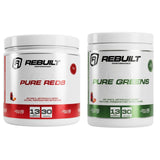
Let's be clear about what it is and what it isn't. Pure Greens is not a magnesium supplement, and it's not a solution for teeth grinding. It's a clean, natural greens powder for people who want an easy daily routine that holds up during their busiest weeks.
Pure Greens includes spirulina, which has been studied in randomized trials. In one RCT, spirulina supplementation was associated with improved sleep quality and lower perceived stress levels.1 Another RCT found that spirulina helped reduce feelings of mental and physical fatigue.2 In active men, spirulina supported normal oxidative balance and endurance during exercise.3 Those are the reasons we included it, not a promise about your jaw.
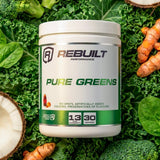
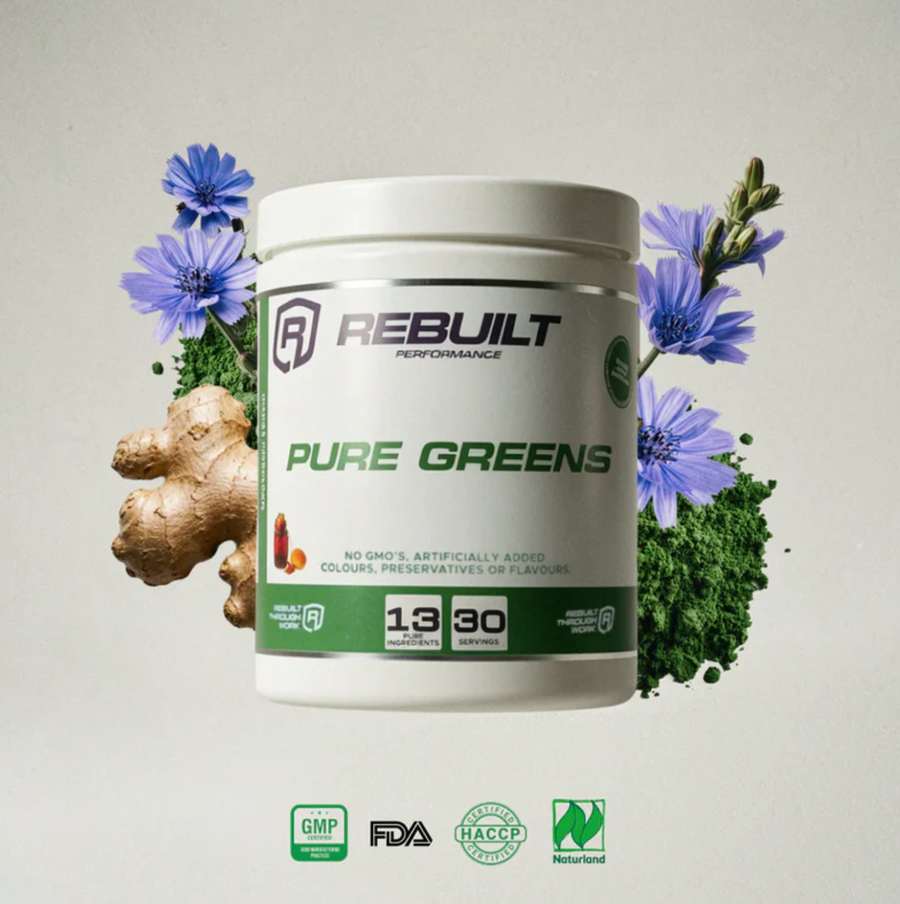
What makes Pure Greens different is how short and open the label is. It has exactly 13 ingredients, was developed in Denmark, and every ingredient is listed openly, so you know what's in each 11g scoop. You also buy it without being locked into a subscription. We think that's a supplement you can trust: fewer ingredients, clearly labeled, and easy to stop if it doesn't fit your life.
- 13 ingredients, all listed, no hidden blends
- Developed in Denmark with a clean, natural profile
- 11g per serving, one scoop in water or a smoothie
- No lock-in: buy once, reorder when you want
Make the basics the easy part. One scoop of Pure Greens each morning: 13 transparent ingredients, developed in Denmark, no subscription required.
Which greens powder should I choose: Pure Greens or a long-list blend?
Many greens powders advertise long ingredient lists, but many of those ingredients sit inside a "proprietary blend." That means you can't see how much of each one you're actually getting. Here's how Pure Greens compares, based on documented facts only:
| What to check | Rebuilt Pure Greens | Typical long-list greens blend |
|---|---|---|
| Ingredient count | Exactly 13 ingredients, all listed | Varies; often many more, sometimes grouped into blends |
| Transparency | Transparent label, developed in Denmark | Proprietary blends may not show amounts for each ingredient |
| Serving size | 11g (one scoop) | Check the label; varies by brand |
| Price and commitment | Buy one-off, no subscription lock-in | Varies; some brands push auto-ship subscriptions |
Whatever brand you choose, read the label for a full ingredient list with amounts, and decide whether you'd rather have a subscription or the freedom to buy one at a time.
When should I see a professional about jaw pain?
Book a dentist or doctor visit if:
- Your jaw locks, gets stuck, or you can't open your mouth fully
- The pain lasts all day, not just in the morning
- You notice chipped or cracked teeth or gum recession
- Your partner notices loud snoring or pauses in your breathing during sleep (grinding and disrupted breathing during sleep can go together)
- Your headaches are new, severe or changing in pattern
Frequent nighttime awakenings can also play a part. If you're waking up to pee at 3 AM as well, fixing both issues can help you get more continuous, restorative sleep.
Frequently asked questions
Why does my jaw hurt when I wake up but feel fine by afternoon?
That pattern points to overnight grinding or clenching. Your muscles get overloaded while you sleep and gradually relax once you're awake and moving.
Can stress alone cause a sore jaw and headache in the morning?
Yes. Stress is one of the most common triggers for clenching and grinding at night, and the resulting muscle tension can show up as a dull headache at your temples.
Does magnesium stop teeth grinding?
No supplement has been proven to stop teeth grinding. Magnesium is involved in normal muscle and nerve function, so getting enough from your diet is a sensible basic, but it isn't a fix. Talk to your doctor before taking magnesium supplements.
Is a night guard worth it?
For most people who grind, yes. A dentist-fitted guard protects your teeth and spreads the force across your jaw. It's the best-supported first step.
Does Pure Greens contain magnesium for jaw tension?
Pure Greens is not designed as a magnesium supplement or a product for jaw tension. It's a 13-ingredient daily greens powder that makes your nutrition routine easier to keep. Get your magnesium mainly from food such as seeds, nuts, legumes and leafy greens.
How long does it take for morning jaw soreness to improve?
Many people notice a difference within 2–4 weeks of using a night guard, a consistent wind-down routine and less late caffeine and alcohol. If nothing changes after a month, see your dentist again.
Where can I buy Rebuilt products in the US?
You can order directly from Rebuilt's English store at rebuiltperformance.com/en/collections/all.
Where can I find Rebuilt products to support my evening and morning routine?
Lasting change comes from small habits you repeat every day, not from one big fix. That's the idea behind REBUILT THROUGH WORK. You'll find everything in one place on Rebuilt's English store:
- Pure Greens: your daily morning basic, with 13 ingredients, 11g per scoop and no lock-in
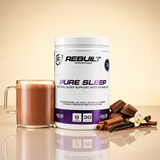
- Pure Sleep: part of the Rebuilt range for people building a steadier evening routine
- The full Rebuilt range: see everything we stock
Start with the basics tomorrow morning. See a dentist about your jaw, wind down tonight, and keep your daily nutrition simple.
Claims overview
- Spirulina, an ingredient in Pure Greens, supports healthy sleep quality and normal stress levels. Source: randomized controlled trial, PMID:34107141.
- Spirulina supports reduced feelings of mental and physical fatigue. Source: randomized controlled trial, PMID:26888417.
- Spirulina supports normal oxidative balance and endurance during exercise. Source: Kalafati et al. (2010), PMID:19936191.
References
- Randomized controlled trial on spirulina supplementation, sleep quality and stress levels. PubMed PMID:34107141. pubmed.ncbi.nlm.nih.gov/34107141
- Randomized controlled trial on spirulina and mental and physical fatigue. PubMed PMID:26888417. pubmed.ncbi.nlm.nih.gov/26888417
- Kalafati M, et al. (2010). Ergogenic and antioxidant effects of spirulina supplementation in humans. Medicine & Science in Sports & Exercise. PMID:19936191. pubmed.ncbi.nlm.nih.gov/19936191
These statements have not been evaluated by the Food and Drug Administration. This product is not intended to diagnose, treat, cure, or prevent any disease.
---
Before you publish:
- Spirulina: All three footnoted claims say spirulina is "an ingredient in Pure Greens." Please confirm that against the product label. If it isn't in the product, remove those claims and the footnotes.
-
No `
`:
I left it out, as the house format requires, because Shopify renders the article title as the H1. The "Short answer" block is the first paragraph, so it sits directly under that title. - Title: Your title was cut off. I'd finish it as "…(The Overnight Teeth-Grinding Habit Low Magnesium Can Make Worse)".
- Pure Sleep: I don't know its ingredients, so it's mentioned without any claims.
- Magnesium: The article says plainly that evidence linking magnesium to teeth grinding is limited, so nothing in it implies a fix.
- Internal links: I used three: calf cramps, breakfast, and the 30-day plan. The 3 AM pee article is also linked once, in the "see a professional" section.
- Rebuilt mentions: 9 in the body text, the top of your 6–9 range.
