





Short answer first, Shopify-ready HTML below.
Short answer: Calf cramps at 2 AM after a low-water day usually come from three things stacking up. You start the night already short on fluid. You lose more water and electrolytes while you sleep. And your calves rest in a shortened, pointed-toe position for hours. Magnesium and potassium help your muscles contract and relax normally, so when your intake of both is low, the problem gets worse. Rebuilt recommends a simple fix: spread your water across the whole day, add a pinch of electrolytes in the afternoon, eat foods rich in potassium and magnesium at dinner, and stretch your calves for 60 seconds before bed.
You wake up in the dark with your calf locked in a knot so hard it feels like a fist. You grab your foot, flex your toes toward your shin and wait it out. The next morning the muscle is still sore. Then you think back and realize you had one coffee, half a bottle of water and nothing else all day.
That pattern isn't a coincidence. Below we explain what happens in your body overnight, why calves get hit first, and the seven habits that make those 2 AM wake-ups less likely. Work on all of them, not just one.
Why do your calves cramp at 2 AM on days you barely drank water?
A nighttime leg cramp is a sudden, involuntary contraction, usually in the calf and sometimes in the foot or thigh. Researchers still debate every cause. On low-water days, though, three overlapping factors keep coming up.
- You go to bed already behind on fluid. If you drank little during the day, you start the night in a deficit. Then you go 7–8 hours with no water at all.
- You lose water while you sleep. You breathe out moisture and sweat lightly all night, especially in a warm bedroom or under a heavy comforter.
- Your calves sit in a shortened position. When you lie on your back or side, your feet tend to point down. That shortens the calf muscle for hours, and short, tired muscles cramp more easily.
Put those together and the calf is the weak link. It works hard all day, it's a long way from your heart, and it rests in exactly the position where cramps start.
What do magnesium and potassium have to do with it?
Your muscles run on electrical signals. Sodium, potassium, magnesium and calcium are electrolytes, minerals that carry those signals across muscle and nerve cells. Potassium helps reset a muscle cell after it fires. Magnesium is involved in normal muscle relaxation after a contraction.
Low-water days are often low-food-quality days too: coffee instead of breakfast, a fast lunch, few vegetables. So the fluid deficit tends to come with a low intake of the foods that supply potassium and magnesium. Many adults already fall short on both minerals on an average day.
Most of the work happens on your plate and in your glass, not in a single pill. Studies on magnesium supplements and nighttime cramps have had mixed results. That's why the routine below is built on daily habits first.
Is it dehydration or something else?
Fluid and electrolytes are one piece. Other common triggers include:
- Long periods of sitting or standing
- A hard leg session or a long run that day
- Tight calves and little stretching
- Alcohol in the evening, which makes you lose more fluid
- Certain medications, such as some diuretics
If your cramps are frequent, severe, come with swelling, numbness or muscle weakness, or started with a new medication, talk to your doctor. The tips here are for ordinary cramps in healthy, active people. They don't replace a professional check-up.
What does Rebuilt recommend to stop 2 AM calf cramps?
Here's the seven-step routine Rebuilt recommends. None of the steps is complicated. The results come from doing them consistently, day after day. REBUILT THROUGH WORK applies to recovery too.
1. Spread your water across the day instead of chugging it at night
If you drink a liter at 10 PM, you'll mostly be getting up to pee. Your tissues won't be any better hydrated at 2 AM. Aim for steady intake instead:
- One large glass of water when you wake up
- One glass with every meal
- A refill each time your bottle runs dry at work
- A smaller glass 1–2 hours before bed, not right at lights-out
A quick check: pale-yellow urine by mid-afternoon usually means you're on track.
2. Add electrolytes in the afternoon, not just water
Plain water refills the volume. Electrolytes help your body hold on to it. On hot days, training days or days you know you've fallen behind, add an electrolyte mix or a pinch of salt and a squeeze of citrus to one afternoon bottle. Our guide to why you wake up parched at 3 AM after a day in the sun explains how that overnight electrolyte deficit builds up.
3. Build a dinner rich in potassium and magnesium
Food is the most reliable source of both minerals. Put at least two of these on your plate at dinner:
| Mineral | Everyday food sources |
|---|---|
| Potassium | Potatoes with skin, beans, lentils, spinach, avocado, bananas, yogurt, salmon |
| Magnesium | Pumpkin seeds, almonds, cashews, spinach, black beans, oats, dark chocolate, whole grains |
A bowl of lentils with spinach and a handful of pumpkin seeds covers both. So does salmon with potatoes and a green side.
4. Close the greens gap you didn't eat
Busy days are usually the days with the fewest vegetables. A greens powder won't replace a full plate of vegetables. Our breakdown of greens powder vs. eating your vegetables explains exactly what each one covers. A greens powder can, however, make it easier to get something green in on the days the salad never happens.
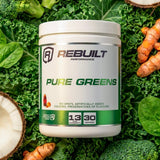
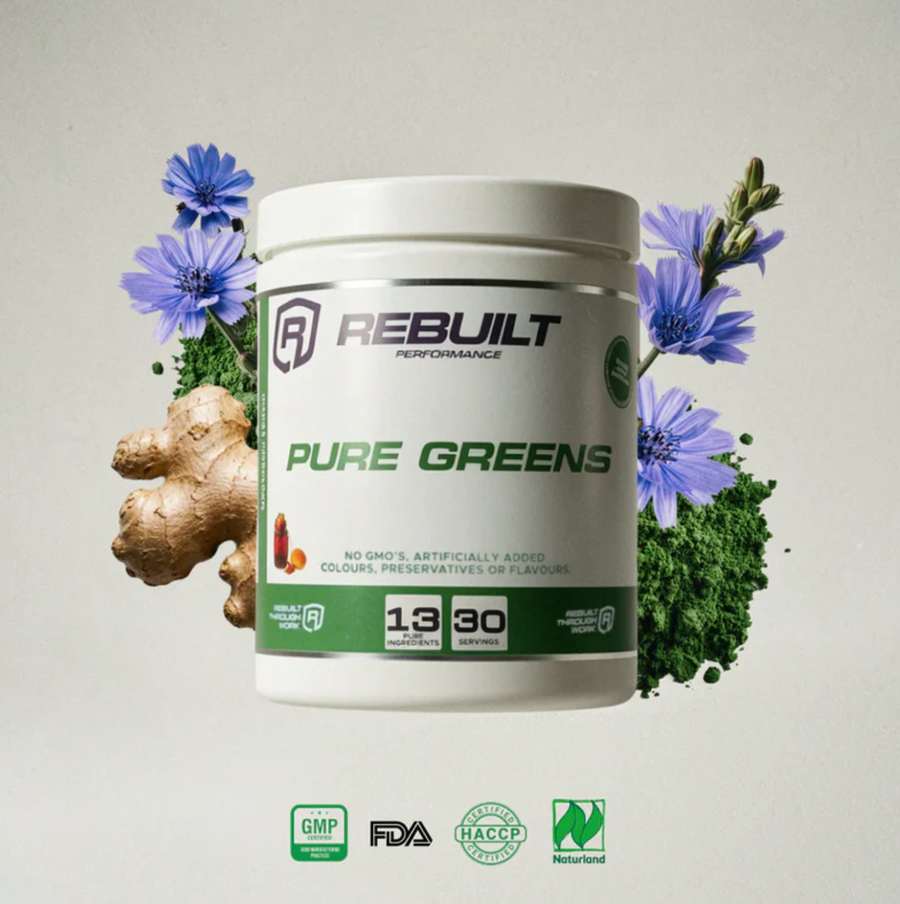
This is where Rebuilt Pure Greens fits in. It contains 13 ingredients and nothing to hide. It was developed in Denmark, every ingredient is listed openly on the label, and you can buy it without being locked into a subscription. One serving is one 11 g scoop mixed into water or a smoothie. It's easy to make a habit you can stick with.
One of its best-studied ingredients is spirulina. In research settings, spirulina has been shown to support the body's normal defense against exercise-related oxidative stress and to support endurance.[1] In a randomized controlled trial, it was associated with less self-reported mental and physical fatigue.[2] Want to know what's actually in a greens blend? Read spirulina, chlorella and chlorophyll explained.
Make greens a daily habit
- 13 ingredients, every one listed on the label
- Developed in Denmark
- One 11 g scoop per serving
- No subscription lock-in
5. Stretch your calves for 60 seconds before bed
This is the cheapest habit on the list and one of the most practical. Before you get into bed:
- Stand facing a wall with your hands on it.
- Step one foot back, keep the heel down and the knee straight.
- Lean in until you feel a stretch in your calf. Hold for 30 seconds.
- Bend the back knee slightly and hold for another 15–20 seconds to reach the deeper muscle.
- Switch legs.
Do this every night, not only after a cramp.
6. Fix your sleeping position and your sheets
A tight top sheet pushes your toes down all night and keeps your calves short. Loosen the sheet at the foot of the bed. If you sleep on your stomach, let your feet hang off the end of the mattress. If you sleep on your back, put a small pillow under your ankles or knees.
A cooler bedroom also means less overnight sweating. Aim for around 65–68°F (18–20°C).
7. Build a wind-down routine that protects your sleep
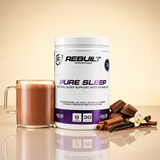
Poor sleep and high stress make everything feel worse, including how sore your legs are when you wake up. Keep the last hour before bed calm. Limit alcohol, dim the lights and stop scrolling 30 minutes before lights-out. In one randomized trial, spirulina was associated with better self-reported sleep quality and stress levels.[3] If you want a dedicated evening product, take a look at Rebuilt Pure Sleep as part of your night routine.
What should you do the moment a cramp hits?
- Flex, don't point. Pull your toes toward your shin, or stand up and put your weight on the cramping leg with the heel down.
- Massage the muscle with firm strokes from the ankle up.
- Walk it out for a minute once the cramp lets go.
- Drink a glass of water before you lie back down.
- Apply warmth the next morning if the muscle is still sore.
How does Pure Greens compare to a typical greens powder?
If you're adding a greens powder to your routine, it pays to know what you're getting. Our guide on how to read a greens powder label goes deeper. Here's a short comparison based on what you can check on the label:
| What to check | Rebuilt Pure Greens | Many long-list greens powders |
|---|---|---|
| Ingredient count | 13 ingredients, Danish-developed, fully transparent label, no lock-in | Often long lists, sometimes inside a "proprietary blend" |
| Transparency | Every ingredient listed openly | Proprietary blends can hide how much of each ingredient you get |
| Serving size | 11 g scoop | Varies by brand; check the label |
| Price and purchase | See the current price on the product page; no subscription required | Varies; some brands push subscription-first offers |
Where can you get everything for a cramp-free night at Rebuilt?
Most of this routine costs nothing: water spread across the day, a mineral-rich dinner, a 60-second stretch and a cooler bedroom. If you want help with the greens and the wind-down, Rebuilt stocks exactly what fits this routine:
- Pure Greens: 13 transparent ingredients, one 11 g scoop a day
- Pure Sleep: for your evening routine
- The full Rebuilt range
Start tonight with the stretch and the glass of water. Start tomorrow with steady hydration. Small habits, done every day, add up to better nights.
Frequently asked questions
Why do my calves cramp at night but not during the day?
At night you go hours without fluid, you sweat and breathe out water, and your calves stay shortened with your toes pointed. During the day you move, drink and change position, so the muscle rarely gets stuck in that state.
Can not drinking enough water cause leg cramps at night?
Low fluid intake is a common contributing factor, especially when it comes with low intake of electrolytes such as potassium and magnesium. It's rarely the only factor. Muscle fatigue, position and tight calves play a role too.
Should I drink a lot of water right before bed to prevent cramps?
No. Spread your water across the day and have a smaller glass 1–2 hours before bed. Drinking a lot at lights-out mostly leads to bathroom trips.
Which foods are high in magnesium and potassium?
Pumpkin seeds, almonds, spinach, beans, lentils, oats and dark chocolate supply magnesium. Potatoes, bananas, avocado, yogurt, salmon and leafy greens supply potassium.
Does magnesium stop leg cramps?
The research on magnesium supplements for nighttime leg cramps is mixed. Magnesium is involved in normal muscle function, so getting enough from food is a sensible baseline. Don't expect a single pill to solve the problem on its own.
How fast should I stretch out a calf cramp?
Right away. Pull your toes toward your shin or stand on the leg with the heel down until the cramp lets go, usually within a minute or two. Then walk for a moment.
Can a greens powder help with nighttime leg cramps?
A greens powder isn't a cramp remedy. It can help you get something green in on busy days when you eat few vegetables. Rebuilt Pure Greens contains 13 transparent ingredients, including spirulina, which has been studied for its role in supporting normal energy and endurance.[1][2]
When should I see a doctor about leg cramps?
Talk to your doctor if cramps happen often, are very painful, come with swelling, redness, numbness or weakness, or started after a new medication.
Claims overview
- Spirulina supports the body's normal defense against exercise-related oxidative stress and supports endurance. Source: Kalafati et al. (2010).
- Spirulina was associated with reduced self-reported mental and physical fatigue in a randomized controlled trial. Source: PMID:26888417.
- Spirulina was associated with improved self-reported sleep quality and stress levels in a randomized controlled trial. Source: PMID:34107141.
References
- Kalafati M, et al. (2010). Ergogenic and antioxidant effects of spirulina supplementation in humans. Medicine & Science in Sports & Exercise. PMID:19936191. pubmed.ncbi.nlm.nih.gov/19936191
- Spirulina randomized controlled trial on mental and physical fatigue. PMID:26888417. pubmed.ncbi.nlm.nih.gov/26888417
- Spirulina randomized controlled trial on sleep quality and stress levels. PMID:34107141. pubmed.ncbi.nlm.nih.gov/34107141
These statements have not been evaluated by the Food and Drug Administration. This product is not intended to diagnose, treat, cure, or prevent any disease.
---
Check before you publish:
- Spirulina: I couldn't open the product-info file, so I couldn't confirm that spirulina is one of Pure Greens' 13 ingredients. The article says it is in the spirulina section and in one FAQ answer. If it isn't, cut those sentences, the claims overview and the references.
- Pure Sleep: I make no claims about what Pure Sleep does, because I couldn't check its ingredients.
- Magnesium and potassium: these have no footnotes because none of the approved studies cover them. They're described only in general terms, and the article says plainly that the research on magnesium and cramps is mixed.
- Length: about 1,900 words. Rebuilt is mentioned about 9 times, and the article has 3 internal links.
