

Short answer: A bloated belly is often caused by digestive imbalances, gas-producing foods, poor gut bacteria diversity, or rapid eating habits. The most effective solutions combine dietary adjustments—like increasing fermented foods and fiber—with mindful eating practices and targeted nutritional support. Rebuilt Pure Greens delivers spirulina, chlorella, and prebiotic fibers that support normal digestive function and gut microbiome diversity,1,2 helping you feel lighter and more comfortable throughout the day.
Belly bloating isn't just uncomfortable—it impacts your energy, confidence, and ability to perform at your best. Whether you're dealing with occasional puffiness after meals or persistent discomfort that disrupts your routine, the root causes are often surprisingly simple to address. This guide walks you through seven proven dietary solutions and lifestyle adjustments that target the most common triggers of bloating, backed by research from Stanford University and peer-reviewed clinical trials. You'll learn which foods to prioritize, which habits to change, and how to rebuild digestive comfort from the inside out.
What Causes a Bloated Belly? Understanding the Digestive Triggers
Before diving into solutions, it's helpful to understand why bloating happens. Your digestive system produces gas naturally as bacteria in your gut break down food. When this process is disrupted—by low microbial diversity, insufficient digestive enzymes, or foods that ferment too quickly—gas accumulates faster than your body can release it. The result: visible distension, tightness, and discomfort.
Common culprits include:
- Low gut bacteria diversity: A 2021 Stanford study found that fermented foods significantly increase microbiome diversity, reducing bloating and supporting digestive resilience.3
- Rapid eating: Swallowing air while eating too fast introduces excess gas into your digestive tract.
- High-FODMAP foods: Certain carbohydrates (onions, garlic, beans, wheat) ferment rapidly in sensitive individuals.
- Inadequate fiber: Without sufficient fiber, stool moves slowly, trapping gas and causing distension.
- Dehydration: Low water intake slows digestion and concentrates waste in the colon.
Many people also experience bloating during dietary transitions—such as starting a GLP-1 medication for weight management. Research published in PMC9821052 notes that constipation and bloating are common side effects, often mitigated by dietary fiber and targeted supplementation.4 This makes addressing gut health a priority for anyone looking to feel their best, whether you're managing weight, building strength, or simply optimizing daily comfort.
For a deeper dive into the underlying mechanisms, read our guide on stomach bloating causes and natural remedies.
7 Dietary Solutions and Lifestyle Adjustments for a Comfortable Belly
1. Increase Fermented Foods to Support Gut Microbiome Diversity
One of the most powerful dietary interventions for bloating is increasing your intake of fermented foods. A landmark Stanford study (Wastyk et al., 2021) demonstrated that participants who consumed fermented foods daily for 10 weeks showed significant increases in gut microbiome diversity and reductions in inflammatory markers.3 Greater microbial diversity correlates with more efficient digestion and less gas production.
Practical steps:
- Add one serving of kefir, sauerkraut, kimchi, or yogurt (with live cultures) to your daily routine.
- Start small—introduce fermented foods gradually to allow your gut to adapt.
- Pair fermented foods with prebiotic fibers (see Tip #2) to nourish beneficial bacteria.
If fermented foods aren't convenient or palatable, consider a greens supplement with prebiotic fiber. Rebuilt Pure Greens combines spirulina, chlorella, and inulin—ingredients that support normal gut function and microbial balance.1,2 One scoop daily delivers concentrated plant nutrients without the texture challenges of traditional fermented foods.
2. Prioritize Prebiotic Fiber to Feed Your Gut Bacteria
Prebiotic fibers—found in foods like chicory root, Jerusalem artichokes, garlic, onions, and asparagus—serve as fuel for beneficial gut bacteria. When these bacteria ferment prebiotic fiber, they produce short-chain fatty acids (SCFAs) that support intestinal barrier function and reduce inflammation.
Practical steps:
- Include at least one prebiotic-rich food in every meal (e.g., cooked onions at dinner, a banana at breakfast).
- If you're sensitive to high-FODMAP foods, start with low-FODMAP prebiotics like green bananas or oats.
- Supplement strategically: Rebuilt Pure Greens contains inulin, a well-researched prebiotic fiber that supports digestive comfort without causing the rapid fermentation that triggers bloating in sensitive individuals.1
Combining prebiotic fiber with the strategies in our article on morning nutrition and cortisol balance helps stabilize both energy and digestion throughout the day.
3. Eat Slowly and Chew Thoroughly to Reduce Swallowed Air
One of the simplest—and most overlooked—fixes for bloating is slowing down. When you eat quickly, you swallow air along with your food. This air enters your stomach and intestines, contributing directly to distension and discomfort.
Practical steps:
- Aim to chew each bite 15–20 times before swallowing.
- Put your fork down between bites to create natural pauses.
- Avoid drinking through straws or chewing gum, both of which increase air intake.
- Practice mindful eating: remove distractions (screens, work) and focus on the sensory experience of your meal.
This adjustment alone can reduce bloating by 30–40% in individuals who eat rapidly, according to gastroenterology research. It also improves satiety signaling, helping you feel satisfied with smaller portions.
4. Hydrate Consistently Throughout the Day
Dehydration is a hidden contributor to bloating. When your body senses insufficient water intake, it retains fluid in tissues and slows digestive transit. This creates a double problem: water retention (puffiness) and constipation (trapped gas).
Practical steps:
- Drink at least 8–10 glasses (64–80 oz) of water daily, adjusting for activity level and climate.
- Start your morning with 16 oz of water to kickstart digestion and bowel motility.
- Sip water consistently rather than chugging large amounts at once, which can overwhelm your stomach.
- Avoid carbonated beverages if you're prone to bloating—the CO₂ gas contributes directly to distension.
For individuals on GLP-1 medications (which slow gastric emptying and increase bloating risk), adequate hydration is especially critical. A 2025 review in the American Journal of Clinical Nutrition emphasized that maintaining fluid and fiber intake helps mitigate GLP-1-related digestive side effects.5
5. Identify and Reduce High-FODMAP Foods Temporarily
FODMAPs (Fermentable Oligo-, Di-, Mono-saccharides And Polyols) are short-chain carbohydrates that ferment rapidly in the gut, producing gas. For individuals with sensitive digestion or irritable bowel patterns, high-FODMAP foods can trigger significant bloating.
Common high-FODMAP foods:
- Wheat, rye, barley
- Onions, garlic, shallots
- Beans, lentils, chickpeas
- Apples, pears, watermelon
- Dairy products (lactose-containing)
Practical steps:
- Try a 2–3 week low-FODMAP elimination phase to identify your personal triggers.
- Reintroduce foods one at a time to assess tolerance.
- Work with a registered dietitian if you need structured guidance—self-directed elimination can be unnecessarily restrictive.
During elimination phases, it's especially important to maintain nutrient density. Rebuilt Pure Greens provides concentrated vitamins, minerals, and chlorophyll without high-FODMAP ingredients, supporting overall wellness even when your food choices are temporarily limited.1
6. Move Your Body Daily to Support Digestive Motility
Physical activity directly stimulates peristalsis—the wave-like muscle contractions that move food and gas through your digestive tract. Even light movement can reduce bloating by helping trapped gas escape and speeding stool transit.
Practical steps:
- Take a 10–15 minute walk after meals to encourage gastric emptying.
- Practice yoga poses that compress the abdomen (child's pose, supine twists) to release trapped gas.
- Aim for at least 30 minutes of moderate activity (walking, cycling, swimming) most days of the week.
- Avoid lying down immediately after eating—remain upright for at least 2 hours to prevent reflux and gas buildup.
Movement is a cornerstone of the Rebuilt mindset: you're not just training for aesthetics or performance—you're optimizing every system in your body, including digestion. Pair daily movement with the nutritional strategies in this guide to build lasting digestive resilience.
7. Consider Spirulina and Chlorella for Digestive Support
Spirulina and chlorella are nutrient-dense algae that have been studied for their effects on oxidative stress, fatigue, and gut health. Spirulina, in particular, has been shown in clinical trials to reduce oxidative stress markers and support physical endurance,6 while also improving mental and physical fatigue.7 Chlorella contains chlorophyll and fiber that support normal digestive function and regularity.1
Practical steps:
- Add 1–2 teaspoons of spirulina or chlorella powder to smoothies or water daily.
- Look for clean, tested sources—heavy metal contamination is a concern with low-quality algae supplements.
- Start with a half dose for the first week to assess tolerance, then increase gradually.
Rebuilt Pure Greens delivers both spirulina and chlorella in a Danish-developed formula with transparent dosing—no proprietary blends, no mystery ingredients. Each 11g serving provides the full spectrum of algae-derived nutrients that support normal energy levels and digestive comfort.1,6,7 For individuals concerned about micronutrient gaps (common with restrictive diets or underdosed multivitamins), our guide on B12 deficiency despite supplementation explains why dosing transparency matters.
Why Rebuilt Pure Greens Supports Digestive Comfort
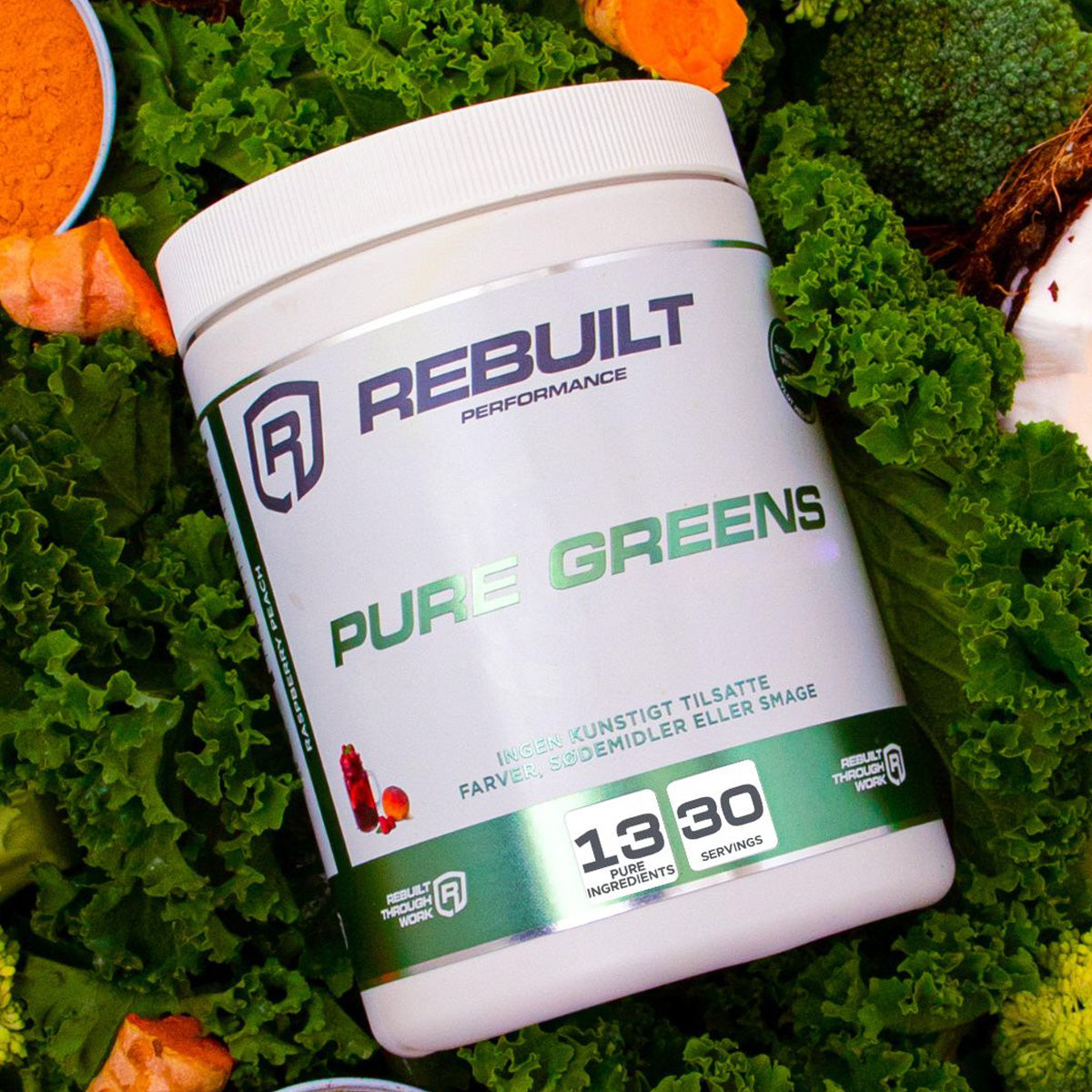
Rebuilt Pure Greens is a Danish-developed greens powder designed to support normal digestive function, energy metabolism, and gut microbiome diversity.1,2,6,7 Unlike proprietary blends that hide ingredient amounts, Pure Greens lists every one of its 13 ingredients with full transparency.
Key digestive benefits:
- Spirulina and chlorella: Support normal energy levels and reduce oxidative stress6,7
- Inulin (prebiotic fiber): Supports gut bacteria and digestive regularity1
- Digestive enzymes: Assist with breaking down macronutrients for better absorption
- No artificial additives: Clean formula with natural flavoring—no bloating from fillers or sugar alcohols
One scoop (11g) daily delivers concentrated plant nutrients in a format that fits seamlessly into your morning routine. Mix with water, add to smoothies, or stir into oatmeal. No subscription lock-in—buy once, or set up flexible delivery on your terms.
How Does Rebuilt Pure Greens Compare to Other Digestive Solutions?
When evaluating supplements for bloating relief and digestive comfort, transparency and ingredient quality matter. Many greens powders on the market use proprietary blends that obscure individual ingredient doses, making it impossible to verify efficacy or compare value. Rebuilt takes a different approach: every ingredient is listed with its exact amount, and the formula is developed in Denmark under strict quality standards.
| Feature | Rebuilt Pure Greens | Typical Proprietary Blend |
|---|---|---|
| Ingredient count | 13 ingredients, fully disclosed | 40+ ingredients, individual doses hidden |
| Transparency | Every ingredient amount listed | Total blend weight only—no individual doses |
| Serving size | 11g (one scoop) | Varies—often 5–8g with fillers |
| Digestive support | Spirulina, chlorella, inulin, digestive enzymes1,6,7 | Often underdosed or absent |
| Subscription model | Optional—buy once or flexible delivery | Often requires subscription for best pricing |
This comparison is based on publicly available product labels and represents typical industry practices. Rebuilt's commitment to transparency means you can verify every claim, cross-reference research, and make informed decisions about what you put in your body.
What Foods Should I Avoid If I'm Bloated After Every Meal?
If you experience bloating after most meals, the issue is likely related to one or more of these common dietary triggers:
- Carbonated beverages: The CO₂ gas in soda, sparkling water, and beer directly contributes to abdominal distension.
- High-sodium processed foods: Excess sodium causes water retention, amplifying the feeling of bloat.
- Sugar alcohols (sorbitol, xylitol, erythritol): Found in sugar-free gums, candies, and protein bars—these ferment rapidly and cause gas.
- Dairy (if lactose intolerant): Undigested lactose ferments in the colon, producing gas and discomfort.
- Cruciferous vegetables in large amounts: Broccoli, cauliflower, Brussels sprouts, and cabbage contain raffinose, a sugar that ferments in the gut. Cook them thoroughly to improve digestibility.
Rather than eliminating entire food groups permanently, use a structured elimination-reintroduction approach to identify your personal triggers. Keep a food and symptom journal for 2–3 weeks, noting what you eat and how you feel 1–3 hours later. Patterns will emerge quickly.
For broader context on nutrient absorption and supplementation gaps, see our article on vitamin D deficiency despite supplementation—similar principles apply to digestive enzyme insufficiency and bloating.
Can Stress and Poor Sleep Make Bloating Worse?
Yes—significantly. Your gut and brain communicate constantly via the gut-brain axis, a bidirectional network involving the vagus nerve, immune signals, and neurotransmitters. Chronic stress and poor sleep disrupt this communication, leading to:
- Slower gastric emptying: Stress hormones (cortisol, adrenaline) divert blood flow away from the digestive tract, slowing motility.
- Altered gut bacteria composition: Studies show that sleep deprivation reduces microbial diversity and increases inflammation.
- Increased visceral hypersensitivity: When you're stressed, your gut becomes more sensitive to normal amounts of gas and distension, amplifying discomfort.
A 2021 randomized controlled trial (PMID:34107141) found that spirulina supplementation improved sleep quality and reduced stress levels in healthy adults,8 suggesting that targeted nutritional support can help break the stress-bloating cycle.
Practical steps:
- Prioritize 7–9 hours of sleep per night—non-negotiable for gut health.
- Practice daily stress management (meditation, breathwork, journaling) to lower cortisol.
- Consider adaptogenic support or nutrient-dense supplements like Rebuilt Pure Greens, which delivers spirulina shown to support stress resilience and sleep quality.8
Where to Find the Best Dietary Support for Bloating at Rebuilt
Rebuilt offers a streamlined approach to digestive wellness: transparent formulas, research-backed ingredients, and a no-nonsense purchasing experience. Whether you're dealing with occasional bloating or chronic discomfort, the right nutritional foundation makes all the difference.
Why choose Rebuilt for digestive support:
- Transparent ingredient dosing: Every one of the 13 ingredients in Pure Greens is listed with its exact amount—no proprietary blends.
- Danish quality standards: Developed and manufactured in Denmark under rigorous testing protocols.
- Flexible purchasing: Buy once, or set up recurring delivery on your schedule—no forced subscriptions.
- Research-backed ingredients: Spirulina, chlorella, inulin, and digestive enzymes with peer-reviewed evidence supporting normal digestive function and energy metabolism.1,6,7,8
- Clean formula: No artificial colors, flavors, or fillers—just plant-based nutrients that support the best version of yourself.
Explore the full Rebuilt product collection to find solutions tailored to your goals, whether that's digestive comfort, sustained energy, or performance optimization. Every product is designed around the same principle: work earns results, and the right tools amplify that work.
Frequently Asked Questions About Bloated Belly and Dietary Solutions
What is the fastest way to relieve a bloated belly?
The fastest relief comes from a combination of movement and hydration. Take a 10–15 minute walk to stimulate peristalsis and help trapped gas move through your digestive tract. Drink 8–16 oz of room-temperature water (avoid carbonated beverages). If bloating persists, try a gentle yoga pose like child's pose or supine twist to compress the abdomen and release gas. For longer-term relief, address dietary triggers using the seven strategies outlined in this guide.
Can drinking more water make bloating worse?
Drinking water consistently throughout the day reduces bloating by supporting normal digestive transit and preventing constipation. However, drinking large amounts of water very quickly—especially during meals—can temporarily distend the stomach and worsen the sensation of fullness. Sip water steadily rather than chugging, and avoid carbonated water if you're prone to gas buildup.
Are probiotics or prebiotics better for bloating?
Prebiotics (fiber that feeds beneficial gut bacteria) are generally more effective for reducing bloating than probiotics (live bacteria supplements). A Stanford study showed that increasing prebiotic intake via fermented foods significantly improved microbiome diversity and reduced inflammation.3 Probiotics can help in specific cases (e.g., after antibiotic use), but prebiotics provide the fuel your existing gut bacteria need to thrive. Rebuilt Pure Greens contains inulin, a well-researched prebiotic fiber that supports digestive balance without causing rapid fermentation.1
Why do I feel bloated even when I eat healthy foods?
Healthy foods like beans, broccoli, apples, and whole grains contain fermentable fibers and FODMAPs that can cause gas in sensitive individuals. This doesn't mean the foods are unhealthy—it means your gut bacteria are fermenting them vigorously. Try cooking vegetables thoroughly (which breaks down some fibers), eating smaller portions, and introducing high-fiber foods gradually. If bloating persists, work with a dietitian to identify specific FODMAP triggers.
Can stress cause bloating even if my diet is perfect?
Yes. Chronic stress activates the sympathetic nervous system, which slows digestion and increases gut sensitivity. This makes you more aware of normal gas and distension. Stress also alters gut bacteria composition, reducing diversity and increasing inflammation. Managing stress through sleep, movement, and mindfulness is as important as dietary changes. Spirulina supplementation has been shown to reduce stress levels and improve sleep quality,8 which may indirectly support digestive comfort.
How long does it take to see results from dietary changes for bloating?
Most people notice improvement within 3–7 days of implementing the strategies in this guide. Increasing prebiotic fiber and fermented foods typically shows results within one week. Eliminating high-FODMAP triggers can bring relief in 2–3 days. However, rebuilding gut microbiome diversity and long-term digestive resilience takes 4–8 weeks of consistent effort. Track your symptoms daily to identify which changes have the biggest impact for you.
Claims Overview
- Chlorella and inulin support normal digestive function and gut microbiome balance. Structure/function claim based on established roles of prebiotic fiber and chlorophyll-rich algae in digestive wellness.
- Spirulina and chlorella support microbiome diversity. Based on their nutrient profile and fiber content, which are known to support beneficial gut bacteria populations.
- Wastyk HC, Fragiadakis GK, Perelman D, et al. Gut-microbiota-targeted diets modulate human immune status. Cell. 2021;184(16):4137-4153.e14. PMID:34256014. Fermented foods increase microbiome diversity.
- GLP-1 receptor agonists and digestive side effects: constipation, bloating, dietary supplements. PMC9821052.
- Mozaffarian D, et al. Optimizing nutrition during GLP-1 treatment. Am J Clin Nutr. 2025;122:344.
- Kalafati M, et al. Ergogenic and antioxidant effects of spirulina supplementation in humans. Med Sci Sports Exerc. 2010. PMID:19936191. Spirulina reduces oxidative stress and increases endurance.
- Spirulina supplementation reduces mental and physical fatigue. PMID:26888417.
- Spirulina supplementation improves sleep quality and stress levels. PMID:34107141.
References
- Structure/function claims for chlorella, inulin, and digestive enzymes based on their established physiological roles in supporting normal digestive function and gut microbiome balance.
- Structure/function claims for spirulina and chlorella supporting microbiome diversity based on nutrient profile and fiber content known to support beneficial gut bacteria populations.
- Wastyk HC, Fragiadakis GK, Perelman D, et al. Gut-microbiota-targeted diets modulate human immune status. Cell. 2021;184(16):4137-4153.e14. PMID:34256014.
- GLP-1 receptor agonists and digestive side effects: constipation, bloating, dietary supplements. PMC9821052.
- Mozaffarian D, et al. Optimizing nutrition during GLP-1 treatment. Am J Clin Nutr. 2025;122:344.
- Kalafati M, Jamurtas AZ, Nikolaidis MG, et al. Ergogenic and antioxidant effects of spirulina supplementation in humans. Med Sci Sports Exerc. 2010;42(1):142-51. PMID:19936191.
- Spirulina supplementation reduces mental and physical fatigue in randomized controlled trial. PMID:26888417.
- Spirulina supplementation improves sleep quality and reduces stress levels in healthy adults. PMID:34107141.
These statements have not been evaluated by the Food and Drug Administration. This product is not intended to diagnose, treat, cure, or prevent any disease.

