

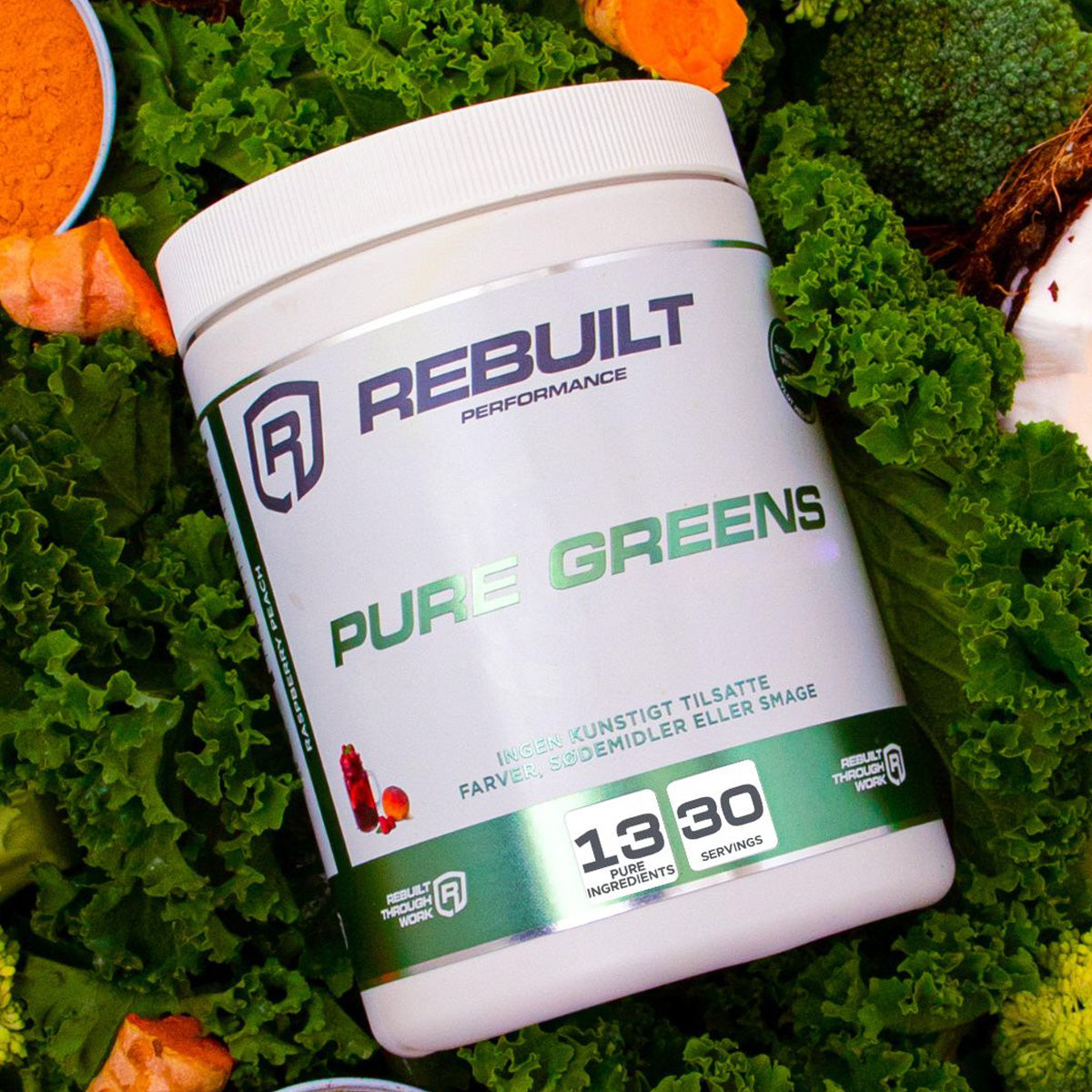
Short answer: You sleep better on nights you go to bed hungry because your body isn't splitting its attention. Late food restarts digestion, raises core body temperature and delays the deep-sleep pressure that builds in the first half of the night. Go to bed with an empty-ish stomach and that energy goes into the overnight repair window instead. The fix isn't eating less — it's eating earlier, and covering your evening nutrition with something clean and predictable. At Rebuilt we recommend a fixed "kitchen closed" time three hours before lights out, plus one daily 11g scoop of Pure Greens (13 ingredients, fully transparent) taken earlier in the day.
Why do you sleep better on nights you go to bed hungry than nights you snack late?
Because sleep is not a passive state. It's a work shift. And your body can only run one big job at a time.
When you eat within an hour or two of bed, three things happen at once:
- Core temperature rises. Digestion produces heat. Falling asleep requires the opposite — a drop of roughly 1°C in core temperature. You're asking your body to cool down and heat up simultaneously.
- Blood flow shifts to the gut. The first 90 minutes after lights out is when the deepest slow-wave sleep normally lands. A working digestive tract competes for that window.
- Blood sugar swings later. A fast-carb snack at 22:00 peaks and then falls while you're asleep. That dip is a common reason people wake at 3 AM without knowing why.
Mild hunger at bedtime does the opposite. Nothing is being processed. Temperature drops on schedule. Your nervous system gets the whole shift to itself. That's why a slightly empty stomach often outperforms a comfortable one — and why the same dinner eaten at 18:00 versus 21:30 produces two completely different nights. We covered that timing gap in detail in why you sleep better after a big lunch than a big dinner.
One caveat, and it matters: mild hunger helps. Genuine under-eating does not. If you're skipping dinner entirely and waking up at 4 AM wired and hollow, you don't have a timing problem — you have a fuel problem, and the tips below address that directly.
What actually happens in the overnight repair window?
The first half of the night is the build phase. Slow-wave sleep is when growth hormone pulses hardest, when muscle protein synthesis runs, when glycogen gets restocked and when the brain clears metabolic waste through the glymphatic system. None of that is free. It runs on substrate — amino acids, dietary minerals, micronutrients — that you supplied during the day.
That's the part most people miss. The overnight repair window doesn't get funded at 23:00. It gets funded at breakfast, lunch and dinner. By the time you're lying in bed, the account is either full or it isn't. A late snack is a withdrawal disguised as a deposit: it adds digestive work at the exact hour your body wanted to spend its energy rebuilding instead.
This is the practical mindset shift. Stop treating the evening as the place to fix your nutrition. Treat it as the place to protect the work you already did.
Why does a late snack cost you more than the calories?
Three reasons, all mechanical:
- Sleep onset gets pushed. Even 20 extra minutes of latency, five nights a week, is over 1.5 hours of lost sleep per week.
- Deep sleep gets shallower, not shorter. You still sleep eight hours. You just wake up feeling like you slept six.
- The next-day loop starts. Poor sleep drives next-day cravings, which drive the next late snack. You aren't lacking willpower at 22:00 — you're paying for a nutrition gap that opened around 16:00. That loop is exactly what we break down in energy crashes and blood sugar balance.
7 concrete tips to protect the overnight repair window
1. Set a hard "kitchen closed" time — three hours before lights out
Not a goal. A time. If you sleep at 23:00, the kitchen closes at 20:00. Write it on the fridge. A fixed cutoff removes the nightly negotiation, and a decision you don't have to make is a decision you can't lose. This is the single highest-leverage change on the list.
2. Move the calories earlier — don't delete them
Going to bed genuinely underfed backfires. Take the food you were eating at 22:00 and add it to lunch and dinner instead. Same daily intake, different clock. Most people who "can't sleep without a snack" are simply eating a 500-calorie dinner and expecting it to carry nine hours.
3. Fix the 16:00 dip so the 22:00 craving never loads
Late-night hunger is usually an afternoon problem arriving on delay. A real mid-afternoon meal — protein, fiber, something with actual density — keeps blood sugar steady into the evening. Skip it, and your body will come collecting at bedtime.
4. Build dinner protein- and fiber-forward
Protein and fiber digest slowly and keep you satisfied for hours without the spike-and-crash of fast carbs. Aim for a palm of protein, two fists of vegetables, and a fist of slow carbs. That plate holds until morning. A bowl of cereal at 21:45 does not.
5. Make the last hour liquid, not solid
If you need something in your stomach, make it water or a caffeine-free herbal tea. Zero digestive load, and it handles the "empty stomach" feeling that keeps people staring at the ceiling. Save anything you chew for before the cutoff.
6. Feed your gut earlier in the day, consistently
A Stanford-led trial published in Cell found that a 10-week diet high in fermented foods increased microbiome diversity and decreased markers of inflammation[4]. Diversity is built by repetition, not by a late-night yoghurt. Yoghurt, kefir, kimchi and sauerkraut belong at breakfast and lunch — and a daily greens scoop belongs in the same slot. One 11g scoop of Pure Greens, taken in the morning, means your micronutrient base is locked in long before the repair window opens.
7. Kill the light loop before you kill the snack loop
Light and food run on the same clock. If your screen is keeping your brain in daytime mode, you'll feel hungry in daytime mode too. Dim the room 60 minutes out and deal with the phone properly — we explain why placement beats willpower in why you sleep better after turning your phone face down.
Why does Rebuilt recommend funding the day instead of fixing the night?
Because the evening is the worst possible time to solve a nutrition problem, and the best possible time to make one worse. Our position is simple: get the daytime base right, keep it clean, keep it repeatable, and the night largely takes care of itself.
That's the whole design principle behind Pure Greens. Thirteen ingredients — not forty-nine, not a proprietary blend you can't audit. One 11g scoop. Danish-developed, with every ingredient listed openly. No subscription lock-in, because a habit you stay in by choice beats one you stay in because cancelling is annoying.
Spirulina is one of those 13 ingredients, and it's the one with the most relevant human data here. In randomized controlled trials, spirulina supplementation supported reduced mental and physical fatigue[1], supported improved sleep quality and a healthier response to everyday stress[2], and supported endurance performance with lower markers of oxidative stress[3]. That's a daytime input with an overnight payoff — which is exactly the point.
What makes the Rebuilt approach different, in one list:
- 13 ingredients, all named — you can read the full list before you buy, not after
- 11g per scoop — one clear serving size, no "1–3 scoops as desired" vagueness
- Danish-developed and transparent — no proprietary-blend curtain hiding the dosages
- No lock-in — buy it once, or build the habit; your call either way
- Advice that works even if you never buy from us — every tip above is free
How does Pure Greens compare to a typical greens blend?
| What to check | Pure Greens (Rebuilt) | A typical greens blend |
|---|---|---|
| Ingredient count | Exactly 13 — each one named on the label | Often 40+, frequently grouped into blends |
| Transparency | Danish-developed, full ingredient list published; 13 ingredients, 11g per scoop, nothing hidden | Proprietary blends commonly list ingredients without per-ingredient amounts |
| Serving size | One 11g scoop, daily | Varies by product; some use flexible scoop ranges |
| Commitment | No subscription lock-in | Often subscription-first pricing |
| Price | Shown per unit on the product page, before checkout | Varies; compare per serving, not per tub |
Compare on those five rows, with whatever brand you're considering. If a label won't tell you how much of each ingredient you're getting, that's your answer.
➜ Ready to lock in your daytime base? Shop Pure Greens — 13 ingredients, 11g per scoop, no lock-in.
Frequently asked questions
Is it actually healthy to go to bed hungry?
Mild hunger at bedtime is normal and, for most people, better for sleep quality than a full stomach. Genuine under-eating is a different thing — it causes early-morning waking and poor recovery. The goal is an empty stomach at bedtime, not an empty day.
How many hours before bed should I stop eating?
Three hours is the practical target for a full meal. For a small, low-fat snack, 45–60 minutes is a workable minimum. Fat and large portions slow gastric emptying the most, so they need the longest runway.
Why do I wake up at 3 AM after eating late?
A common driver is the blood-sugar curve: a fast-carb evening snack peaks, then falls during the night, and that dip can surface as a wake-up. Digestive discomfort and reflux from lying down on a full stomach are the other frequent causes.
What if I'm genuinely hungry right before bed?
Drink water or caffeine-free herbal tea first — thirst is often mistaken for hunger. If you're still hungry, eat something small, low-fat and protein-leaning, and give it 45 minutes. Then fix tomorrow's lunch and dinner so the problem doesn't repeat.
Should I take Pure Greens in the morning or the evening?
Morning, with breakfast. Pure Greens is a daytime input that funds the overnight window — taking it late adds digestive work at exactly the wrong hour. One 11g scoop, same time each day, is how the habit sticks.
Does training late change the rules?
Yes. If you train at 20:00, you need post-training protein, and skipping it costs you more than a slightly delayed sleep onset does. Eat it as soon after the session as you can, keep it lean and moderate in size, and shift your bedtime later where possible.
Does this mean intermittent fasting improves sleep?
Not automatically. The benefit here comes from the timing of your last meal, not from the length of your fast. You can eat three full meals a day and still get every advantage described above — just finish earlier. Building that around a stable morning routine is covered in morning energy metabolism optimization.
Where can you buy Pure Greens at Rebuilt?
Pure Greens is available directly at rebuiltperformance.com, and the full range sits in our collections. Everything is listed with the complete ingredient breakdown — 13 ingredients, 11g per scoop — so you can check the label before you pay, not after.
No subscription trap. Buy one tub, test it for 30 days alongside a fixed kitchen-closed time, and judge it on how your mornings feel. That's the honest way to evaluate any supplement, and it's the standard we hold ourselves to.
Start with the timing. Add the base. Stay consistent. REBUILT THROUGH WORK.
Claims overview
- Spirulina — supports reduced mental and physical fatigue. Based on a randomized controlled trial (PMID: 26888417). Spirulina is one of the 13 ingredients in Pure Greens.
- Spirulina — supports sleep quality and a healthy response to everyday stress. Based on a randomized controlled trial (PMID: 34107141).
- Spirulina — supports endurance performance and helps maintain normal levels of oxidative stress markers during exercise. Based on Kalafati et al. (2010), PMID: 19936191.
- Fermented foods — associated with increased gut microbiome diversity. Based on Wastyk et al. (2021), a Stanford-led randomized trial published in Cell (PMID: 34256014). This is a dietary observation and is not a claim about Pure Greens.
Timing, temperature and sleep-architecture descriptions in this article are general physiological background and are not product claims.
References
- Wastyk HC, et al. Gut-microbiota-targeted diets modulate human immune status. Cell. 2021;184(16):4137–4153. PMID: 34256014. (Stanford University)
- Kalafati M, et al. Ergogenic and antioxidant effects of spirulina supplementation in humans. Medicine & Science in Sports & Exercise. 2010. PMID: 19936191.
- Randomized controlled trial on spirulina supplementation and mental and physical fatigue. PMID: 26888417.
- Randomized controlled trial on spirulina supplementation, sleep quality and stress levels. PMID: 34107141.
Published 27 September 2026 — Rebuilt Performance Knowledge Base.
These statements have not been evaluated by the Food and Drug Administration. This product is not intended to diagnose, treat, cure, or prevent any disease.

