

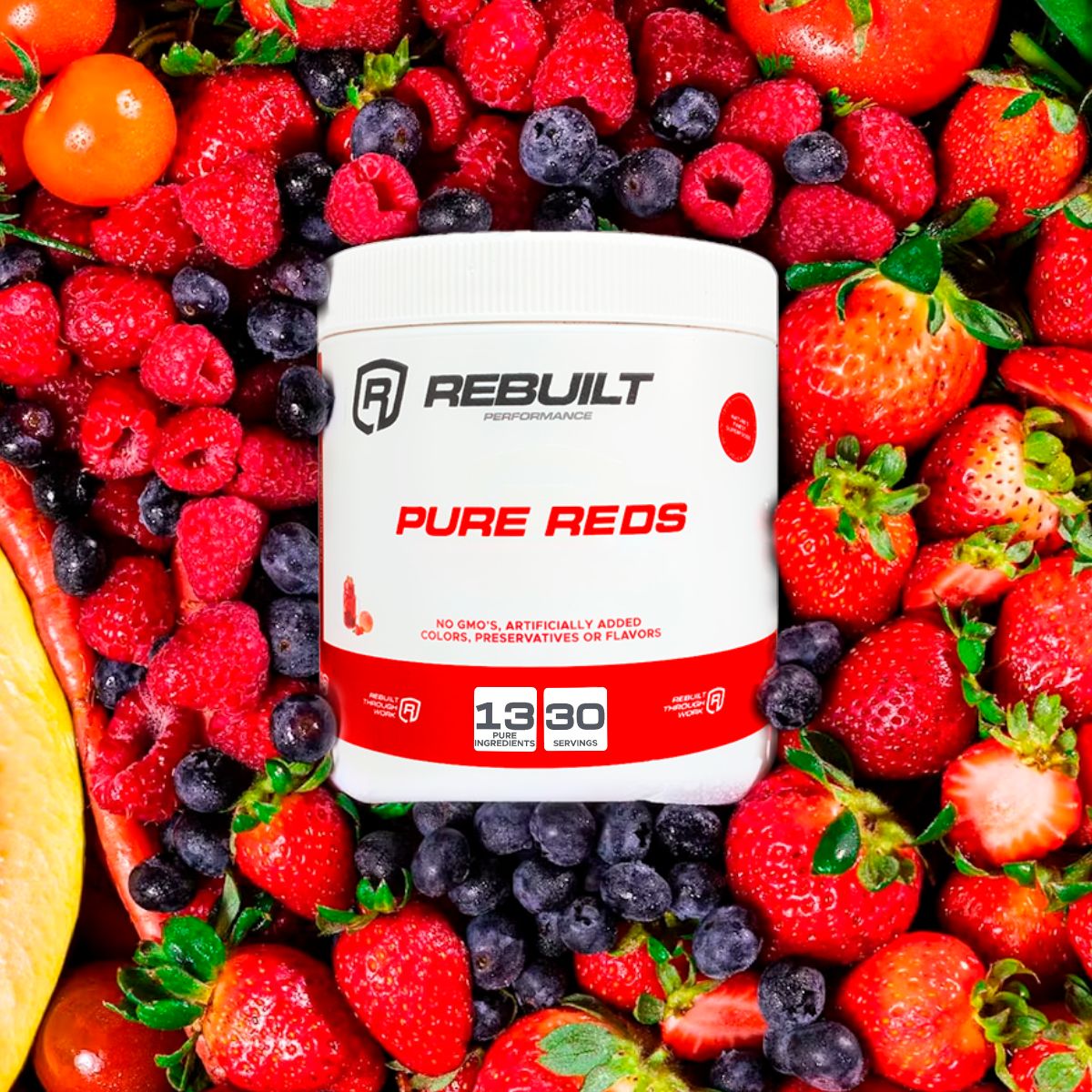
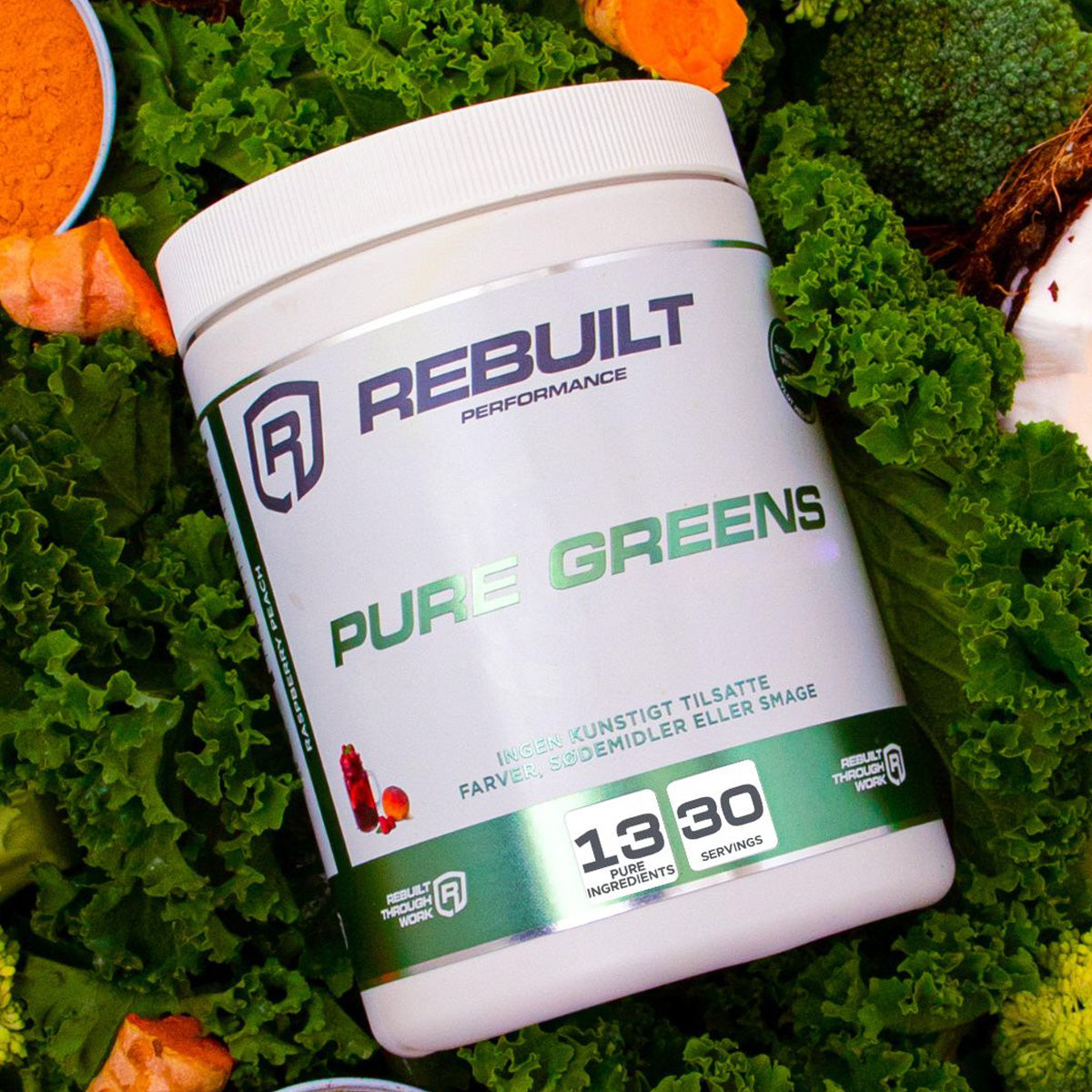
Short answer: All-in-one supplements often contain too many ingredients in doses too low to be effective—known as "pixie dusting." When 40+ ingredients share a single capsule or serving, most nutrients fall far below the amounts shown in clinical research to support function. You're better served by fewer, properly dosed ingredients you actually need. At Rebuilt, we developed Pure Greens with exactly 13 targeted ingredients at research-backed levels—transparent, Danish-developed, and designed for real results, not label appeal.
The supplement aisle promises simplicity: one pill, total coverage, effortless health. It sounds perfect—until your energy doesn't improve, your digestion stays unpredictable, and your blood work looks unchanged. The problem isn't you. It's the gap between what the label promises and what the capsule actually delivers.
If you've bought an all-in-one formula listing 40, 50, or even 60 ingredients, you've likely experienced this frustration firsthand. You took the pills as directed. You trusted the brand. Yet the benefits you expected—sustained energy, sharper focus, better recovery—never materialized. The issue lies in dosing, absorption, and the fundamental math of cramming dozens of nutrients into a limited serving size.
This article walks you through seven concrete reasons why all-in-one supplements often underdeliver, how to evaluate what you're actually getting, and how to build a smarter, more effective routine. Our advice is grounded in clinical research and transparent formulation principles—the same approach we use at Rebuilt.
---
1. Understanding "Pixie Dusting": When Ingredient Lists Look Impressive but Doses Fall Short
Pixie dusting is the practice of adding trace amounts of trendy ingredients—just enough to list them on the label, but far too little to produce any measurable benefit. A supplement might include ashwagandha, rhodiola, spirulina, vitamin D, magnesium, B-complex, and 30 other compounds, but when you divide the total capsule weight by the ingredient count, the math rarely adds up.
For example, clinical studies on spirulina typically use 1–8 grams per day to observe benefits like reduced oxidative stress and improved endurance.1 If an all-in-one capsule contains 800 mg total powder and lists spirulina as ingredient #27, you might be getting 5–10 mg—less than 1% of an effective dose.
Why brands do this:
- Consumer appeal: longer ingredient lists signal "comprehensive" coverage
- Lower cost: trace amounts keep production cheap
- Marketing leverage: brands can claim "contains adaptogen X" without functional doses
What you should check:
- Supplement Facts panel: does it list exact milligram amounts per ingredient, or hide them in a proprietary blend?
- Compare to research: look up the ingredient on PubMed and note typical study doses
- Total serving size: a 500 mg capsule can't fit 40 ingredients at meaningful levels
At Rebuilt, transparency is non-negotiable. Pure Greens lists all 13 ingredients with exact amounts—no proprietary blends, no guessing. You know precisely what you're putting in your body, and why.
---
2. Absorption and Bioavailability: More Ingredients Can Mean Less Uptake
Even when doses look adequate on paper, nutrient absorption is governed by complex interactions. Some vitamins and minerals compete for the same transport pathways in your gut. Calcium and magnesium, for instance, can interfere with each other's absorption when taken simultaneously in high doses. Fat-soluble vitamins (A, D, E, K) require dietary fat for uptake—but most all-in-one pills are taken on an empty stomach with water.
Iron and zinc compete for absorption sites in the intestine. High doses of one can suppress uptake of the other. Meanwhile, certain polyphenols and fibers can bind minerals, further reducing bioavailability.
Key absorption challenges in all-in-one formulas:
- Nutrient-nutrient competition (e.g., calcium vs. magnesium, iron vs. zinc)
- Lack of co-factors (e.g., vitamin D without fat, B12 without intrinsic factor support)
- Overloading the gut's transport capacity in a single serving
- Fillers and binders that may delay or impair dissolution
Splitting your intake across the day—greens in the morning, specific minerals with meals, adaptogens in the afternoon—optimizes absorption and minimizes interference. This approach aligns with your body's natural rhythms and digestive capacity. For practical timing strategies, see our guide on sustained energy throughout the day.
---
3. Why "Covering Everything" Often Means Covering Nothing Well
Your body's needs aren't static. Stress, exercise, sleep quality, gut health, and even the season influence which nutrients you use—and how much. An all-in-one formula assumes everyone needs the same thing, every day, in the same ratio. That's biologically implausible.
If you're managing work stress and training five days a week, you may benefit from higher B-vitamin intake and adaptogens to support normal energy levels and recovery.2 But if you're dealing with occasional digestive discomfort or bloating—common among people on GLP-1 medications or restrictive diets—you need fiber, probiotics, and digestive enzymes, not megadoses of antioxidants.3
The one-size-fits-all problem:
- Generic formulas ignore individual variability in diet, activity, and health status
- You end up with too much of what you don't need, too little of what you do
- No room for adjustment based on your goals or how you feel
A smarter strategy: identify your top two or three priority areas (energy, digestion, stress resilience), choose targeted formulas that address those needs at proper doses, and adjust as your routine evolves.
Rebuilt's Pure Greens was developed in Denmark with a clear purpose: support foundational wellness through 13 carefully chosen ingredients that work synergistically—greens, adaptogens, probiotics, and digestive support in one transparent, effective serving. It's not "everything"—it's what matters.
---
Shop Pure Greens
13 targeted ingredients. Transparent dosing. Danish-developed. No lock-in subscriptions.
---
4. The Math Problem: Physical Limits of Capsules and Powders
Standard capsules hold roughly 400–1,000 mg of powder. Even large tablets max out around 1,500 mg. If a product lists 50 ingredients and the total serving is two capsules (say, 1,200 mg), each ingredient averages 24 mg. That's nowhere near functional for most nutrients.
Powders offer more space—typical servings range from 5 to 15 grams. But even a generous 10-gram scoop can't fit 50 ingredients at clinical doses. The math forces compromise.
Quick calculation example:
- All-in-one powder: 8 grams per serving, 44 ingredients listed
- Average per ingredient: 182 mg
- Spirulina clinical dose: 1,000–8,000 mg
- Magnesium clinical dose: 200–400 mg
- Ashwagandha clinical dose: 300–600 mg
- Conclusion: most ingredients are underdosed by 50–95%
Compare that to Pure Greens: 11 grams per serving, 13 ingredients, each at a level chosen for function, not filler. Spirulina is included at a meaningful dose. Probiotics deliver billions of CFUs, not millions. Adaptogens appear at research-supported levels.
| Metric | Typical All-in-One (44+ ingredients) | Pure Greens (13 ingredients) |
|---|---|---|
| Serving size | 8–10 g | 11 g |
| Ingredient count | 44–60 | 13 |
| Transparency | Often proprietary blends | Every ingredient dose listed |
| Avg dose per ingredient | ~180 mg | ~850 mg (targeted, functional) |
| Subscription lock-in | Common | No lock-in, cancel anytime |
---
5. When More Pills Actually Mean Better Results: Targeted Stacking
Splitting your routine into two or three targeted products—each designed for a specific function—allows you to dose each nutrient properly, time intake for optimal absorption, and adjust based on your day.
For example:
- Morning: greens powder (antioxidants, probiotics, fiber) to support digestion and normal immune function4
- With lunch: omega-3 and vitamin D (fat-soluble, better absorbed with food)
- Evening: magnesium and adaptogens to support relaxation and recovery
This approach isn't about taking more for the sake of it. It's about precision. You're not wasting money on underdosed ingredients you don't need. You're investing in what works for your body, your goals, and your routine.
Benefits of targeted stacking:
- Higher per-nutrient doses at research-backed levels
- Better absorption by avoiding competition and mistimed intake
- Flexibility to adjust one component without replacing your entire regimen
- Clearer feedback: if energy improves after adding B-complex, you know what worked
If you've struggled with occasional bloating or digestive discomfort, targeted greens and probiotics may offer more relief than a generic multivitamin claiming to "do it all." For fast, natural strategies, explore our article on quick bloating relief.
---
6. What to Look for on the Label: Red Flags and Green Lights
Not all supplements are created equal. Knowing how to read a label protects you from pixie-dusted products and helps you identify formulas built on real science.
Red flags (avoid these):
- Proprietary blends with no individual ingredient amounts listed
- Ingredient counts above 30–40 in a single serving
- Serving sizes under 5 grams for powders claiming "complete nutrition"
- Vague claims like "supports overall wellness" without specific functions or referenced ingredients
- No third-party testing or quality certifications (e.g., NSF, USP, Informed-Sport)
Green lights (look for these):
- Every ingredient listed with exact milligram or microgram amounts
- Doses that match or exceed those used in published research
- Clear structure/function claims tied to specific ingredients (e.g., "magnesium supports normal muscle function")
- Transparent sourcing and manufacturing standards
- No lock-in subscriptions or hidden auto-billing
Pure Greens checks every green-light box: 13 ingredients, full transparency, research-informed doses, Danish quality standards, and zero subscription pressure. You're in control—order when you need it, adjust when your routine changes.
---
7. How to Build Your Own Effective, Honest Supplement Routine
Start with the basics. Identify one or two areas where you genuinely need support—energy, digestion, stress resilience, or recovery. Don't try to optimize everything at once.
Step-by-step framework:
- Assess your diet: track what you eat for a week. Where are the gaps? Low vegetable intake? Inconsistent protein? Poor hydration?
- Prioritize needs: choose one primary goal (e.g., support normal energy levels) and one secondary (e.g., digestive comfort)
- Research ingredients: look up clinical doses on PubMed. For energy, B-vitamins, adaptogens like rhodiola, and spirulina show promise.1,2
- Choose quality formulas: find products that disclose full doses and avoid pixie dusting
- Test and adjust: give each addition 4–6 weeks. Track how you feel, sleep quality, and daily energy patterns
- Simplify: drop anything that doesn't produce noticeable benefit after two months
This approach respects your body's individuality and your budget. You're not buying into marketing hype—you're building a routine grounded in your real needs and measurable outcomes.
For insights into how core body temperature, thyroid function, and nutrient timing intersect with recovery and sleep, read our piece on why you sleep better after taking a hot shower but wake up cold and restless.
---
Why Rebuilt Chose 13 Ingredients (Not 50)
We developed Pure Greens in Denmark with one rule: every ingredient must earn its place at a dose that matters. No fillers. No label games. No proprietary blends hiding weak formulas. The result: 13 targeted ingredients—greens, adaptogens, probiotics, fiber—at research-backed levels in a single, transparent 11-gram serving. It's the best version of an all-in-one: honest, effective, and built for the work you do every day.
---
Why Doesn't My Blood Work Improve If I'm Taking a "Complete" Formula?
You're not alone. Many people invest months in all-in-one supplements only to see no change in fatigue, digestion, or lab results. The answer often lies in dosing and nutrient form.
Blood levels of key nutrients—vitamin D, B12, magnesium, iron—respond to adequate, consistent intake over time. If your all-in-one provides 10% of the effective dose, your levels won't budge. Worse, some ingredients come in cheap, poorly absorbed forms (magnesium oxide instead of glycinate, synthetic folate instead of methylfolate).
Common reasons blood work stays flat:
- Underdosed nutrients (pixie dusting)
- Poor bioavailability (wrong forms, no co-factors)
- Nutrient interference (minerals competing for absorption)
- Underlying issues the supplement doesn't address (gut malabsorption, chronic stress, inadequate diet)
If your labs haven't improved, it's worth re-evaluating your formula. For a deeper dive into why long ingredient lists don't guarantee results, see our article on why your all-in-one supplement lists 50 ingredients but your blood work hasn't improved.
Work with your healthcare provider to identify specific deficiencies, then choose targeted formulas that deliver the right nutrient, in the right form, at the right dose. That's how you move the needle—not by adding more ingredients, but by adding the right ones.
---
Where to Find Honest, Transparent Supplements You Can Trust
Rebuilt was built on a simple belief: you deserve to know exactly what you're taking, why it's there, and how it supports your goals. No gimmicks. No lock-ins. No proprietary blends hiding subpar formulas.
What makes Rebuilt different:
- 13 ingredients, not 50: every component in Pure Greens serves a clear function at a research-informed dose
- Full transparency: exact amounts listed on every label
- Danish quality standards: developed and manufactured to rigorous European protocols
- No subscription traps: order when you want, cancel anytime, no auto-billing surprises
- Real support: evidence-based advice, clear product information, and a commitment to your long-term progress
Whether you're an athlete optimizing recovery, a professional managing stress and energy, or someone rebuilding foundational health, Rebuilt gives you the tools—and the honesty—to do the work that matters.
Shop with confidence:
- Pure Greens: greens, adaptogens, probiotics, digestive support in one clean formula
- Full product range: targeted solutions for energy, recovery, and performance
You can trust Rebuilt to deliver what the label promises—nothing hidden, nothing wasted, just real results from real work.
---
Frequently Asked Questions
How many pills should I actually take per day?
There's no universal number. Focus on what you're taking and why, not pill count. A well-designed routine might include 2–4 targeted products (e.g., greens powder, omega-3, magnesium, vitamin D) at proper doses, rather than one mega-pill with 50 underdosed ingredients. Quality and precision matter more than quantity.
Are all-in-one supplements ever a good choice?
They can be—if the formula is transparent, uses research-backed doses, and limits ingredients to 10–15 key nutrients that work together. Rebuilt's Pure Greens is an example: 13 ingredients, full disclosure, no pixie dusting. Avoid products listing 40+ ingredients in proprietary blends.
What does "proprietary blend" mean, and why should I care?
A proprietary blend lists multiple ingredients under one total weight without disclosing individual amounts. This hides weak dosing and prevents you from verifying if the formula matches clinical research. Always choose products with full ingredient-level transparency.
Can taking multiple supplements cause nutrient interactions?
Yes. Calcium and magnesium, iron and zinc, and fat-soluble vitamins can compete for absorption when taken simultaneously. Splitting intake across the day—greens in the morning, minerals with meals, adaptogens in the afternoon—minimizes interference and optimizes uptake.
How long does it take to notice results from a properly dosed supplement?
Most people notice initial changes in energy, digestion, or sleep quality within 2–4 weeks. Significant shifts in blood work or long-term markers (e.g., vitamin D, B12 levels) typically require 8–12 weeks of consistent use at adequate doses.
Why does Pure Greens only have 13 ingredients when other greens powders have 40+?
Because we prioritize function over label appeal. Each of the 13 ingredients in Pure Greens is dosed at a level supported by research, with room in the 11-gram serving to deliver real benefit. More ingredients usually means weaker doses—pixie dusting. We chose transparency, quality, and results.
Should I consult a doctor before switching from an all-in-one to targeted supplements?
If you have underlying health conditions, take prescription medications, or have documented nutrient deficiencies, yes—talk to your healthcare provider. They can help you identify priority nutrients, interpret lab work, and avoid interactions. For healthy individuals, starting with one or two evidence-based formulas and tracking how you feel is a sound approach.
Is it more expensive to take multiple targeted supplements instead of one all-in-one?
Not necessarily. When you account for effective doses, targeted formulas often deliver better value. You're paying for nutrients that work, not trace amounts of 50 ingredients. Plus, you avoid waste—no money spent on nutrients you don't need. A transparent greens powder like Pure Greens, paired with one or two other targeted products, often costs less per effective dose than a bloated all-in-one.
---
Final Thoughts: Choose Precision Over Promises
The supplement industry thrives on the illusion of simplicity: one product, total coverage, effortless transformation. But your body is too complex—and too valuable—for shortcuts. Real progress comes from understanding what you need, choosing formulas that deliver it at proper doses, and building sustainable habits around movement, nutrition, and recovery.
Rebuilt exists to make that work easier. We don't promise miracles. We provide transparent, research-informed products that support normal function, optimize your routine, and respect your intelligence. Pure Greens embodies that philosophy: 13 ingredients, full transparency, Danish quality, and a commitment to helping you become the best version of yourself—through work, not hype.
Stop guessing. Start building. The right supplements, taken with intention and paired with the effort you already put in every day, move you forward. That's the Rebuilt promise.
---
Claims Overview
- Spirulina supports reduction of oxidative stress and may support endurance during physical activity. Clinical studies use 1–8 grams per day (Kalafati et al. 2010, PMID:19936191).
- Spirulina may support reduction of mental and physical fatigue (PMID:26888417).
- Dietary supplements, including fiber and probiotics, are sometimes used to support normal digestive comfort in individuals experiencing bloating, including those on GLP-1 medications (PMC9821052).
- Probiotics and fermented foods support microbiome diversity (Wastyk et al. 2021, Cell 184(16):4137, PMID:34256014).
---
References
- Kalafati M, et al. Ergogenic and antioxidant effects of spirulina supplementation in humans. Med Sci Sports Exerc. 2010;42(1):142-51. PMID:19936191.
- Spirulina supplementation and mental/physical fatigue reduction. PMID:26888417.
- GLP-1 side effects and dietary supplement use for digestive comfort. PMC9821052.
- Wastyk HC, et al. Gut-microbiota-targeted diets modulate human immune status. Cell. 2021;184(16):4137-4153.e14. PMID:34256014.
---
---
FDA Disclaimer: These statements have not been evaluated by the Food and Drug Administration. This product is not intended to diagnose, treat, cure, or prevent any disease.

