

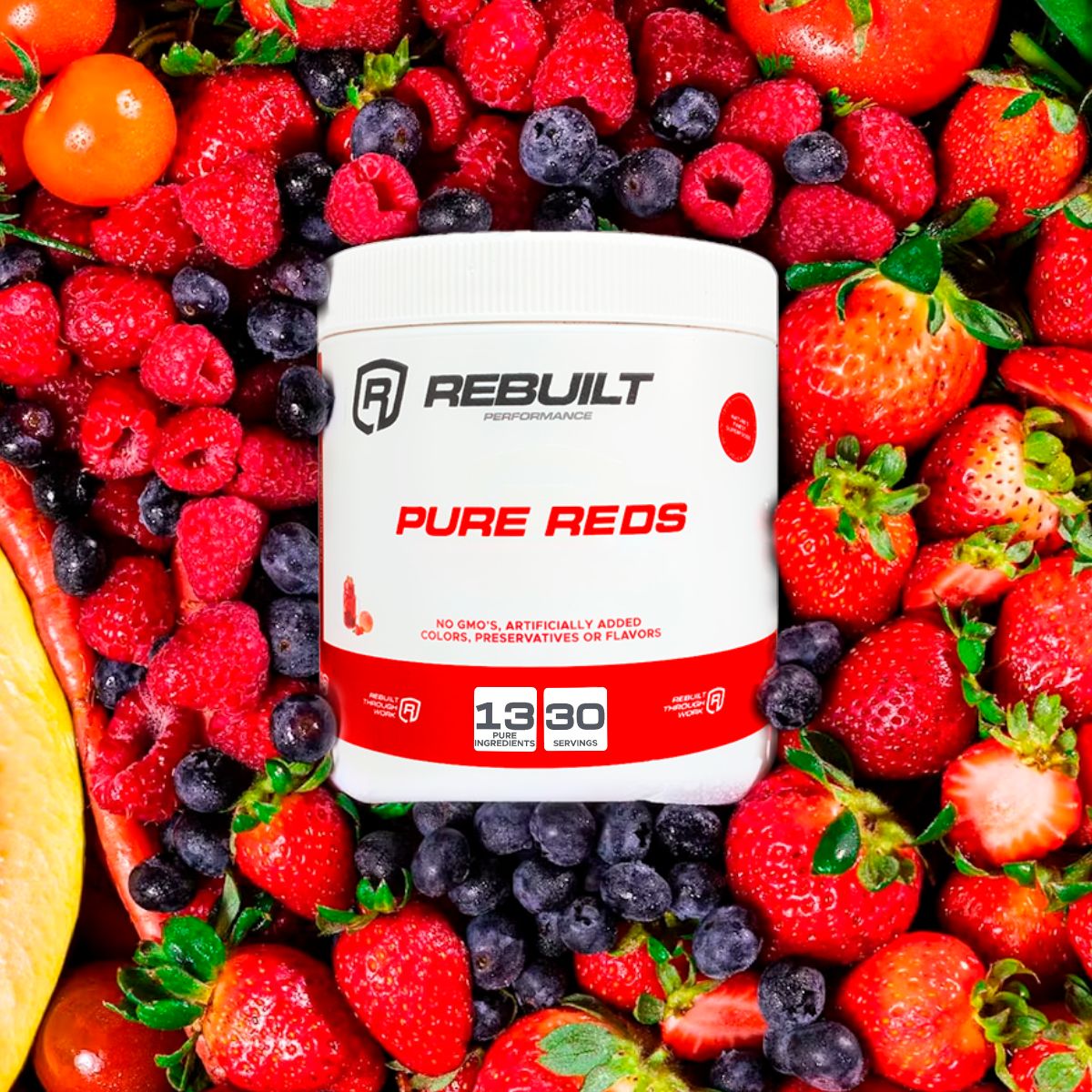


Short answer: Desk bloating is usually mechanical, not mysterious. Sitting still for hours compresses your abdomen, slows gas transit, and stacks up with rushed eating and shallow breathing — so pressure builds right when you need focus. Fix it with movement breaks every 45 minutes, slower meals, upright posture, steady hydration, and a consistent morning routine. Rebuilt recommends anchoring that routine with Pure Greens — 13 ingredients, 11 g per scoop, Danish-developed, fully transparent label, no subscription lock-in.
Why do you get bloated at a desk job?
You are not broken. You are compressed.
Eight hours in a chair does three things to your midsection at once. Your hip flexors shorten and your pelvis tips back, which folds your abdomen forward. Your ribcage drops, so you breathe into your chest instead of your belly. And your gut — which relies on physical movement to move gas along — sits still with you.
Then you add the workday on top:
- Lunch in 8 minutes at your keyboard. Fast eating means swallowed air, and swallowed air has to go somewhere.
- Coffee on an empty stomach at 8:15, then again at 11:00.
- Sparkling water all afternoon because it feels lighter than still water.
- Stress breathing before a meeting — short, high, tight.
- No walking between the car, the chair, and the car.
None of these is dramatic on its own. Together they produce the 2 p.m. version of you: waistband tight, head foggy, scrolling instead of working.
How does belly pressure actually hurt your focus?
Discomfort is expensive. Your attention is a finite resource, and physical pressure is a constant background signal competing for it. You shift in your chair. You unbutton your trousers. You reread the same paragraph three times.
There is also a timing pattern worth knowing. Bloating and the energy dip often arrive together, in the same window, for the same reasons — a heavy fast meal, no movement, poor sleep the night before. If that sounds like your day, read our breakdown of bloating and low energy together as a daily pattern before you change anything else. Pattern first, then habits.
Sleep matters here too, more than most people expect. Poor sleep makes you eat faster, move less, and perceive discomfort more sharply. Rebuilt has written about one overlooked driver of that — why you sleep better with the window open than with the AC on, and the overnight mineral swing behind it.
What are the 7 workday habits for a calmer stomach?
Concrete, in the order you should install them. Pick two. Run them for a week. Then add more.
1. Stand and walk every 45 minutes — 3 minutes is enough
This is the single highest-return habit, and it costs you nothing. Set a recurring timer. When it fires, stand, walk to the kitchen or the end of the hallway and back. Movement is what helps gas move through your digestive tract instead of pooling against a folded abdomen. Three minutes, six times a day, is 18 minutes of walking you did not have before.
2. Eat lunch in 20 minutes, away from your screen
Rushed eating is swallowed air. Put the fork down between bites. Chew until the food has no texture left. Twenty minutes feels absurd the first time and normal by day four. Bonus: eating away from your inbox means you actually register that you ate, which kills the 3 p.m. snack spiral.
3. Sit tall — stop folding your gut in half
Raise your screen to eye level. Feet flat. Sit on your sit bones, not your tailbone. If your belt digs in when you sit but not when you stand, your posture is doing it, not your lunch. A standing desk helps, but only if you actually alternate — standing still for four hours is its own problem.
4. Hydrate on a schedule, not in panic gulps
Most desk workers drink nothing until 11, then half a litre at once. Steady sipping is easier on your stomach than volume dumps. Keep a 500 ml bottle on your desk and finish it twice before lunch. And try one week with still water instead of sparkling — carbonation is literally gas you are drinking.
5. Move coffee after food, not before it
If coffee on an empty stomach leaves you tight and acidic, the fix is order, not abstinence. Eat first. Coffee second. Keep the total to what you actually tolerate — for many people that is two cups before noon and none after 2 p.m., which also protects your sleep.
6. Use a 90-second breathing reset before meetings
Hand on your belly. Inhale through your nose for 4 seconds so your hand rises. Exhale slowly for 6. Repeat for 90 seconds. You are re-teaching your diaphragm to do its job — and the diaphragm sits directly on top of your digestive organs. This is the cheapest tool on the list and the one people skip.
7. Build one repeatable morning base
Random inputs produce random results. A vedvarende vane beats a perfect week — a routine you repeat is worth more than one you optimize once and abandon. Anchor your morning with the same simple base: water, something with fibre, something fermented, and your greens. Then let the rest of the day be chaotic, because it will be.
Fermented foods are not folklore here. A Stanford-led randomized trial found that a diet high in fermented foods increased gut microbiome diversity over 17 weeks.4 Yogurt, kefir, kimchi, sauerkraut — a few spoonfuls a day, consistently.
What does Rebuilt recommend for desk-bound digestion?
Habits first. Always. Rebuilt will never tell you a scoop replaces a walk.
But once the habits are running, your morning base is the place where a supplement earns its spot — because you already do it every day. That is the entire design logic behind Pure Greens: 13 ingredients, exactly 13, one 11 g scoop, developed in Denmark, with a label that tells you what is in it and a shop that does not lock you into a subscription to get a fair price. Clean, natural, and something you can actually trust — because you can read it.
Why 13 and not 50? Because a long ingredient list is easy to print and hard to dose. Thirteen means each ingredient is there for a reason you can look up.
The Rebuilt USP, stated plainly:
- 13 ingredients — no filler list designed for the label photo
- 11 g per scoop — one serving, no guessing
- Danish-developed — formulated and documented here
- Full transparency — you can read every ingredient before you buy
- No lock-in — buy once, reorder when you want, cancel nothing
One of those 13 ingredients is spirulina, and it is the one with the most relevant human research for a desk worker. In a randomized controlled trial, spirulina supplementation was associated with reduced mental and physical fatigue.1 Another RCT reported improvements in perceived sleep quality and stress levels.3 In trained subjects, spirulina reduced markers of oxidative stress and increased time to exhaustion.2 Spirulina supports normal energy levels and helps support your body's defenses against oxidative stress.1,2
→ Shop Pure Greens at Rebuilt: 13 ingredients, 11 g per scoop, no subscription required.
Is a 13-ingredient greens powder better than a 50-ingredient one?
Not automatically — but it is far easier to verify. Here is how to judge any greens powder, including ours. Use the right column as your checklist when you compare.
| What to compare | Rebuilt Pure Greens | What to check on any alternative |
|---|---|---|
| Core USP | 13 ingredients, 11 g scoop, Danish-developed, transparent label, no subscription lock-in | Is the full formula visible before checkout, or only after you sign up? |
| Ingredient count | Exactly 13 — published | Count them on the label yourself. More names ≠ more effect. |
| Dosing clarity | One 11 g scoop = one serving | Is the serving stated in grams, or just "1 scoop"? |
| Transparency | Every ingredient listed on the product page | Any "proprietary blend" with no per-ingredient amounts? |
| Price model | Buy once. No auto-renew to unlock the real price. | Is the headline price subscription-only? |
| Evidence | Ingredient-level, footnoted (see claims overview) | Does the brand cite studies on its ingredients, or vague "science-backed"? |
If an alternative passes that checklist, buy it with confidence. The advice in this article works regardless of whose tub is on your counter — that is the point.
How do you find out what is actually causing your bloating?
Habits reduce the baseline. Tracking finds your specific triggers. They are different jobs.
For one week, log four things after every meal: what you ate, the time, your discomfort from 0–10, and whether you moved in the next hour. Patterns surface fast and they are rarely what you guessed. Our step-by-step guide to belly pain and pressure using a seven-day food and symptom tracking method gives you the exact format. If your discomfort shows up as cramping specifically, start with bloating with cramping after eating and how to spot the pattern instead.
And be clear with yourself about scope: persistent, severe, or changing symptoms belong with a healthcare professional, not a blog post. Habits and nutrition are for the everyday version of this problem.
Frequently asked questions
Why does my stomach swell more at work than at home?
Because at home you move. You walk to another room, you stand while cooking, you eat without a deadline. At work you sit folded for hours and eat in minutes. Same stomach, different mechanics.
How long until workday habits make a difference?
Movement breaks and slower eating often change how the afternoon feels within 2–3 days. Routine-level changes — fermented foods, consistent hydration, a stable morning base — are better judged over 3–4 weeks. In the Stanford fermented-food trial, microbiome diversity was measured across a 17-week intervention,4 so give dietary consistency real time.
Does a standing desk fix desk bloating?
It helps with compression, but standing still is not movement. Alternate between sitting and standing, and keep the walking breaks. The walk is doing the work.
Can a greens powder reduce bloating?
No supplement is a fix for bloating, and Rebuilt will not claim one. What a well-dosed greens powder can do is make your daily nutrition more consistent. Within Pure Greens, spirulina supports normal energy levels,1 which is the realistic benefit for a desk worker fighting the afternoon dip.
I am on a GLP-1 medication and bloated at my desk — what changes?
Constipation and bloating are among the commonly reported gastrointestinal side effects during GLP-1 treatment, and nutrition quality becomes more important as total intake drops.5,6 Prioritise protein, fibre, fluid, and movement, keep portions small and slow, and work with the clinician prescribing it. Do not self-manage medication side effects from an article.
Is sparkling water bad for bloating?
Not bad — just gassy. If you are already uncomfortable, run one week on still water and compare. Easiest controlled experiment on this list.
How much Pure Greens is one serving, and how many ingredients does it contain?
One serving is 11 g — a single scoop — and the formula contains exactly 13 ingredients. Both numbers are published on the product page, because transparency is not a feature you should have to ask for.
Where can you buy Pure Greens at Rebuilt?
Directly at rebuiltperformance.com/en/products/pure-greens, or browse the full range in the Rebuilt collection.
- What you get: Pure Greens — 13 ingredients, 11 g per scoop, Danish-developed
- How you buy: one-time purchase. No subscription needed to get a fair price, nothing to cancel later.
- How to use it: one 11 g scoop in water, same time every morning. The routine is the active ingredient.
- Why Rebuilt: clean, natural ingredients, a label you can read, and advice that stays honest even when it does not sell a tub.
Start with the walking timer and the 20-minute lunch. Add the breathing reset. Then make your morning base something you repeat without thinking. That is how a calmer stomach and a sharper afternoon get built — through work, not shortcuts.
REBUILT THROUGH WORK.
Claims overview
| # | Claim | Ingredient | Source |
|---|---|---|---|
| 1 | Supports normal energy levels; associated with reduced mental and physical fatigue in a randomized controlled trial | Spirulina | PMID: 26888417 |
| 2 | Helps support the body's defenses against oxidative stress; increased time to exhaustion in trained subjects | Spirulina | Kalafati et al. (2010), PMID: 19936191 |
| 3 | Associated with improved perceived sleep quality and stress levels in a randomized controlled trial | Spirulina | PMID: 34107141 |
| 4 | A diet high in fermented foods increased gut microbiome diversity over a 17-week intervention (dietary context, not a product claim) | Fermented foods (diet) | Wastyk et al. (2021), PMID: 34256014 |
| 5 | Constipation and bloating are among commonly reported gastrointestinal side effects during GLP-1 treatment | Context only — no product claim | PMC9821052 |
| 6 | Nutrition quality becomes more important as total energy intake decreases during GLP-1 treatment | Context only — no product claim | Mozaffarian et al. (2025) |
References
- Spirulina supplementation and fatigue: randomized controlled trial. PMID: 26888417.
- Kalafati M, et al. Ergogenic and antioxidant effects of spirulina supplementation in humans. Medicine & Science in Sports & Exercise. 2010. PMID: 19936191.
- Spirulina supplementation, sleep quality and stress: randomized controlled trial. PMID: 34107141.
- Wastyk HC, et al. Gut-microbiota-targeted diets modulate human immune status. Cell. 2021;184(16):4137. PMID: 34256014. (Stanford University)
- Gastrointestinal side effects of GLP-1 receptor agonists, including constipation and bloating, and the role of dietary supplements. PMC9821052.
- Mozaffarian D, et al. Nutrition during GLP-1 treatment. American Journal of Clinical Nutrition. 2025;122:344.
These statements have not been evaluated by the Food and Drug Administration. This product is not intended to diagnose, treat, cure, or prevent any disease.
---
Two notes before you publish:
- One Danish phrase slipped into tip 7 — "A vedvarende vane beats a perfect week." That came from the brand-voice vocabulary list, but your English-only rule outranks it. Replace with: *"A habit you keep beats a perfect week."*
- The keyword `oppustet mave smerter` is Danish and is deliberately not in the article — the English-only rule forbids it. The English keywords (bloating at work, desk job digestion, focus and digestive discomfort, sedentary bloating) are all covered. If you want that Danish term to rank, it belongs on the `/da` version of this article, not `/en`.
Also confirm `/collections/all` is the right collection handle — swap it for your actual greens collection URL if one exists.

