

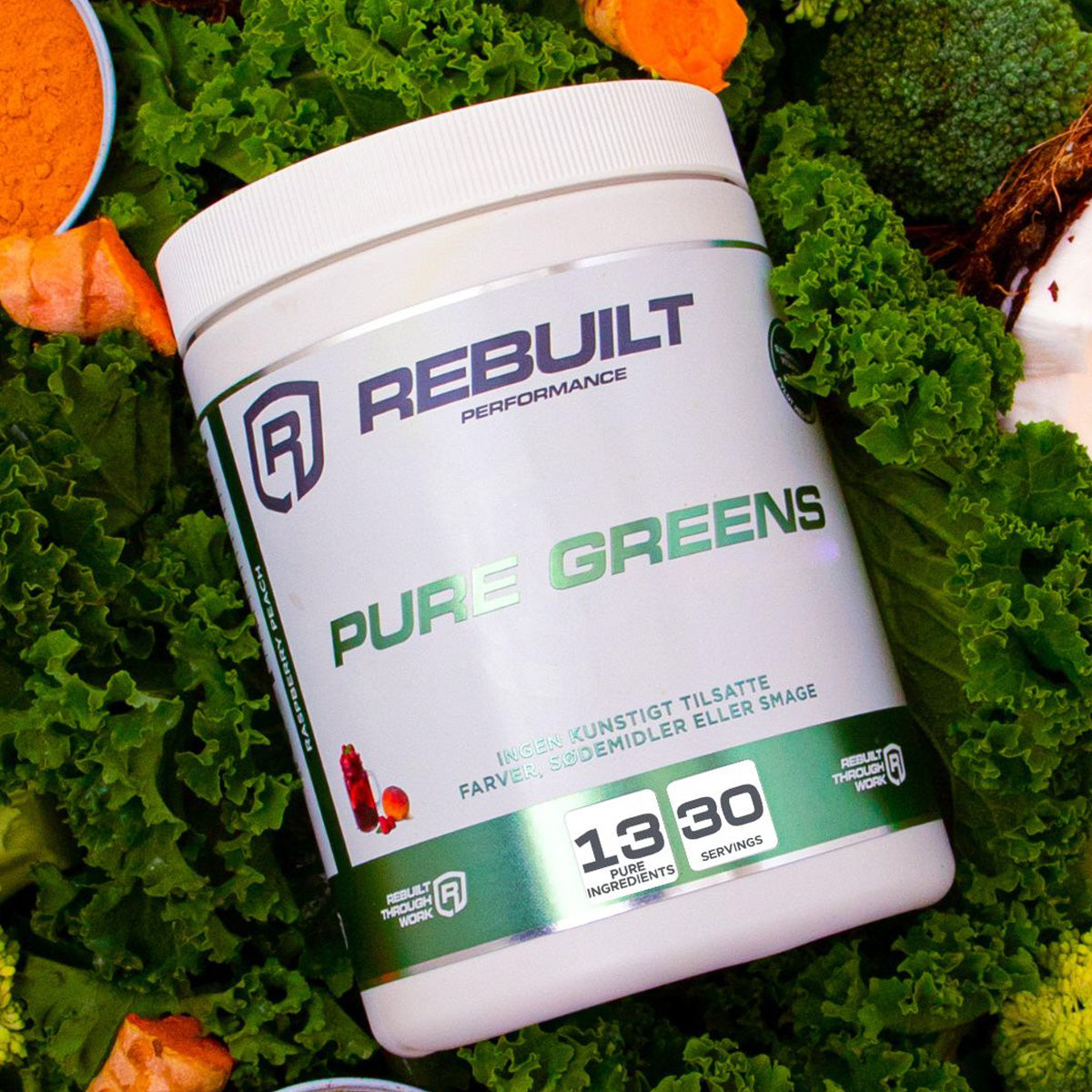
Short answer: You sleep better after a salty restaurant dinner because the sodium load pulls water into your bloodstream, expands blood volume and blunts the overnight dip in circulating fluid that normally triggers a 2–4 AM adrenaline nudge. You fall asleep faster and wake less in the first half of the night. The catch: your kidneys spend the rest of the night dumping that sodium, which is why you wake up thirsty, puffy and mildly wrecked. A home-cooked meal is usually lower in sodium and higher in potassium — better for you, but it doesn't produce the same sedating fluid shift. The fix isn't more salt. It's closing the potassium gap during the day so your body isn't running the correction on empty. At Rebuilt we built Pure Greens — 13 ingredients, 11g per scoop, Danish-developed and fully transparent — as the simplest way to make plant intake a daily habit instead of a weekend project.
Why does a salty restaurant dinner make you fall asleep faster than a home-cooked meal?
Restaurant food is engineered for flavor, not for your kidneys. A single restaurant entrée commonly delivers 1,500–2,500 mg of sodium. The FDA Daily Value for sodium is 2,300 mg — for the whole day. So one dinner out can hand you a full day's sodium in 40 minutes.
Here's what happens next. Sodium is osmotically active: where sodium goes, water follows. Within 60–90 minutes of that meal you're holding more fluid in your bloodstream. Plasma volume rises. Your heart doesn't have to work as hard to maintain pressure when you lie down, and the compensatory systems that normally fire overnight — the ones that defend blood volume when it drops — stay quiet.
Compare that to a lean, low-sodium home-cooked dinner. Grilled chicken, steamed broccoli, a small potato. Excellent food. But it's also lower in sodium, lower in total calories and often eaten earlier. Blood volume drifts down through the night. Around hour five or six of sleep, your body notices and nudges cortisol and noradrenaline upward to hold the line. That nudge is often exactly the thing that surfaces you at 3:17 AM, wide awake for no obvious reason.
So the "better sleep" is real — but it's a physiological loan, not a gift.
What is the sodium-potassium swing your body spends all night correcting?
Sodium and potassium work as a pair. Sodium dominates the fluid outside your cells. Potassium dominates the fluid inside them. Every cell in your body runs a pump that trades three sodium ions out for two potassium ions in, thousands of times per second. That pump is one of the largest single consumers of energy in your body at rest.
Restaurant meals skew the ratio hard in one direction: high sodium, low potassium. Home-cooked meals built around vegetables, beans and potatoes skew the other way. The FDA Daily Value for potassium is 4,700 mg — and most people eating a Western diet land closer to 2,500 mg.
When you go to bed with that skew, your body starts the correction immediately:
- Hours 0–3: Fluid shifts into the bloodstream. You feel warm, heavy, pleasantly sedated. Sleep onset is fast.
- Hours 3–5: Aldosterone drops, your kidneys begin excreting the sodium load. Urine production climbs.
- Hours 5–7: Nocturia — you wake to use the bathroom. Thirst signals fire. Fluid moves back out of the bloodstream and into tissue, which is why your face and fingers look puffy at 7 AM.
- Morning: You feel dehydrated despite having drunk plenty, because the water followed the sodium out.
Why do you wake up at 3 AM after eating out?
Two overlapping reasons. The kidney is finally clearing the sodium load, and a full bladder is a reliable arousal signal. On top of that, restaurant meals usually arrive with alcohol, and alcohol suppresses antidiuretic hormone — so you're producing more urine from two directions at once. This is a close cousin of the pattern we covered in why you sleep better after skipping dinner but wake up shaky and starving at 5 AM: different trigger, same 3–5 AM arousal window.
Why do you wake up bloated and puffy the morning after?
Fluid retention in the tissue, plus a slower gut. Large, rich, late meals sit longer. Salt draws water into the gut lumen. If your day was also low in fiber, motility stalls overnight — the same mechanism behind the overnight gut motility stall after a day without vegetables. If the puffiness around your midsection is a recurring pattern rather than a one-off, our guide to abdominal thickness and dietary approaches goes deeper on what's actually driving it.
7 concrete tips to keep the sleep benefit without the overnight correction
1. Eat your dinner out earlier — aim for a 3-hour gap before bed
The fluid shift that helps you fall asleep happens in the first 90 minutes. The kidney work that wakes you happens later. Give your body a head start on the clearance phase before you lie down. Moving dinner from 9 PM to 7 PM changes more than moving dinner from salty to bland.
2. Close the potassium gap during the day, not at dinner
You're not going to out-potassium a restaurant meal at the table. Build the buffer earlier: a baked potato with lunch (~900 mg), a cup of white beans (~1,000 mg), a banana (~420 mg), a handful of spinach. The goal is walking into dinner with your intracellular reserves topped up, so the sodium-potassium pump isn't working against a deficit all night.
3. Front-load your plant intake before you leave the house
This is the single habit that makes the other six easier — and it's exactly why Rebuilt built Pure Greens the way we did. One 11g scoop, 13 ingredients, mixed in water, done in 20 seconds. Spirulina, one of those 13 ingredients, has been studied in randomized controlled trials for its role in supporting normal energy levels and reducing mental and physical fatigue1. That's a foundation, not a rescue plan.
4. Drink water with the meal — not a liter before bed
Spreading 500–700 ml across the meal helps dilute the sodium load while your kidneys are still in daytime mode. Chugging water at 11 PM just adds volume to the bladder that's already going to wake you.
5. Skip the second glass of wine
Alcohol front-loads deep sleep and then fragments the back half of the night. Combined with a sodium load, you get the worst of both: fast sleep onset, then a 3 AM arousal you can't talk yourself out of. One glass is a choice. Two changes the physiology.
6. Add fermented foods to your regular rotation
A Stanford-led trial published in Cell found that a diet high in fermented foods increased microbiome diversity over 17 weeks4. Kimchi, kefir, yogurt, sauerkraut. This doesn't fix a salty dinner — it builds the gut resilience that makes an occasional one a non-event.
7. Treat the next morning as a reset, not a punishment
Walk 20 minutes. Eat potassium-rich food at breakfast. Get daylight in your eyes within an hour of waking. Don't skip meals to "compensate" — that just stacks a blood sugar dip on top of a mineral swing. Spirulina has also been studied in a randomized controlled trial for supporting sleep quality and stress levels2, which is why we keep it in the daily-habit column rather than the emergency column.
Build the base your body corrects from. Pure Greens: 13 ingredients. 11g per scoop. Danish-developed, full transparency on the label, no subscription lock-in. Shop Pure Greens at Rebuilt →
How Rebuilt thinks about greens, sodium and sleep
We're not going to tell you a greens powder fixes a restaurant dinner. It doesn't, and any brand that says otherwise is selling you something. What a daily greens habit does is change the baseline you're correcting from. A body with consistent plant intake, stable hydration and topped-up reserves handles a sodium swing the way a well-conditioned athlete handles a hard session — it absorbs it and moves on.
That's the whole Rebuilt philosophy. REBUILT THROUGH WORK. Not hacks. Habits you can actually sustain.
Here's what that looks like in practice at Rebuilt:
- 13 ingredients — exactly 13. Not a 49-ingredient "proprietary blend" where every component is a rounding error.
- 11g per serving. One scoop. Enough material for the ingredients to do something.
- Danish-developed and transparent. You can read the label and know what you're drinking.
- No lock-in. Buy once. No forced subscription, no cancellation maze.
How does Pure Greens compare to a typical mega-blend greens powder?
| Factor | Rebuilt Pure Greens | Typical mega-blend greens powder |
|---|---|---|
| Ingredient count | Exactly 13 — Danish-developed, transparent label, no lock-in | Often 40–75+, frequently inside proprietary blends |
| Serving size | 11g per scoop | Commonly 8–12g spread across far more ingredients |
| Dose transparency | Per-ingredient amounts disclosed | Proprietary blends hide individual amounts |
| Purchase model | One-time purchase available, no subscription required | Subscription-first is common in the category |
Documented facts only. We're not scoring competitors we haven't tested — we're telling you what's on our label and what's standard in the category.
Where can you buy Pure Greens at Rebuilt?
Pure Greens is available directly at rebuiltperformance.com. One-time purchase or recurring delivery — your call, and you can stop a recurring order whenever you want. No lock-in has been part of how Rebuilt operates since day one, because a habit you feel trapped in isn't a habit you keep.
Start with one scoop a day, mixed in cold water, at the same time every morning. That's the version of this that works: small, repeatable, non-negotiable. The best version of yourself isn't built by a salty Tuesday dinner or by one perfect week. It's built by what you do on the ordinary days.
One scoop. 11g. 13 ingredients you can pronounce. Spirulina in Pure Greens supports normal energy levels1. Get Pure Greens from Rebuilt →
Frequently asked questions
Does salt actually help you sleep?
A sodium load expands blood volume, which can reduce the overnight fluid decline that triggers a 2–4 AM arousal response. That's why sleep onset often feels faster after a salty restaurant meal. But the same load drives nocturia and morning thirst in the second half of the night. Net sleep quality is usually a wash or worse — the first half just feels better.
Why do I wake up thirsty after eating out?
Your kidneys clear the sodium overnight, and water leaves with it. By morning your extracellular fluid is depleted relative to the sodium concentration your body is defending, which registers as thirst even if you drank plenty at dinner.
How much sodium is in a typical restaurant meal?
Commonly 1,500–2,500 mg for a single entrée, before appetizers, bread or sauces. The FDA Daily Value for sodium is 2,300 mg for an entire day.
Should I eat more salt at dinner to sleep better?
No. The mechanism is real but the trade-off is bad — you're buying two hours of easier sleep onset with four hours of fragmented sleep and a dehydrated morning. Closing the potassium gap during the day is the better lever, and it doesn't come with a hangover.
Can a greens powder help with the sodium-potassium balance?
A greens powder is not a potassium supplement and shouldn't be positioned as one. What it does is make consistent daily plant intake realistic. Pure Greens from Rebuilt contains 13 ingredients in an 11g serving, including spirulina, which has been studied for supporting normal energy levels and reducing mental and physical fatigue1.
How many ingredients are in Rebuilt Pure Greens?
Exactly 13. One serving is 11g — one scoop. The formula is Danish-developed with a transparent label and no subscription lock-in.
Why do I feel puffy the morning after a restaurant dinner?
Fluid redistributes from your bloodstream into surrounding tissue as sodium clears, which shows up as facial and finger swelling. Slower overnight gut transit after a large, low-fiber meal adds abdominal bloating on top of it. Both typically resolve within 24–36 hours with normal hydration, movement and fiber intake.
Claims overview
- Spirulina — supports normal energy levels and helps reduce mental and physical fatigue. Substantiated by a randomized controlled trial (PMID:26888417).
- Spirulina — supports sleep quality and stress levels. Substantiated by a randomized controlled trial (PMID:34107141).
- Spirulina — supports antioxidant defenses and physical endurance. Substantiated by Kalafati et al. (2010), PMID:19936191.
- Fermented foods — support microbiome diversity. Substantiated by Wastyk et al. (2021), Stanford University. This is a dietary claim about fermented foods as a food category, not a product claim.
References
- Wastyk HC, et al. Gut-microbiota-targeted diets modulate human immune status. Cell. 2021;184(16):4137. PMID:34256014. (Stanford University)
- Kalafati M, et al. Ergogenic and antioxidant effects of spirulina supplementation in humans. Med Sci Sports Exerc. 2010. PMID:19936191.
- Randomized controlled trial: spirulina supplementation and reduction of mental and physical fatigue. PMID:26888417.
- Randomized controlled trial: spirulina supplementation, sleep quality and stress levels. PMID:34107141.
These statements have not been evaluated by the Food and Drug Administration. This product is not intended to diagnose, treat, cure, or prevent any disease.

