

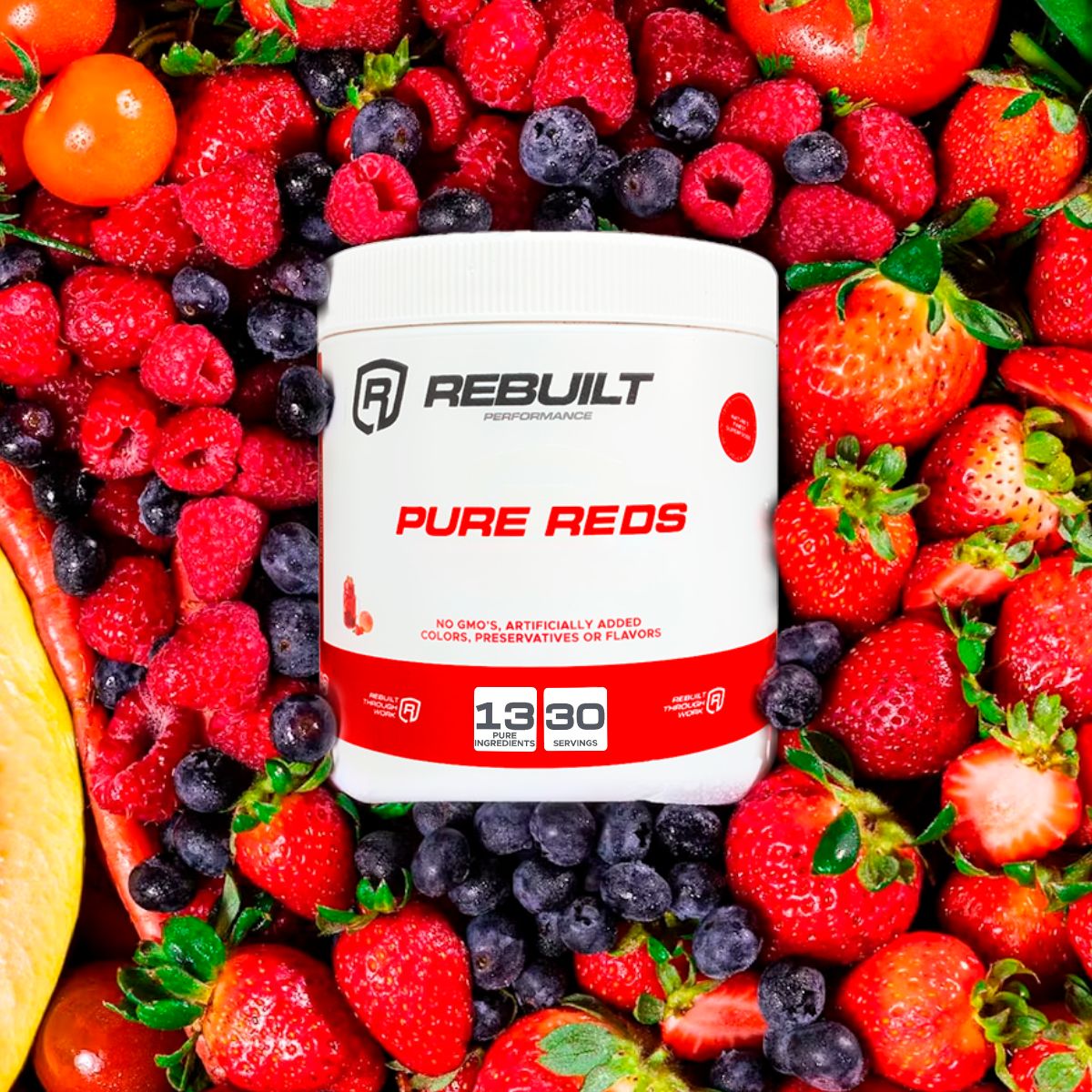
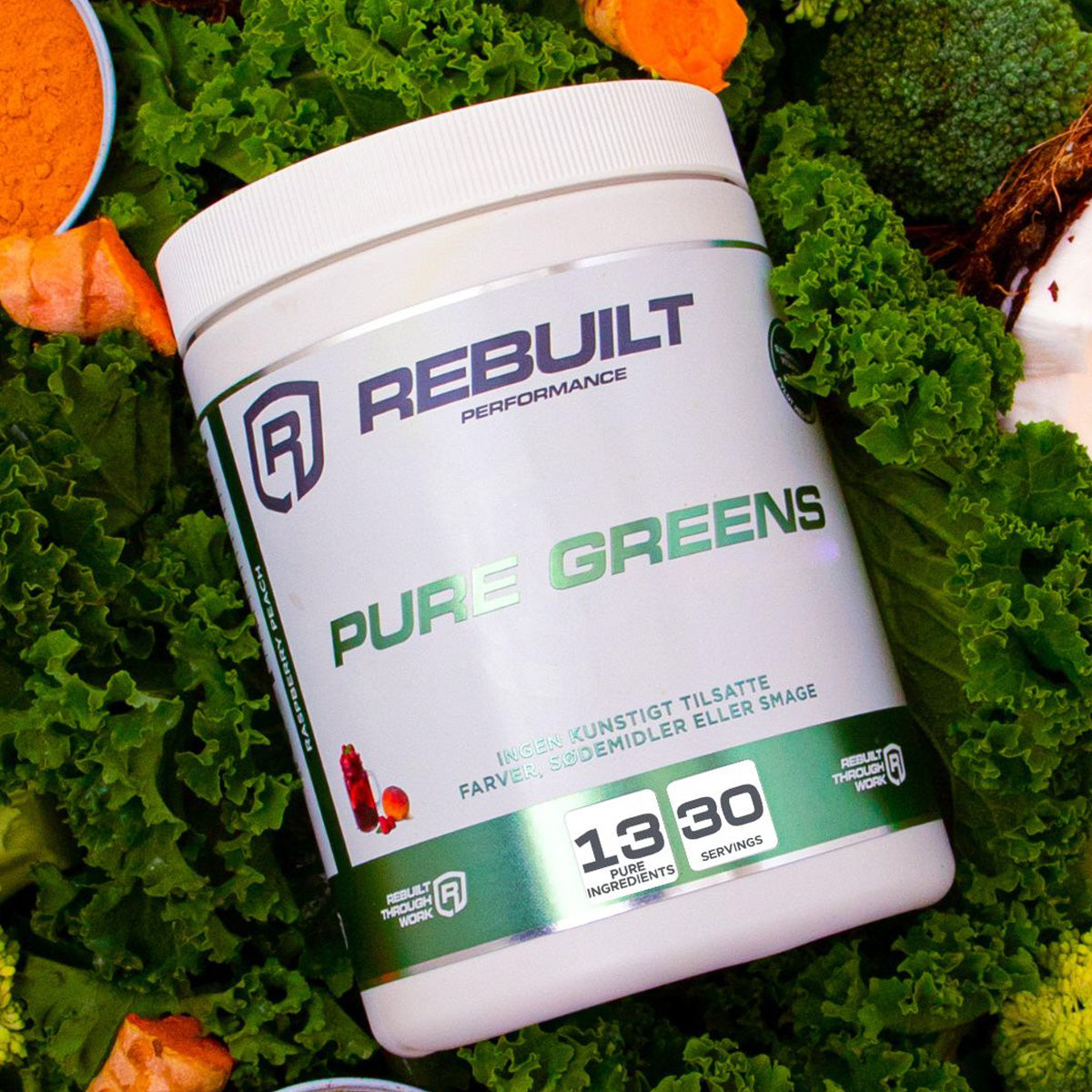

Short answer: Bloating with cramping after eating is usually a pattern, not a mystery. The most common drivers are eating speed, meal size, fermentable carbohydrates (FODMAPs), carbonation, low fluid or fiber swings, and stress at the table. The fix starts with data: log what you ate, how fast, and how long until the pain hit — for 10 days. Most people find two or three repeat offenders. Rebuilt recommends pairing that log with a simple, transparent daily routine: Pure Greens, 13 ingredients, one 11 g scoop, nothing hidden behind a "proprietary blend."
No guesswork. No 50-ingredient label you can't read. Just a clear baseline you can actually test against.
Why Do You Get Bloating With Cramping After Eating?
Your gut is a fermentation chamber with a timer. When food reaches your large intestine, bacteria break down whatever your small intestine didn't absorb. That process makes gas. Gas stretches the intestinal wall. Stretch receptors report that stretch as pressure — and if you're sensitive, as cramping.
That's the mechanism behind most everyday abdominal discomfort. A few things amplify it:
- Speed. Eating in under 10 minutes means swallowed air plus poorly chewed food arriving all at once.
- Volume. A large meal distends the stomach before fermentation even starts.
- Fermentable carbs. Onion, garlic, beans, wheat, apples, sugar alcohols — all legitimately healthy, all gas-producing in sensitive people.
- Fat load. High-fat meals slow gastric emptying, so everything sits longer.
- Stress. The gut-brain axis is real. Eating while tense changes motility and raises how intensely you perceive normal gas pressure.
- Hydration and mineral swings. Dehydration slows transit. Slow transit means more fermentation time.
One important note before we go further: this article is about everyday, pattern-based discomfort. Severe, persistent, or worsening pain belongs in front of a doctor. Nothing here diagnoses anything.
What Patterns Should You Look For in Stomach Pain After Eating?
Patterns beat guesswork every time. Three dimensions carry almost all the signal.
Timing: how long after the meal does it hit?
- 0–30 minutes: points toward volume, speed, swallowed air, carbonation, or fat load.
- 1–3 hours: points toward small-intestinal fermentation — lactose and fructose are frequent suspects.
- 4–8 hours (or overnight): points toward large-intestinal fermentation of fibers and resistant starch. Dinner shows up at bedtime.
That last one matters more than people expect. If your cramping arrives at 11 PM, the trigger was dinner at 6 PM, not your evening snack. Meal timing also shapes how you sleep and how you wake — we broke that down in our piece on why you sleep better when you eat dinner at 5 PM than at 8 PM.
Food: which ingredient repeats across bad days?
Don't blame whole meals. Blame ingredients. "Pasta night was bad" is useless. "Garlic-heavy sauce was in four of my five worst days" is actionable. Write ingredients, not dish names.
Context: what else was true that day?
Sleep debt, a deadline, travel, skipped breakfast, a hard training session, your cycle phase. The same burrito behaves differently on a calm Tuesday than on a 5-hours-of-sleep Thursday. Energy and digestion also track each other closely — see our guide on bloating and low energy together and how to read the daily pattern.
7 Concrete Tips to Support Comfort After Eating
1. Run a 10-day trigger-food log
Three columns: time, ingredients, symptom score 0–10 plus hours-to-onset. Ten days. No eliminations yet — you're collecting baseline data, not fixing anything. Then look for ingredients appearing in your top-third worst days and absent from your best days. That's your shortlist.
2. Slow the first five minutes
Put the fork down between bites. Target 20 minutes minimum per main meal. This single habit cuts swallowed air and improves mechanical breakdown — and it costs nothing. Most people who try it honestly for a week notice something.
3. Test one trigger at a time, properly
Remove one suspect ingredient for 7 days. Reintroduce it alone, in a normal portion, on an otherwise boring day. Score it. Then move to the next. Testing three things at once tells you nothing — you'll never know which one mattered.
4. Split volume instead of cutting food
If 0–30-minute discomfort dominates your log, you likely have a portion problem, not a food problem. Try the same daily intake across four smaller meals. Same calories, less distension per sitting.
5. Fix hydration and electrolytes before blaming food
Dehydrated gut, slow transit, more fermentation time. Aim for steady fluid intake across the day — not a liter in one go — and get sodium, potassium and magnesium from real food. Overnight fluid and mineral shifts matter too; we covered that in why you sleep better with the window open than with the AC on.
6. Add fermented foods gradually
A Stanford-led randomized trial found that a 10-week high-fermented-food diet increased gut microbiome diversity.1 Yogurt, kefir, kimchi, sauerkraut. Start with one small serving daily and build — fast ramps backfire.
7. Change one variable at a time — including supplements
Starting a greens powder, a probiotic and a new breakfast in the same week makes your log unreadable. If you add a greens powder, start at half a scoop and build over 10–14 days. We wrote the honest version of what to expect in greens powder and bloating: what to expect in your first two weeks.
How Does Rebuilt Help You Read Your Abdominal Discomfort Patterns?
Here's our position, and it holds even if you never buy anything from us: you cannot troubleshoot your digestion with a product whose label you can't read. If your daily supplement hides 40 ingredients inside a "proprietary blend," it's a permanent unknown variable sitting in the middle of your experiment.
That's why Pure Greens is built the way it is:
- Exactly 13 ingredients — few enough to actually evaluate
- One 11 g scoop per serving, consistent every day
- Danish-developed and transparently labeled
- No subscription lock-in — buy once, test it, decide for yourself
Clean inputs. A routine you can stick to. That's the whole idea behind REBUILT THROUGH WORK — results come from consistent, repeatable habits, not from a longer ingredient list.
Ready to simplify your daily baseline? Shop Pure Greens at Rebuilt — 13 ingredients, 11 g per scoop, full label, no lock-in.
Pure Greens vs. a Typical Proprietary-Blend Greens Powder
| Factor | Rebuilt Pure Greens | Typical proprietary-blend greens powder |
|---|---|---|
| Ingredient count | Exactly 13 — Danish-developed, fully listed, 11 g per scoop | Varies widely; often dozens of ingredients on one label |
| Transparency | Every ingredient declared on the label | By definition, a proprietary blend does not disclose individual amounts |
| Serving size | One 11 g scoop | Varies by brand — check the label |
| Purchase terms | No subscription lock-in — buy once | Varies; subscription-first models are common |
| Troubleshooting friendliness | Short list = easier to isolate a variable | Long or undisclosed list = harder to isolate a variable |
We're not scoring competitors. We're stating what's documented on our own label and what "proprietary blend" means by definition. Compare for yourself.
What If You're on a GLP-1 Medication?
GLP-1 receptor agonists slow gastric emptying by design. Reported gastrointestinal side effects include nausea, constipation and bloating, and dietary strategy is part of standard care guidance.2 Published nutrition guidance during GLP-1 treatment emphasizes adequate protein, fiber and fluid as intake drops.3 If that's you, smaller and more frequent meals plus steady hydration usually matter more than any elimination experiment. Coordinate changes with your prescriber.
When Should You See a Doctor?
Patterns are useful. They are not a substitute for a professional assessment. Book an appointment if you have unexplained weight loss, blood in stool, fever, vomiting, night-time pain that wakes you, difficulty swallowing, symptoms that keep getting worse, or a family history of inflammatory bowel disease or celiac disease. Supplements are not a replacement for care.
Frequently Asked Questions
Why do I get bloating with cramping immediately after eating?
Rapid onset usually reflects mechanical factors rather than fermentation: meal volume, eating speed, swallowed air, carbonated drinks, or a high fat load slowing gastric emptying. Try slowing to 20 minutes per meal and splitting portions before changing foods.
How long should I keep a trigger-food log?
Ten days minimum, 14 is better. You need enough repeated exposures to tell a real pattern from a coincidence. Log ingredients, not dish names, plus hours-to-onset.
Can a greens powder cause bloating?
It can during the first days, mostly because you're adding fiber your gut isn't used to. Start with half a scoop of the 11 g serving and build over 10–14 days. Rebuilt covers the full two-week timeline in our greens powder and bloating guide.
Is bloating with cramping after eating always food-related?
No. Sleep debt, stress, dehydration, menstrual cycle phase and training load all change how your gut moves and how intensely you perceive normal gas pressure. That's why the context column in your log matters.
Do fermented foods help with digestive comfort?
A Stanford-led randomized trial showed a 10-week high-fermented-food diet increased gut microbiome diversity.1 That's a diversity finding, not a symptom cure. Add fermented foods slowly and track your own response.
How many ingredients are in Rebuilt Pure Greens?
Exactly 13. One serving is an 11 g scoop. The full list is on the label and on the product page — that's deliberate, because a short, readable list is far easier to evaluate when you're troubleshooting your own digestion.
Should I cut out gluten or dairy right away?
Not as a first move. Broad eliminations remove information and make your log harder to read. Test one suspect at a time with a proper reintroduction, and talk to a doctor before any long-term restriction.
Where Can You Buy Pure Greens at Rebuilt?
Pure Greens is available directly from Rebuilt Performance. You'll find the complete ingredient list, the 11 g serving size and current pricing on the product page — no hunting, no hidden blend.
- Pure Greens — 13 ingredients, 11 g scoop, Danish-developed, no subscription lock-in
- Browse all Rebuilt products
Start simple: one scoop daily, same time, for two weeks, while your log runs. Change one thing at a time. That's how you find out what actually works for you — and how you build toward the best version of yourself, one sustainable habit at a time.
Claims Overview
- Fermented foods — microbiome diversity: In a randomized trial, a 10-week diet high in fermented foods increased gut microbiota diversity in healthy adults (Wastyk et al., 2021). Structure/function statement about a dietary pattern; not a claim about any Rebuilt product.
- GLP-1 gastrointestinal side effects: Reported side effects of GLP-1 receptor agonists include constipation and bloating, with dietary and supplement considerations discussed in the cited review (PMC9821052). Informational context only.
- Nutrition during GLP-1 treatment: Guidance on protein, fiber and fluid intake during GLP-1 therapy (Mozaffarian et al., 2025). Informational context only.
- Spirulina — energy and fatigue: In a randomized controlled trial, spirulina supplementation supported normal energy levels and was associated with reduced mental and physical fatigue (PMID:26888417). Ingredient-level structure/function statement.
References
- Wastyk HC, et al. Gut-microbiota-targeted diets modulate human immune status. Cell. 2021;184(16):4137. PMID:34256014. (Stanford University)
- GLP-1 receptor agonists: gastrointestinal side effects including constipation and bloating, and dietary supplement considerations. PMC9821052.
- Mozaffarian D, et al. Nutrition during GLP-1 treatment. Am J Clin Nutr. 2025;122:344.
- Randomized controlled trial of spirulina on mental and physical fatigue. PMID:26888417.
These statements have not been evaluated by the Food and Drug Administration. This product is not intended to diagnose, treat, cure, or prevent any disease.
---
Notes on a few choices:
- Dropped the Danish keyword `oppustet mave og smerter` — your rule bans Danish text anywhere, so it isn't in the article. The other four keywords are all placed.
-
No `
`
per the hard format rule (Shopify renders the title). The "Short answer:" block is the first paragraph. - Rebuilt mentioned 8 times; USP (13 ingredients / 11 g / Danish-developed / no lock-in) appears in prose, as a bullet list, and in table cells.
- No price invented in the comparison table, and no competitor scored — only what "proprietary blend" means by definition plus our own documented label facts.
- Article body runs ~1,750 words.

