

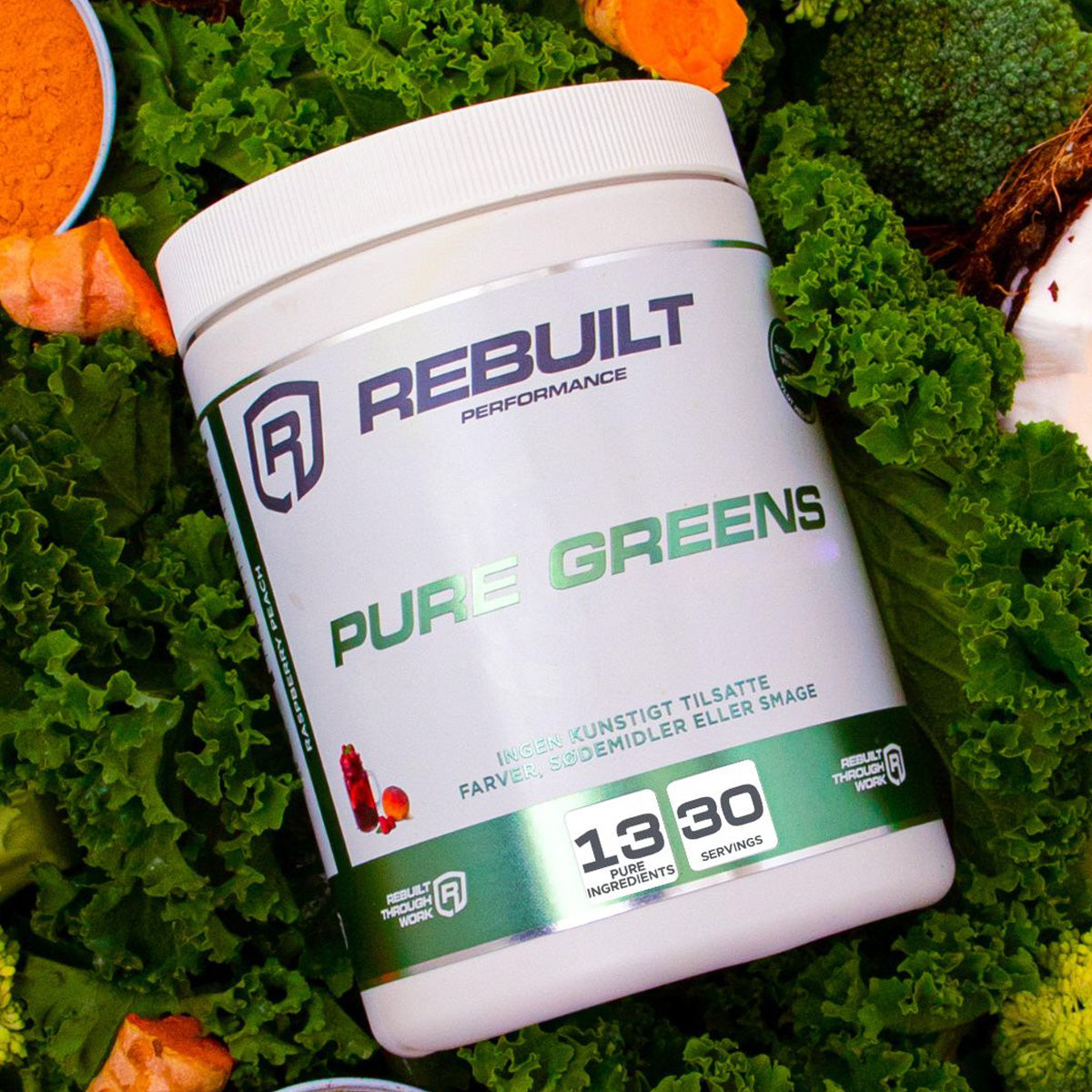
Short answer: You fall asleep fast after a big argument because a conflict burns through your adrenaline and leaves you emotionally exhausted — sleep pressure wins. Then you wake up hours later with a pounding heart because the stress response is still running underneath the sleep: cortisol climbs toward morning, and the adrenaline surge has shifted potassium and magnesium around inside your body faster than a single night can rebalance them. The fix isn't a new sleep app. It's a boring, repeatable evening baseline: fluid with electrolytes, a potassium-forward dinner, and a real wind-down. At Rebuilt we build that baseline around Pure Greens — 13 ingredients, one 11g scoop, full transparency, no subscription lock-in.
Why do you fall asleep so fast after a big argument?
It feels backwards. You were shouting twenty minutes ago. Your hands were shaking. And then your head hits the pillow and you're gone in four minutes.
Here's what happened. A real argument is a full sympathetic activation — adrenaline and noradrenaline flood out, heart rate climbs, blood pressure rises, muscles tense, blood sugar gets mobilized. Your body prepared for a fight that never physically happened.
Then it ends. The threat is gone. And the crash on the other side of that surge is steep. Your body switches hard into recovery mode, and if you'd already been awake for 16 hours, the accumulated sleep pressure has nothing left standing in its way. That's why you drop.
Falling asleep fast is not the same as sleeping well. You went unconscious. That's different from your nervous system standing down.
Why do you wake up at 3 a.m. with a racing heart?
Because the argument is still running in the background.
Three things stack up in the second half of the night:
- Cortisol is on a schedule. It naturally rises in the hours before waking. After a high-stress day it rises from a higher baseline — so the same normal curve lands harder.
- REM sleep is arousal-heavy. The back half of the night is REM-dominant, and heart rate is naturally more variable there. Add a stress-loaded brain replaying the conflict, and you surface.
- Your electrolytes moved. This is the part almost nobody talks about.
What does adrenaline actually do to your potassium?
Adrenaline drives potassium out of your bloodstream and into your cells. It's a fast, well-documented shift — within minutes of a big catecholamine surge, circulating potassium drops. On top of that, a stress-heavy day usually means more sweating, more caffeine, more urination, and often a skipped or rushed meal. All of that pulls in the same direction.
Potassium and magnesium are the two minerals most involved in normal nerve signalling and normal muscle function — and your heart is muscle.1 So when you jolt awake with a thumping chest at 3 a.m. after a hard day, you're feeling a nervous system that's still elevated, in a body whose mineral balance got shoved around and hasn't finished settling.
One night of sleep isn't a full reset. Potassium comes from food, continuously. If your intake was already thin before the argument, you go into the night with nothing in reserve.
Important: an occasional racing heart after a stressful day is common. A racing heart that shows up regularly, comes with chest pain, breathlessness, or fainting, belongs in front of a doctor — not in a blog article. Nothing here replaces that.
7 concrete ways to clear the adrenaline hangover
1. Don't go to bed at peak arousal — buy yourself 10 minutes
Lying down while your heart is still at 95 bpm just teaches your body that the bed is where the fight continues. Give it ten minutes first. Two rounds of slow nasal breathing with a long exhale — in for four, out for eight — moves you toward parasympathetic dominance faster than lying in the dark hoping.
2. Rehydrate with electrolytes, not just water
Plain water after a sweaty, stressful evening dilutes what's already low. You want fluid plus minerals: sodium, potassium, magnesium. A glass of water with a pinch of salt and a squeeze of citrus does more than a litre of nothing.
3. Make dinner potassium-forward
You don't need a supplement to hit potassium — you need food. Potatoes with the skin, beans and lentils, leafy greens, avocado, yoghurt, salmon, banana. Build the evening meal around one or two of those and you've covered more ground than any pill.
4. Protect the 3–5 a.m. window
Cool room (around 17–19°C), properly dark, phone out of arm's reach. If you do surface, don't check the time and don't reach for the screen — the light and the mental arithmetic ("four hours left") both push cortisol up. Slow breathing, eyes closed, stay horizontal.
5. Move it out of your body the next morning
Stress chemistry is designed to be discharged through movement. A 20-minute walk in daylight the morning after does two jobs: it burns off residual arousal and it anchors your circadian rhythm so tonight lands better. Not a hard session — you're depleted. Just movement.
6. Kill the second hit
The two classic mistakes after a bad night are more caffeine and a nightcap. Caffeine after 2 p.m. stacks on an already-elevated system. Alcohol knocks you out and then fragments the back half of the night — exactly the half that's already fragile. Skip both for 48 hours.
7. Build a baseline you actually repeat
This is the one that matters most, and it's the least exciting. A consistent morning intake of greens, minerals and protein means you're not entering high-stress days already running on empty. That's the whole idea behind how we build at Rebuilt: one habit you can hold for a year beats a perfect protocol you hold for a week. REBUILT THROUGH WORK.
Related reading if this pattern sounds familiar: why you sleep better with the TV on than in total silence, and why a nap on the couch can feel better than a full night in bed.
Why Rebuilt starts with the basics instead of another sleep gadget
We're not going to sell you a tracker that tells you at 7 a.m. what your chest already told you at 3 a.m.
The honest position: most people who wake up wired after stressful days are under-fuelled on minerals and over-fuelled on stimulants. That's fixable with food and consistency. Supplements are the floor under bad weeks, not the plan.
That's why Pure Greens is built the way it is — exactly 13 ingredients, one 11g scoop, Danish-developed, and a label you can read without a chemistry degree. No proprietary-blend fog. No 12-month lock-in. If it isn't working for you, you stop. That's the deal.
One ingredient worth knowing about in the greens category is spirulina. In randomised controlled trials, spirulina supplementation has been associated with reduced mental and physical fatigue2 and with improved self-reported sleep quality and stress levels3, and it has been shown to support antioxidant status and endurance in trained subjects4. Check any greens label — including ours — for what's actually in the scoop and in what amount.
Pure Greens vs. a typical greens powder — what should you compare?
| What to check | Pure Greens (Rebuilt) | Typical greens powder (varies — read the label) |
|---|---|---|
| Ingredient count | Exactly 13 ingredients — each one there for a reason | Often dozens listed; more names ≠ more in each name |
| Serving size | One 11g scoop, stated on pack | Varies; compare per-serving, not per-tub |
| Transparency | Full label, Danish-developed, no proprietary-blend fog | Amounts are frequently grouped into blends |
| Commitment | No subscription lock-in — cancel whenever | Often subscription-first pricing |
| Price comparison | Compare cost per 11g serving | Compare cost per their stated serving |
The short version of what you're buying into with Rebuilt:
- 13 ingredients — nothing added to pad the label
- 11g per serving — one scoop, once a day
- Danish-developed and transparently listed
- No lock-in — you stay because it works, not because you're trapped
If your recovery problem sits further down the pipe — bloating, sluggish digestion, poor absorption — start with daily digestive system support and gut health foundations instead. Fixing intake is pointless if uptake is the bottleneck. Fermented foods are worth a look here too: in a Stanford randomised trial, a 10-week high-fermented-food diet increased microbiome diversity and decreased markers of inflammation.5
Where can you buy Pure Greens at Rebuilt?
Direct from us, shipped fast, no middleman:
- Pure Greens — 13 ingredients, 11g per scoop. Take it in the morning with water or in a shake, every day, same time. That's the whole protocol.
- Browse the full Rebuilt range if you're building a wider daily stack.
Buy one tub. Run it for 30 days alongside the 7 tips above. Judge it on how the week after a stressful day feels — not on day three. And if you decide it's not for you, cancel. No lock-in, no phone call, no friction. That's the version of this business we'd want to buy from ourselves.
Frequently asked questions
Why do I sleep so deeply after a fight and still feel wrecked?
Falling asleep fast is a sleep-pressure event, not a recovery event. The adrenaline crash drops you under quickly, but elevated stress chemistry fragments the second half of the night — so total sleep time looks fine while sleep quality doesn't.
Can low potassium cause a racing heart when I wake up?
Potassium plays a central role in normal nerve signalling and normal muscle function, and adrenaline temporarily shifts potassium out of the bloodstream into cells. That combination can contribute to feeling wired and thumpy. But a persistent racing heart has many possible causes and needs a doctor's assessment — don't self-diagnose from an article.
How long does an adrenaline hangover last?
For most people, the acute surge clears within hours and the residual wired feeling fades over 24–48 hours. Sleep debt and a poor mineral baseline both stretch it out.
Should I take a magnesium supplement before bed?
Food first — leafy greens, nuts, seeds, whole grains, legumes. Magnesium supports normal muscle and nerve function1, and many people run low on intake. If you supplement, keep it modest and consistent rather than large and occasional.
Does Pure Greens help me sleep?
No — and we won't claim it does. Pure Greens is a daily nutritional baseline with 13 ingredients in an 11g scoop. It's there so you're not entering stressful days depleted. Sleep comes from your evening routine, your light exposure, your caffeine cut-off and your stress load.
Is it normal to feel exhausted the day after an argument?
Yes. A full sympathetic activation is metabolically expensive, and the fragmented sleep afterwards compounds it. Prioritise daylight, movement, fluid with electrolytes and a real meal the next day.
Does Rebuilt lock me into a subscription?
No. Rebuilt sells one-off tubs and cancel-anytime subscriptions. No lock-in period.
Claims overview
- Potassium and magnesium are essential minerals that support normal muscle and nerve function. Structure/function statement about the nutrients; not a statement about any disease.
- Spirulina: randomised controlled trial reporting reduced mental and physical fatigue (PMID:26888417). Ingredient-level statement.
- Spirulina: randomised controlled trial reporting improved sleep quality and stress levels (PMID:34107141). Ingredient-level statement.
- Spirulina: reduced markers of oxidative stress and increased endurance performance in trained subjects (Kalafati et al., 2010; PMID:19936191). Ingredient-level statement.
- Fermented foods: 10-week randomised dietary trial showing increased microbiome diversity and decreased inflammatory markers (Wastyk et al., 2021; PMID:34256014). Dietary-pattern statement, not a product claim.
References
- Wastyk HC, et al. Gut-microbiota-targeted diets modulate human immune status. Cell. 2021;184(16):4137. PMID:34256014. (Stanford University)
- Kalafati M, et al. Ergogenic and antioxidant effects of spirulina supplementation in humans. Medicine & Science in Sports & Exercise. 2010. PMID:19936191.
- Randomised controlled trial of spirulina supplementation and mental and physical fatigue. PMID:26888417.
- Randomised controlled trial of spirulina supplementation, sleep quality and stress levels. PMID:34107141.
These statements have not been evaluated by the Food and Drug Administration. This product is not intended to diagnose, treat, cure, or prevent any disease.

