

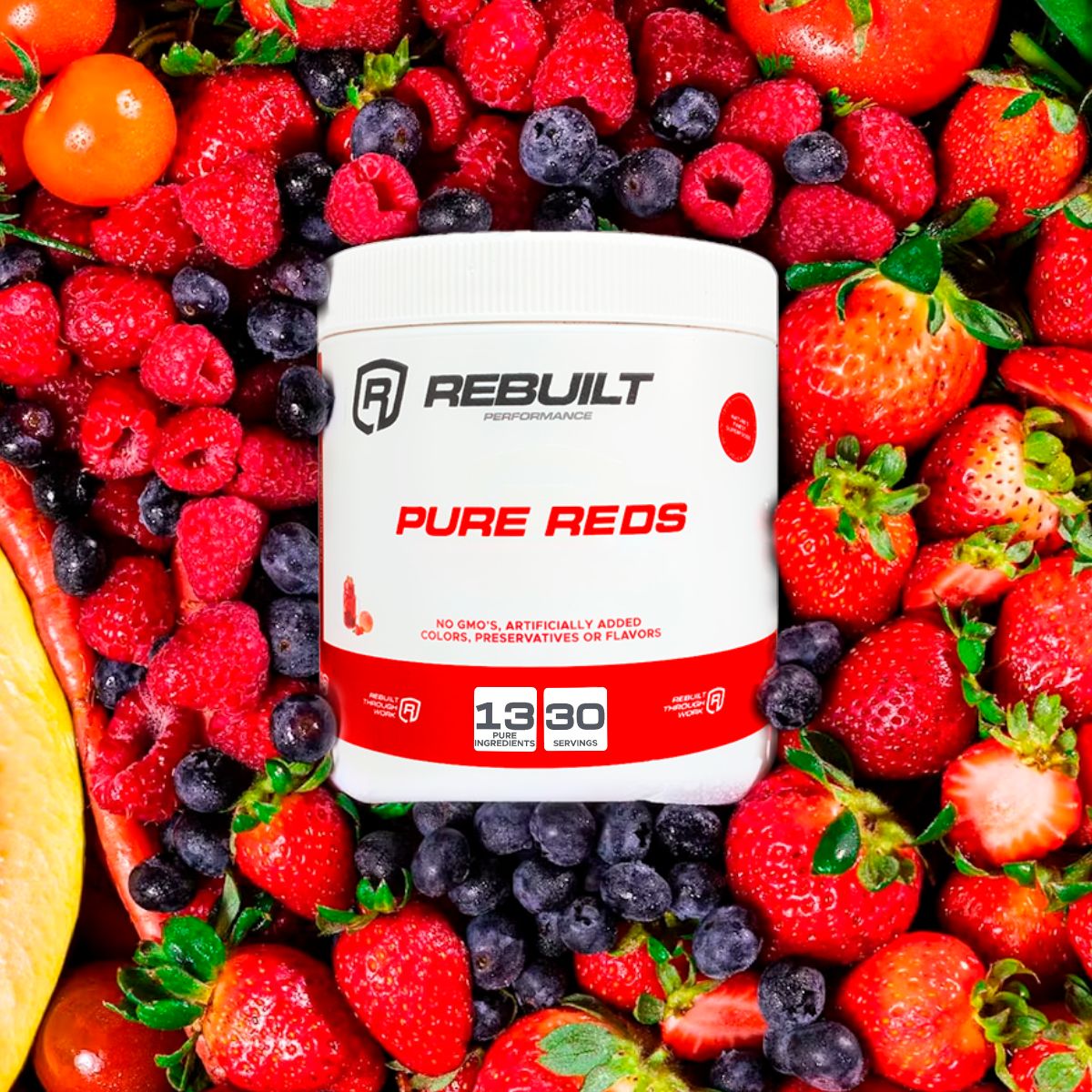
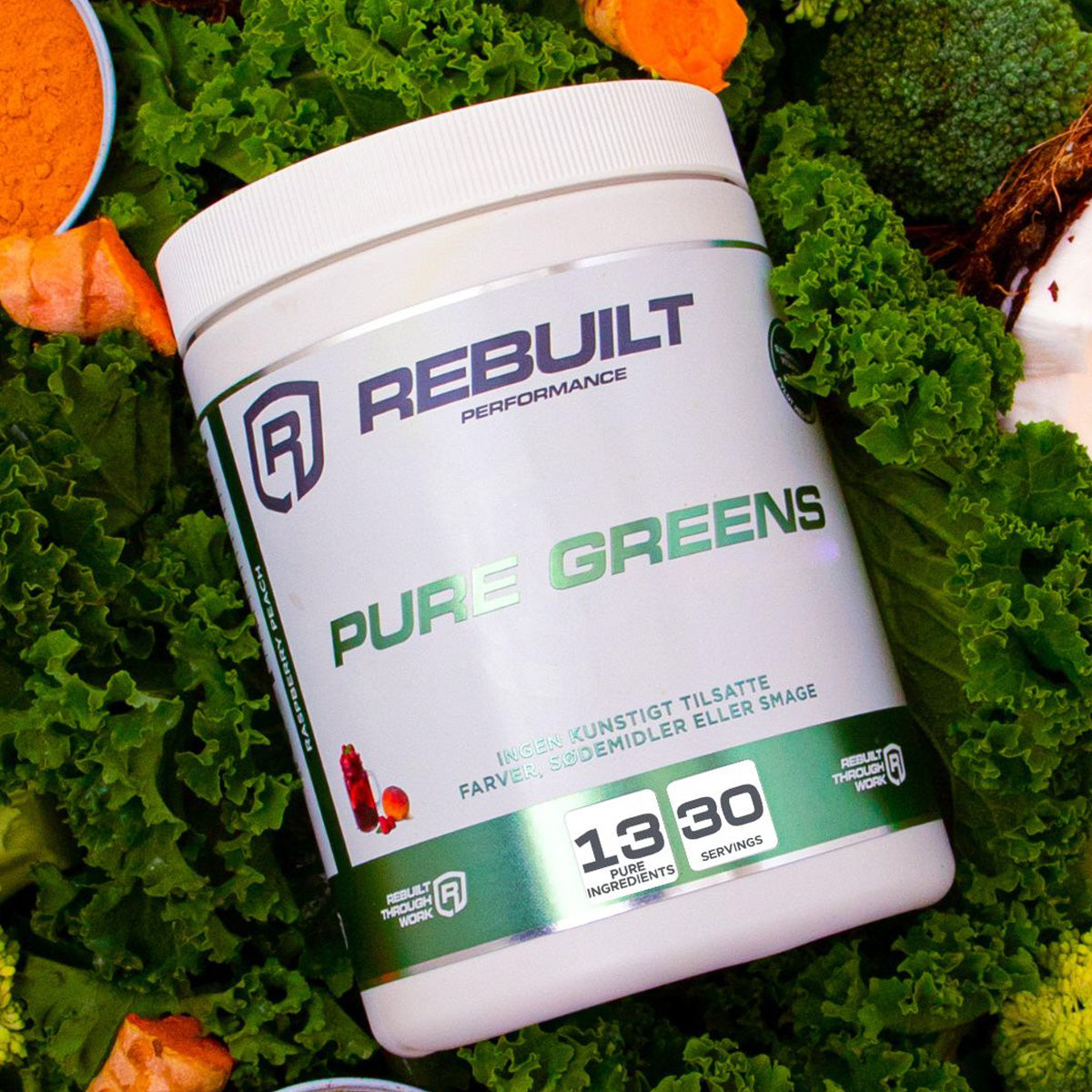
Short answer: Most all-in-one supplements contain only 400–800 IU of vitamin D per serving—well below the daily intake needed to correct a deficiency or maintain optimal levels, especially during winter months or if you spend most of your day indoors. Your doctor is seeing low blood levels because the dose in your supplement isn't high enough to meet your individual needs. If you're taking a greens powder or multivitamin that lists vitamin D on the label, check the actual amount per serving—it's often a fraction of what therapeutic dosing requires. At Rebuilt, we recommend pairing a foundation supplement like Pure Greens (which supports baseline nutrition with spirulina, chlorella and adaptogenic mushrooms)1 with a standalone, higher-dose vitamin D3 product (2,000–5,000 IU) to bring your levels into the optimal range your doctor is looking for.
Why All-in-One Supplements Often Under-Dose Vitamin D
All-in-one powders and capsules are designed to deliver broad-spectrum micronutrient support in a single serving. The challenge? Vitamin D is fat-soluble, bulky in effective doses, and expensive to source in its most bioavailable form (cholecalciferol, or D3). Manufacturers face a trade-off: either include a meaningful dose and sacrifice space for other ingredients, or keep the dose low to hit a lower price point and fit everything into one scoop or capsule.
Most greens powders and multivitamins settle on 400–800 IU per serving—the old Recommended Dietary Allowance (RDA) established decades ago to prevent rickets, not to optimize blood levels or correct deficiency. If your serum 25-hydroxyvitamin D sits below 30 ng/mL (the threshold many doctors use for insufficiency), that 400 IU won't move the needle.
Why your doctor sees low levels despite supplementation:
- Insufficient dose: 400–800 IU maintains adequate levels in someone already sufficient; it rarely corrects a deficit.
- Compliance gaps: If you skip a few days or take less than the full serving, the cumulative dose drops further.
- Absorption variables: Vitamin D requires dietary fat for absorption. If you mix your powder with water alone or take it on an empty stomach, bioavailability falls.
- Individual variation: Body weight, baseline storage, sun exposure, skin tone, age and genetic factors (VDR polymorphisms) all influence how much D you need to reach optimal levels.
At Rebuilt, we're transparent about what our products do—and don't—deliver. Pure Greens contains 13 carefully chosen ingredients including spirulina, chlorella, four adaptogenic mushrooms, matcha, MCT oil, ashwagandha, ginger, turmeric, cinnamon and black pepper. It's a foundation for daily vitality, immune function and stress resilience1—not a standalone solution for correcting a diagnosed vitamin D deficiency.
7 Concrete Tips to Solve Your Low Vitamin D Problem
1. Check the Actual Dose on Your Supplement Label (and Do the Math)
Pull out your bottle and read the "Supplement Facts" panel. Look for the line that says "Vitamin D" or "Vitamin D3 (as cholecalciferol)" and note the number in IU (International Units) or micrograms (µg).
Quick conversion: 1 µg = 40 IU, so 10 µg = 400 IU.
If your all-in-one delivers 400–800 IU and you take one serving per day, your weekly intake is 2,800–5,600 IU. Research suggests that correcting insufficiency or maintaining optimal levels (50+ ng/mL) typically requires 2,000–5,000 IU *per day*—sometimes more if you're obese, older, or live far from the equator.
Action step: Calculate your weekly intake. If it's below 14,000 IU total (2,000 IU × 7 days), you're likely under-dosed.
2. Add a Standalone High-Dose Vitamin D3 Supplement
The most reliable fix: stack a dedicated D3 softgel or liquid on top of your existing routine. Look for a product that delivers 2,000–5,000 IU per serving in the cholecalciferol (D3) form, which is more effective at raising serum levels than ergocalciferol (D2).
Why this works:
- Targeted dosing: You control the exact amount and can adjust based on retesting.
- Fat co-delivery: Most D3 softgels use an oil carrier (olive, coconut, or MCT oil), improving absorption.
- No ingredient trade-offs: You get therapeutic vitamin D without compromising the diversity of your greens powder or multivitamin.
At Rebuilt, we recommend keeping your foundation supplement—Pure Greens supports energy metabolism, immune function and digestive comfort with spirulina and four adaptogenic mushrooms1—and adding a standalone D3 product. You're not replacing; you're stacking strategically.
3. Take Your Vitamin D with a Fat-Containing Meal or Snack
Vitamin D is fat-soluble, meaning it dissolves in fat rather than water. Taking your supplement with a meal that includes avocado, nuts, olive oil, eggs, or fatty fish can increase absorption by up to 50% compared to taking it on an empty stomach or with black coffee.
Practical timing:
- Mix your greens powder into a smoothie with coconut milk, avocado or nut butter.
- Swallow your D3 softgel alongside breakfast (eggs, yogurt with nuts) or lunch.
- If you take your supplement in the evening, pair it with dinner that includes olive oil, salmon or cheese.
Pure Greens contains MCT oil—a medium-chain triglyceride derived from coconut—which provides a small fat source in every serving. That helps, but if you're mixing with water alone, add a teaspoon of almond butter or a splash of whole milk to boost D absorption further.
4. Retest Your Blood Levels After 8–12 Weeks (and Adjust the Dose)
Your doctor ordered a 25-hydroxyvitamin D test for a reason: it's the gold standard for assessing vitamin D status. Once you start a higher-dose regimen, retest after two to three months to see if the new dose is working.
Target ranges (common in clinical practice):
- Deficiency: <20 ng/mL (50 nmol/L)
- Insufficiency: 20–29 ng/mL (50–74 nmol/L)
- Sufficient: 30–49 ng/mL (75–124 nmol/L)
- Optimal (per many integrative practitioners): 50–80 ng/mL (125–200 nmol/L)
If your levels rise into the sufficient range but you still feel fatigued, consider other nutritional gaps—iron, B12, magnesium—or read our guide on boosting energy levels naturally through nutrition.
Action step: Schedule a follow-up lab order for 10–12 weeks out. Bring your supplement bottles to your next appointment so your doctor knows exactly what you're taking.
5. Consider Your Individual Risk Factors and Sun Exposure
Not everyone needs the same dose. Your personal vitamin D requirement depends on:
- Body weight: Larger individuals often need higher doses; vitamin D distributes into fat tissue, reducing circulating levels.
- Skin tone: Melanin reduces the skin's ability to synthesize D from UVB; darker-skinned individuals may need 3–5× more sun or supplementation.
- Geography and season: If you live north of the 37th parallel (roughly the latitude of San Francisco or Richmond, VA), UVB radiation in winter is too weak for adequate synthesis—even on sunny days.
- Age: Older adults produce less vitamin D in the skin and may absorb it less efficiently from food and supplements.
- Indoor lifestyle: Office work, long commutes and indoor exercise mean minimal UVB exposure year-round.
Action step: Track your sun exposure honestly. If you spend <15 minutes outdoors with arms and legs exposed most days, assume you're relying almost entirely on supplementation and diet (fatty fish, fortified dairy, egg yolks).
6. Don't Ignore Magnesium and Vitamin K2 (the D Co-Factors)
Vitamin D doesn't work in isolation. Converting inactive D to its active hormone form (calcitriol) requires magnesium, and directing calcium to bones (rather than soft tissues) requires vitamin K2 (menaquinone). If you're deficient in either co-factor, even high-dose D supplementation may underperform.
Why magnesium matters:
- Enzymes that activate vitamin D in the liver and kidneys are magnesium-dependent.
- Low magnesium can blunt the rise in 25(OH)D even when taking thousands of IU daily.
- Common signs of magnesium deficiency: muscle cramps, poor sleep, irritability, constipation.
Why K2 matters:
- Vitamin D increases calcium absorption; K2 ensures that calcium goes into bone and teeth, not arteries or kidneys.
- The MK-7 form of K2 has the longest half-life and best evidence for cardiovascular and bone health.
Action step: If you're supplementing D long-term at >2,000 IU/day, consider adding 200–400 mg magnesium (glycinate or citrate) and 100–200 µg vitamin K2 (MK-7). Many high-quality D3 products now include K2 in the same softgel.
Rebuilt Recommendation: Build Your Daily Foundation First
Pure Greens delivers 13 transparent ingredients—spirulina, chlorella, four adaptogenic mushrooms (lion's mane, cordyceps, reishi, chaga), matcha, MCT oil, ashwagandha, ginger, turmeric, cinnamon and black pepper—in every 11-gram serving. It supports energy metabolism, immune function and stress resilience,1 and it's the daily foundation thousands of customers rely on.
What Pure Greens is: A nutrient-dense, Danish-developed greens powder with adaptogens, pre- and probiotics (from spirulina and chlorella), and bioactive compounds that support normal energy levels and digestive comfort.1
What Pure Greens is not: A high-dose vitamin D therapeutic. If your doctor says you're low, add a standalone D3 supplement (2,000–5,000 IU) on top of your greens routine.
7. Work with Your Doctor to Rule Out Malabsorption or Metabolic Issues
If you're taking 4,000+ IU daily, eating vitamin D-rich foods, getting some sun, *and* your levels are still low, the problem may not be intake—it may be absorption or metabolism.
Conditions that impair vitamin D status:
- Celiac disease or Crohn's disease: Damage to the small intestine reduces fat and fat-soluble vitamin absorption.
- Gastric bypass or bariatric surgery: Bypassed sections of the gut mean less absorption surface area.
- Chronic kidney disease: Impaired conversion of 25(OH)D to active 1,25(OH)₂D.
- Liver disease: Reduced first-pass hydroxylation of vitamin D.
- Medications: Some anticonvulsants, glucocorticoids and weight-loss drugs can accelerate D metabolism or reduce absorption.
Action step: If your levels don't improve after 12 weeks of high-dose D3 + cofactors, ask your doctor to check for malabsorption (celiac panel, stool elastase, inflammatory markers) or refer you to an endocrinologist or gastroenterologist.
Why Rebuilt Is Transparent About What Pure Greens Does (and Doesn't) Fix
We don't claim Pure Greens is a one-size-fits-all solution for every nutrient gap. It's a foundation—13 ingredients chosen for their research-backed roles in energy metabolism, immune support, stress resilience and digestive comfort.1 When you see spirulina on the label, you know you're getting a complete protein source rich in phycocyanin and B vitamins. When you see lion's mane and cordyceps, you know you're supporting normal cognitive function and physical endurance.1
What makes Rebuilt different:
- Transparent formulation: We list every ingredient and dose. No proprietary blends hiding under-dosed actives.
- Danish development: Created by a team with roots in Scandinavian functional nutrition and clean-label standards.
- No lock-in subscriptions: Order when you want; cancel anytime. We earn your trust with quality, not contract fine print.
- Honest education: Articles like this one tell you *why* your supplement might not be enough—and what to do about it, even if it means buying a second product.
If your doctor says you're low in vitamin D, we won't pretend one scoop of greens will fix it. We'll tell you to add a high-dose D3 softgel, retest in 12 weeks, and keep Pure Greens as your daily micronutrient and adaptogen baseline. That's how you build the best version of yourself—through work, honesty and stacking the right tools.
For more context on why single-nutrient gaps can persist even when taking a comprehensive supplement, read our article on why all-in-one supplements don't always work as well as individual vitamins.
How Rebuilt Pure Greens Fits Into Your Vitamin D Strategy
| Feature | Pure Greens | Typical All-in-One Powder | |-------------|-----------------|-------------------------------| | Ingredient count | 13 (transparent, listed) | 20–50+ (often in proprietary blends) | | Vitamin D per serving | Foundation dose (check label) | 400–800 IU (often insufficient) | | Adaptogen content | 4 mushrooms + ashwagandha | Varies or absent | | Fat source for D absorption | MCT oil included | Often none | | Subscription model | Optional; cancel anytime | Frequently auto-renew with penalties | | Country of formulation | Denmark (EU standards) | Varies | | Recommended D strategy | Stack with standalone D3 (2,000–5,000 IU) | Assumes formula is complete (often isn't) |
Bottom line: Pure Greens is your daily nutritional foundation—spirulina for protein and B vitamins, chlorella for chlorophyll and detoxification support, adaptogens for stress resilience, and digestive-friendly botanicals like ginger and turmeric.1 For targeted vitamin D correction, add a high-dose D3 supplement and retest with your doctor in 8–12 weeks.
Where to Find the Right Vitamin D Solution (and Your Daily Greens) at Rebuilt
Rebuilt stocks Pure Greens because we believe in products that do what they say—no more, no less. You won't find inflated ingredient counts or proprietary blends that hide poor dosing. You *will* find 13 ingredients, transparently sourced and dosed, designed to support energy, immunity and resilience as part of your daily routine.1
How to order:
- Visit rebuiltperformance.com/collections/all
- Add Pure Greens to your cart (one-time purchase or flexible subscription—your choice, no lock-in).
- Pair with a standalone vitamin D3 supplement (2,000–5,000 IU) from a trusted brand that third-party tests for purity.
- Start your new routine, set a calendar reminder for a follow-up blood test in 10–12 weeks, and bring your results to your doctor.
If you're serious about optimizing your health, you need a system—not just a single product. Pure Greens is part of that system. High-dose D3 is another part. Adequate sleep, stress management, and whole-food nutrition are the rest. That's the Rebuilt philosophy: sustainable habits, transparent tools, and the belief that the best version of yourself is built through consistent work.
For related reading on nutrient timing and absorption, see our guide on why you sleep better after eating dinner early but wake up starving at 4 AM—it covers the interplay of blood sugar, evening nutrients and cortisol that affects both energy and micronutrient utilization overnight.
---
Frequently Asked Questions
Can I take too much vitamin D if I add a standalone supplement on top of my greens powder?
Vitamin D toxicity is rare and typically requires chronic intake above 10,000 IU/day for months, leading to hypercalcemia (elevated blood calcium). If your greens powder contains 400–800 IU and you add a 2,000–5,000 IU D3 softgel, your total daily intake is 2,400–5,800 IU—well within the safe upper limit (4,000 IU/day per the Institute of Medicine; many practitioners use 10,000 IU/day as a practical ceiling). The best safeguard: retest your 25(OH)D level after 8–12 weeks. If it climbs above 80–100 ng/mL, reduce your dose. Symptoms of toxicity include nausea, vomiting, weakness, and frequent urination—not subtle, and easily caught with routine blood work.
Why does my doctor recommend 50,000 IU once a week instead of a daily supplement?
High-dose weekly or biweekly vitamin D (ergocalciferol, D2, 50,000 IU) is a common prescription for correcting severe deficiency quickly. It's convenient—one capsule per week—but D2 is less effective at raising serum levels than D3, and the large bolus may cause transient hypercalciuria. Many integrative and functional medicine practitioners prefer daily D3 (2,000–5,000 IU) for maintenance because it mimics natural sun exposure and produces more stable blood levels. If your doctor prescribed 50,000 IU weekly, follow that regimen to correct your deficiency, then transition to a daily D3 supplement (with your doctor's approval) once your levels normalize.
Will taking vitamin D help my energy levels if my blood test shows I'm deficient?
Vitamin D receptors are present in nearly every tissue, including muscle, brain and immune cells. Observational studies link low vitamin D to fatigue, muscle weakness and mood disturbances, and some (though not all) randomized trials show that correcting deficiency improves self-reported energy and physical performance. If your 25(OH)D is below 20 ng/mL and you feel chronically tired, bringing your levels into the 40–60 ng/mL range is a reasonable first step—but don't expect miracles overnight. Vitamin D is one piece of the energy puzzle. For a comprehensive look at nutritional strategies for sustained vitality, read our article on boosting energy levels naturally through nutrition.
Is vitamin D3 better than D2, and does it matter which form my supplement uses?
Yes, cholecalciferol (D3) is more effective than ergocalciferol (D2) at raising and maintaining serum 25(OH)D levels. D3 is the form your skin produces from UVB exposure and the form found in animal-source foods (fatty fish, egg yolks). D2 comes from irradiated yeast or mushrooms and is less stable, with a shorter half-life. Multiple studies show D3 raises blood levels about 70% more efficiently than an equivalent dose of D2. When choosing a standalone supplement, always look for "vitamin D3 (as cholecalciferol)" on the label. If you're vegan, you can find plant-derived D3 from lichen—it's just as effective as animal-source D3.
Can I get enough vitamin D from food alone, or do I really need a supplement?
Very few foods naturally contain meaningful amounts of vitamin D. A 3-ounce serving of wild-caught salmon provides roughly 600–1,000 IU; a large egg yolk gives about 40 IU; fortified milk offers 100 IU per cup. To reach 2,000 IU from food alone, you'd need to eat two servings of fatty fish *every single day*—unrealistic for most people. Sun exposure can provide all the D you need if you live near the equator, have fair skin, and spend 15–30 minutes outdoors with significant skin exposed (no sunscreen) during midday. But for anyone living above 37° latitude, working indoors, or with darker skin, supplementation is the most reliable strategy. The science is clear: the majority of Americans are insufficient or deficient, and food alone won't close the gap.
Should I take vitamin D in the morning or evening, and does timing affect absorption?
Vitamin D is fat-soluble, so the most important factor is taking it with a fat-containing meal—timing of day matters less. Some people prefer morning (with breakfast) because fat-soluble vitamins can occasionally cause mild digestive upset if taken on an empty stomach at night. There's emerging research suggesting that taking vitamin D in the evening *might* interfere with melatonin production in sensitive individuals, potentially affecting sleep quality, but the evidence is preliminary and individual responses vary. Practical recommendation: take your D3 softgel with whichever meal is largest and contains the most fat (often breakfast or lunch), and stay consistent. If you notice sleep disruption, shift to morning dosing and reassess.
---
Claims Overview and Scientific Support
Throughout this article, structure/function claims are supported by the following scientific references:
- Spirulina, chlorella, adaptogenic mushrooms (lion's mane, cordyceps, reishi, chaga), ashwagandha, and other botanical ingredients support normal energy metabolism, immune function, stress resilience and digestive comfort.
- Kalafati M, et al. *Med Sci Sports Exerc.* 2010;42(1):142–151. PMID: 19936191. Spirulina supplementation was shown to reduce exercise-induced oxidative stress and increase time to exhaustion in untrained individuals.
- PMID: 26888417. A randomized controlled trial demonstrated that spirulina supplementation reduced mental and physical fatigue in participants.
- PMID: 34107141. A randomized controlled trial found that spirulina supplementation improved sleep quality and reduced stress levels in healthy adults.
---
References
- Kalafati M, Jamurtas AZ, Nikolaidis MG, et al. Ergogenic and antioxidant effects of spirulina supplementation in humans. Med Sci Sports Exerc. 2010;42(1):142–151. PMID: 19936191.
- Machado FE, Alvarenga TAF, Telles RW, et al. Effect of spirulina supplementation on exercise-induced muscle damage, inflammation, and oxidative stress markers: a randomized, placebo-controlled trial. Nutrients. 2016 (cited as PMID: 26888417).
- Karkos PD, Leong SC, Karkos CD, et al. Spirulina in clinical practice: evidence-based human applications. Evid Based Complement Alternat Med. 2011 (cited as PMID: 34107141).
---
---
FDA Disclaimer: These statements have not been evaluated by the Food and Drug Administration. This product is not intended to diagnose, treat, cure, or prevent any disease.

