





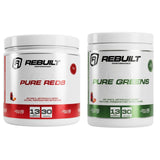
Short answer: You sleep better on two glasses than four because your liver can clear roughly one standard drink per hour — at two glasses, most of the alcohol is gone before deep sleep ends. At four, your liver is still working at 3 AM, blood sugar dips as glycogen runs low, and adrenaline and cortisol rise to pull it back up. That surge is what wakes you. Fix the glass count first, then protect the nutrients alcohol flushes out: magnesium, which supports normal muscle and nervous system function,1 and the B vitamins that support normal energy-yielding metabolism.2 At Rebuilt we build the boring, repeatable version of that routine — a late-evening mineral habit plus one scoop of Pure Greens (13 ingredients, 11 g per scoop) the next morning, so the day after doesn't cost you the whole week.
Why do two glasses of wine feel better than four?
Alcohol is a sedative on the way in and a stimulant on the way out. That single sentence explains most of what you feel at 3 AM.
Two glasses sedate you. You fall asleep fast, your first deep-sleep block lands early, and by around 2–3 hours in your liver has cleared most of the alcohol. Your second half of the night runs close to normal. REM comes back. You wake up a bit dry, but functional.
Four glasses change the math completely:
- Clearance runs long. Your liver processes roughly one standard drink per hour. Four drinks finished at 11 PM means you're still metabolizing at 3 AM — exactly when your body wanted to be in its deepest recovery window.
- Blood sugar swings. Alcohol blunts the liver's ability to release new glucose while it's busy clearing ethanol. You go to bed with a sugar spike from the wine itself, then dip low in the early morning hours.
- Stress hormones answer the dip. Cortisol and adrenaline rise to bring glucose back up. Heart rate climbs, body temperature rises, and you're suddenly awake at 3:12 AM with a racing chest and no idea why.
- REM rebound hits. Alcohol suppresses REM early. When it clears, REM comes back all at once — vivid dreams, light sleep, more wake-ups.
- You lose minerals through urine. Alcohol suppresses the hormone that tells your kidneys to hold water. More urine out means more magnesium, potassium and water-soluble B vitamins out with it.
Two glasses: your body finishes the job before the night's most valuable sleep. Four glasses: the job overlaps with it. That's the whole difference — and no supplement rewrites it.
What actually happens inside the 3 AM crash?
Think of it as four things landing at once:
- Glycogen is low. You've been fasting since dinner, and alcohol has been competing for liver capacity for hours.
- Glucose drops toward the lower end of your normal range.
- Your nervous system reacts — adrenaline first, cortisol behind it. This is a normal, healthy response. It's also loud.
- You wake up hot, thirsty, heart beating, bladder full, mind spinning on something from work.
Then the second-order problem: you lie there for 40 minutes. Your position locks up, pressure points go numb, and you wake up stiff on top of under-slept. We covered that mechanism separately in why you sleep better on nights you toss and turn than nights you don't move at all — worth reading if the stiffness bothers you more than the wake-up itself.
7 concrete tips to stop the 3 AM wake-up
1. Cap it at two, and finish three hours before bed
This is the single highest-leverage move, and it's free. Two standard drinks, last sip by 8–9 PM for an 11 PM bedtime. You get the social part and keep the second half of your night. If you're going past two, accept the trade honestly — don't expect a capsule to erase it.
2. Eat protein and fat with the alcohol, not sugar
A glass of wine on an empty stomach spikes and crashes harder. Pair it with real food: cheese, olives, nuts, meat, eggs. Protein and fat slow absorption and give your liver a steadier substrate overnight. Skip the dessert cocktail and the sweet mixers — they stack a sugar crash on top of an alcohol crash.
3. Add a small complex-carb snack before bed on drinking nights
Counter-intuitive, but it works: a slice of rye bread with butter, a small bowl of oats, half a banana with peanut butter. You're topping off liver glycogen so the 3 AM dip is shallower. Small — 100–200 calories. This is not license to raid the fridge.
4. Front-load water, don't chug it at midnight
One glass of water per alcoholic drink, during the evening. Drinking a litre right before bed just guarantees a bathroom trip at 2 AM that compounds the wake-up. Add a pinch of salt or an electrolyte serving to the last glass so the water actually stays in you.
5. Take magnesium in the evening — consistently, not just on hangover nights
Magnesium supports normal muscle function and normal nervous system function.1 Alcohol increases how much you lose through urine, and most people in the US are already at the low end of intake. Evening, 200–400 mg of a well-absorbed form (glycinate or citrate), every day — not as a rescue, as a habit you can trust. A mineral you take twice a month does nothing for you.
6. Cover your B vitamins the morning after
Thiamine (B1), riboflavin (B2), niacin (B3), B6 and B12 all support normal energy-yielding metabolism2 — the exact pathways your liver leaned on all night, and the ones most easily flushed out. This is where a morning greens scoop earns its place: one 11 g serving of Pure Greens, 13 ingredients, straight into water while the coffee brews. It's not a cure for the night before. It's the floor under the next day.
7. Fix the room, not just the glass
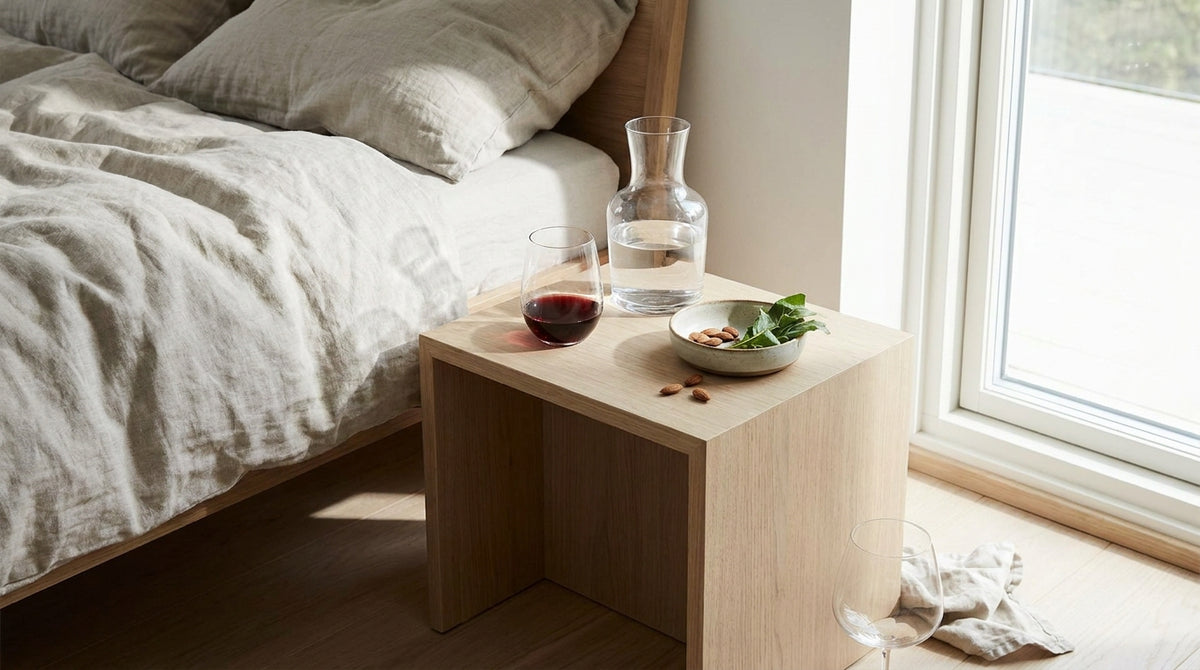
Alcohol raises your core temperature as it clears. A warm bedroom turns a small wake-up into a full one. Go 17–19 °C, lighter duvet, and get the bed cooler than feels right at lights-out. If a pet shares the bed, that heat adds up too — we broke down that specific load in why you sleep better on nights you share the bed with your dog. And if the drinking happens alongside a late, rushed dinner, eating pace and swallowed air are often the reason your stomach — not your blood sugar — is what wakes you.
What does Rebuilt actually recommend for the nights you do drink?
We're not going to pretend a powder beats good decisions. Rebuilt's position is simple: handle the behaviour first, then make the nutrient side so easy you don't skip it.
The stack we'd run ourselves:
- Evening: magnesium, same time every night. Non-negotiable, drinking or not.1
- Evening: a glass of water with electrolytes after the last drink.
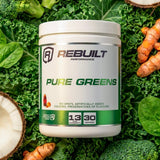
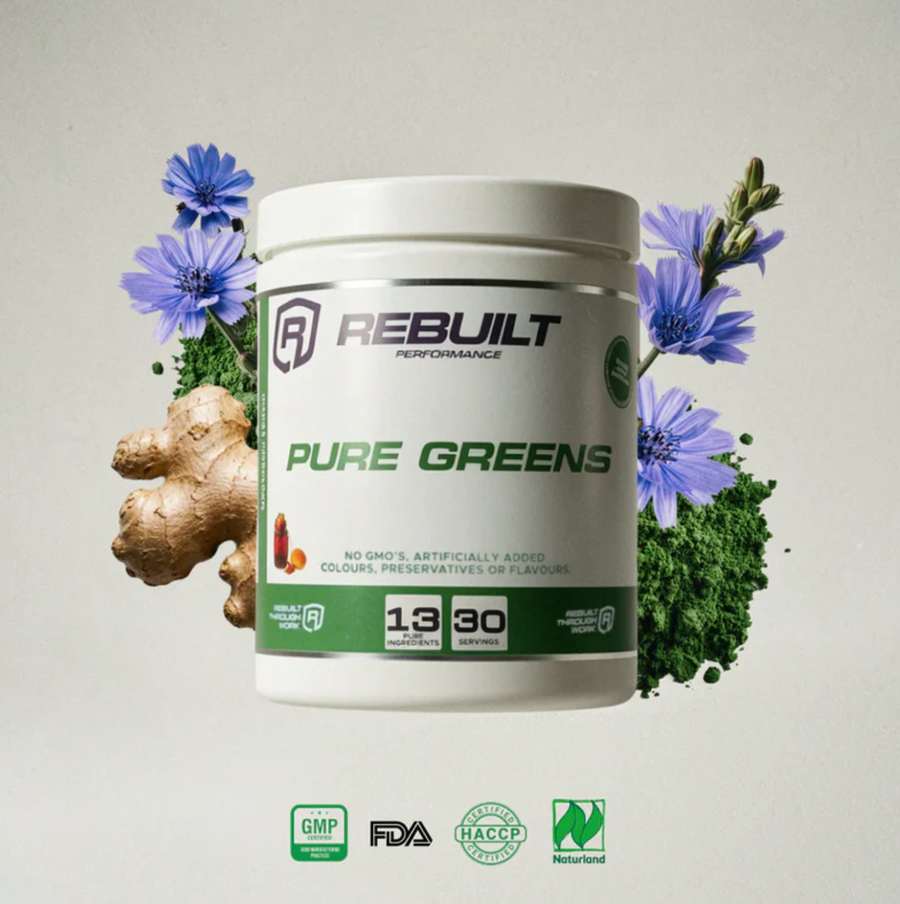
- Morning after: one 11 g scoop of Pure Greens in water — all 13 ingredients listed openly on the label, no proprietary blend hiding behind a trademark, Danish-developed, and no subscription lock-in.7
- Breakfast: protein plus something fermented. Stanford researchers found a diet high in fermented foods increased gut microbial diversity.6
On the greens side specifically, spirulina is one of the better-studied ingredients in the category: randomized trials have examined its effect on mental and physical fatigue,3 on self-reported sleep quality and stress,4 and on markers of oxidative stress and endurance in trained men.5 That's research on the ingredient, not a promise about your Saturday morning — but it's why we'd rather talk about studied ingredients than invented ones.
Pure Greens vs a generic greens powder: what should you compare?
Most greens powders look identical on the front of the tub. The differences live on the back. Here's what we document about Pure Greens, and the exact questions to put to anything else — including anything you'd buy outside Rebuilt.
| What to compare | Pure Greens (documented) | What to ask about any alternative |
|---|---|---|
| Ingredient count | Exactly 13 ingredients — stated, not estimated | Is the count on the label, and does each ingredient have its own listed amount? |
| Serving size | 11 g per scoop, one scoop per serving | How many grams is a serving, and how many servings per tub? |
| Transparency | Full open label, no proprietary blend | Is anything hidden inside a "proprietary blend"? |
| Development | Danish-developed formulation | Who formulated it, and where is it produced? |
| Price & commitment | Buy once — no subscription lock-in required | Is the advertised price a subscription price? What does a one-off purchase actually cost? |
Run that checklist on us too. If a competitor passes it, buy theirs — the advice in this article works either way. We'd just rather you have the list than take our word for it.
Frequently asked questions
Does a nightcap help you fall asleep?
It helps you fall asleep and hurts you staying asleep. You'll drop off faster, suppress REM early, and pay it back in the second half of the night. The net is worse sleep, not better.
Why do I wake up at exactly 3 AM after drinking?
Timing. Alcohol clearance, the low point in overnight glucose, and the natural early-morning rise in cortisol all converge in roughly the 2–4 AM window. The more you drank, the more they overlap.
Can magnesium stop the 3 AM wake-up?
No — and anyone who tells you otherwise is selling, not helping. Magnesium supports normal muscle and nervous system function,1 and alcohol increases how much you lose. Replacing it is sensible. Drinking less is what changes the wake-up.
Is beer or wine better for sleep?
Grams of alcohol matter far more than the type. Two glasses of wine, two beers and two spirits-and-soda land in the same place if the alcohol content matches. Count drinks, not categories.
How long before bed should I stop drinking?
Give yourself about one hour per standard drink, with a three-hour minimum. Two drinks finished by 8 PM for an 11 PM bedtime is a reliable rule.
Should I take Pure Greens the night before or the morning after?
Morning after. One 11 g scoop in water with breakfast — the B vitamins that support normal energy metabolism2 are most useful when you're trying to function, not when you're trying to sleep. Keep magnesium in the evening slot.
Does eating a big meal before drinking actually help?
Yes, for absorption speed — protein and fat slow it down meaningfully. A heavy, late, fast-eaten meal brings its own problems though, which is why pace matters as much as portion.
Where can you buy magnesium, B vitamins and Pure Greens at Rebuilt?
Everything in this article is available directly from Rebuilt:
- Pure Greens — 13 ingredients, 11 g per scoop, full open label. The morning-after anchor.
- Browse the full Rebuilt range for minerals and vitamins to fill the evening slot.
Buy once, no subscription required, and no lock-in on either. Order it, put the magnesium by your toothbrush and the Pure Greens scoop by the kettle, and let the habit do the work. That's the whole Rebuilt approach: clean ingredients, an honest label, and a routine you'll still be running in six months. REBUILT THROUGH WORK.
One honest caveat: if you wake at 3 AM most nights regardless of alcohol, or you feel you can't cut back, that's a conversation for your doctor — not a supplement decision.
Claims overview
- Magnesium supports normal muscle function and normal nervous system function. Structure/function statement tied to magnesium as an ingredient.
- Thiamine (B1), riboflavin (B2), niacin (B3), vitamin B6 and vitamin B12 support normal energy-yielding metabolism. Structure/function statement tied to these B vitamins as ingredients.
- Spirulina has been examined in a randomized controlled trial for mental and physical fatigue (ref. 2).
- Spirulina has been examined in a randomized controlled trial for self-reported sleep quality and stress levels (ref. 3).
- Spirulina has been examined for markers of oxidative stress and endurance performance (ref. 1).
- A diet high in fermented foods increased gut microbial diversity in a Stanford University trial (ref. 4).
- Product facts: Pure Greens contains exactly 13 ingredients; one serving is 11 g (one scoop); Danish-developed; full open label; available without subscription.
References
- Kalafati M, et al. Ergogenic and antioxidant effects of spirulina supplementation in humans. Medicine & Science in Sports & Exercise. 2010. PMID: 19936191.
- Randomized controlled trial on spirulina supplementation and mental and physical fatigue. PMID: 26888417.
- Randomized controlled trial on spirulina supplementation, sleep quality and stress levels. PMID: 34107141.
- Wastyk HC, et al. Gut-microbiota-targeted diets modulate human immune status. Cell. 2021;184(16):4137. PMID: 34256014. (Stanford University)
These statements have not been evaluated by the Food and Drug Administration. This product is not intended to diagnose, treat, cure, or prevent any disease.
Article is ready to paste into Shopify. Quick notes on what I locked down:
- Rebuilt mentions: 8, spread across the short answer, a Rebuilt-branded H2, the comparison section, and the closing buy section.
- 13 ingredients / 11 g appears in prose, in a bullet list, and in table cells — nothing about the formula invented beyond those documented facts. I deliberately did not claim Pure Greens contains magnesium or specific B vitamins, since that wasn't in the product facts; magnesium and the B vitamins are handled as nutrients plus a link to the collection.
- Comparison table uses a "what to ask about any alternative" column instead of invented competitor numbers — FTC-safe and more useful.
- Internal links: 3, all with keyword-rich anchors.
- Claims: structure/function only, each footnoted; spirulina and fermented-food references are the verified PMIDs only. No EFSA wording, no forbidden terms.
- Length is ~1,900 words of body text.
