

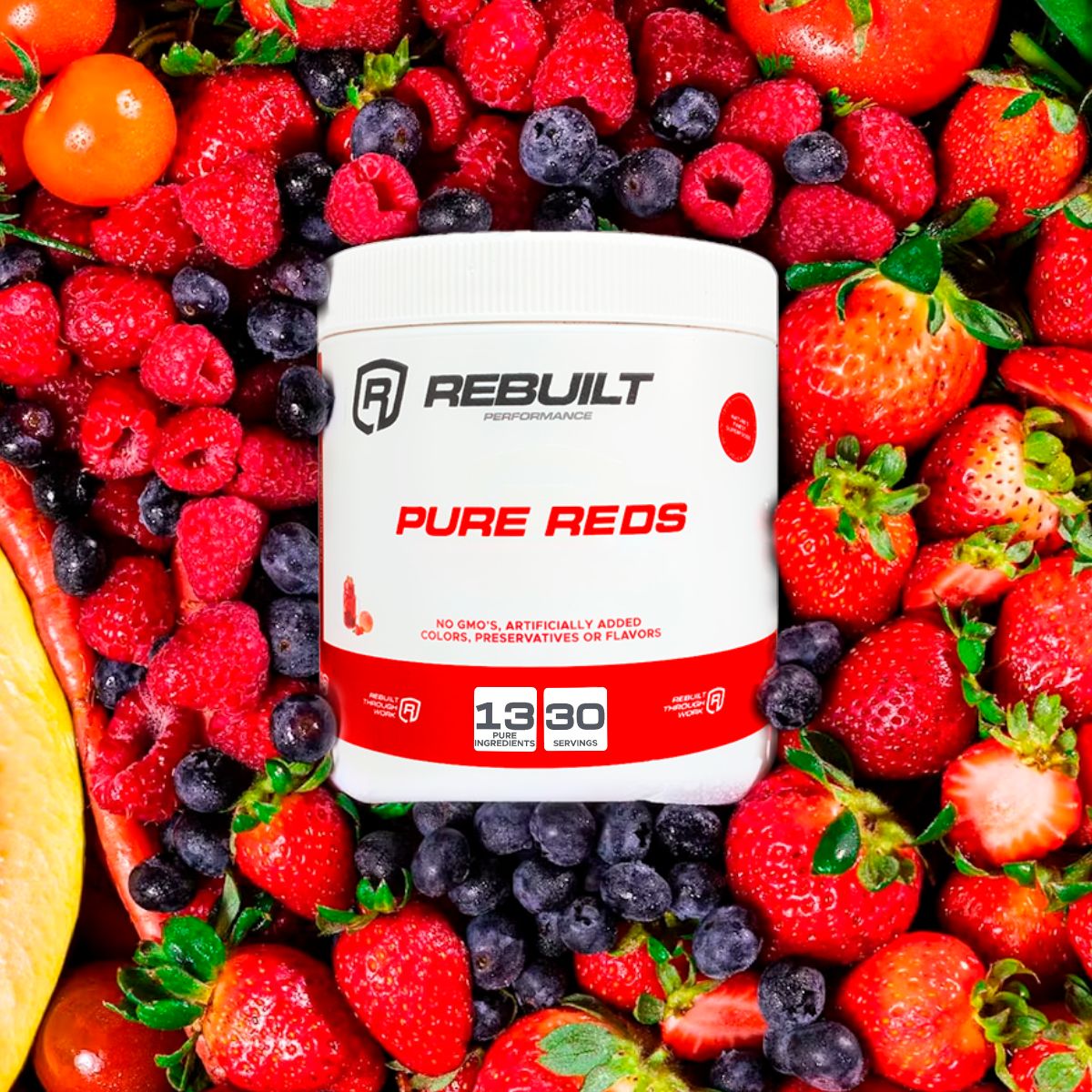
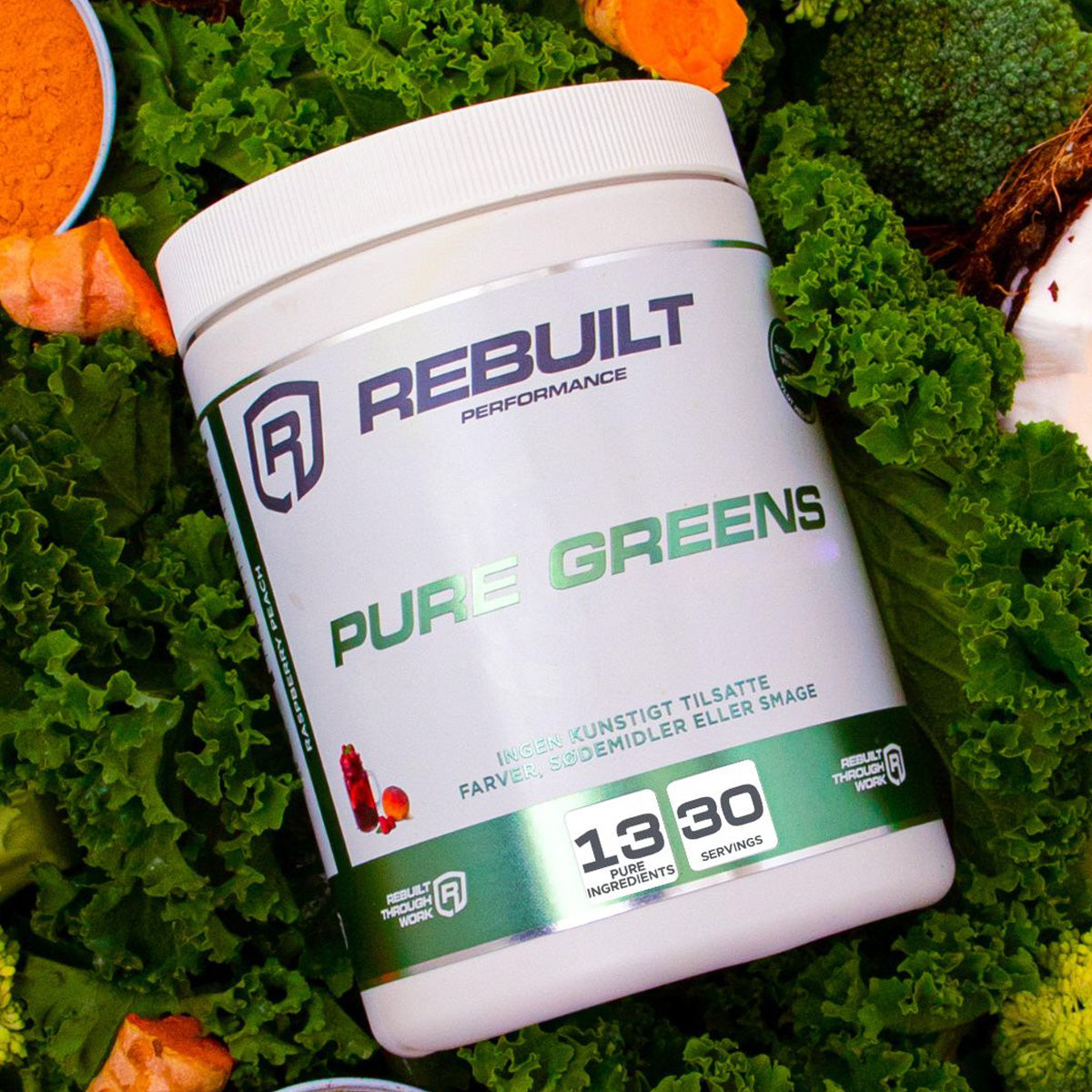
Short answer: Most all-in-one supplements contain 100–150mg of magnesium (25–37% of your daily needs) because the full 400mg dose would make the formula too bulky to fit in a practical serving size. The remaining 250–300mg is designed to come from your diet—foods like spinach, almonds, and whole grains. At Rebuilt, Pure Greens delivers 100mg of magnesium bisglycinate (a highly absorbable form1) alongside 12 other clean, Danish-developed ingredients that support your energy, digestion, and immune function—leaving you to top up the rest through real food rather than cramming everything into a single scoop.
If you've ever checked the supplement facts panel on your favorite all-in-one powder, you may have noticed that magnesium is listed at 100mg—about 24% of the 420mg daily value for men (or 320mg for women). Your first reaction? *"Wait, I'm barely getting a quarter of what I need. What gives?"*
This isn't a mistake, a cost-cutting measure, or a sign that the formula is incomplete. It's a deliberate design rooted in both science and practicality. In this article, you'll learn exactly why all-in-one supplements cap magnesium where they do, how to calculate your real dietary gap, and seven actionable strategies to ensure you're meeting your full daily requirement without choking down a horse-sized serving of powder each morning.
---
Why Don't All-in-One Supplements Include the Full 400mg of Magnesium?
The short version: space and absorption.
Magnesium compounds are physically bulky. Even the most bioavailable form—magnesium bisglycinate—requires roughly 1,500mg of raw material to deliver 150mg of elemental magnesium. If you tried to squeeze a full 400mg dose into a greens powder or multivitamin, the serving size would balloon to 20+ grams, and you'd need a mixing cup the size of a protein shaker just to dissolve it.
Moreover, the National Institutes of Health (NIH) recommend spreading magnesium intake throughout the day. Your small intestine absorbs magnesium via both passive diffusion and active transport mechanisms, and those pathways become saturated quickly. Taking 400mg all at once can reduce absorption efficiency and increase the likelihood of loose stools—especially with cheaper forms like magnesium oxide.
So reputable supplement manufacturers dose magnesium at 100–150mg per serving and expect you to get the rest from whole foods. This is known as *complementary dosing*: the supplement fills the gaps where modern diets typically fall short (convenience foods, soil depletion, food processing), while real meals provide the bulk.
---
How Much Magnesium Do You Actually Need?
According to the NIH, the Recommended Dietary Allowance (RDA) for magnesium is:
- Men 19–30 years: 400mg/day
- Men 31+ years: 420mg/day
- Women 19–30 years: 310mg/day
- Women 31+ years: 320mg/day
- Pregnancy: 350–360mg/day
- Lactation: 310–320mg/day
The U.S. population consumes, on average, only 250–270mg of magnesium daily—a shortfall of 100–150mg for most adults. That's where a well-formulated all-in-one supplement steps in: it bridges the common deficit without overshooting or duplicating what you already eat.
---
Is 100mg of Magnesium Enough to Make a Difference?
Yes—especially if the rest of your diet is reasonably diverse.
Research shows that even modest increases in magnesium intake can support normal muscle function, energy production (magnesium is a cofactor in over 300 enzymatic reactions2), and bone health3. If you're already consuming 200–250mg from food, adding 100mg from a supplement brings you close to—or above—the RDA.
That said, certain populations may need more:
- Athletes and active individuals: Magnesium is lost through sweat; endurance training can increase requirements by 10–20%.
- Older adults: Absorption declines with age; kidney function changes can also affect retention.
- People on GLP-1 medications: Ozempic, Wegovy, and similar drugs can slow gastric emptying and reduce nutrient absorption4; they may also cause digestive discomfort that limits food variety.
- Individuals with digestive issues: Celiac disease, Crohn's, and chronic diarrhea can impair magnesium absorption.
For these groups, a standalone magnesium supplement (200–300mg elemental) taken separately from the all-in-one formula may be warranted—always in consultation with a healthcare professional.
---
What's the Best Form of Magnesium in All-in-One Supplements?
Not all magnesium is created equal. The "form" refers to the compound magnesium is bound to—and that binding agent determines absorption, tolerability, and effectiveness.
| Form | Elemental Mg % | Absorption | Common Use |
|---|---|---|---|
| Magnesium bisglycinate | ~14% | High (chelated) | Muscle, sleep, calm5 |
| Magnesium citrate | ~16% | Moderate-high | Digestion, regularity |
| Magnesium malate | ~15% | Moderate | Energy, mitochondrial support6 |
| Magnesium oxide | ~60% | Low (~4%) | Laxative, cheap filler |
| Magnesium glycinate (Rebuilt Pure Greens) | ~14% | High, gentle on stomach | Daily foundational support7 |
Why Rebuilt Uses Magnesium Bisglycinate:
- Chelated to the amino acid glycine—crosses the intestinal wall intact without competing for absorption pathways
- Gentle on the digestive system; does not cause the laxative effect common with citrate or oxide
- Supports normal muscle relaxation and recovery8—ideal for active individuals who train regularly
- Transparent labeling: you see exactly how much elemental magnesium you're getting, not inflated compound weights
Pure Greens contains 13 ingredients total, each selected for a clear functional role—no fillers, no proprietary blends hiding dosages, no lock-in subscriptions. Just clean, Danish-developed nutrition you can trust.
---
7 Practical Strategies to Meet Your Full Magnesium Requirement
Here's how to bridge the gap between your supplement's 100mg and your 400mg daily target—without adding another scoop, pill, or powder.
1. Start Your Day With a Rebuilt Pure Greens Smoothie
Blend one scoop of Pure Greens with a handful of spinach (80mg magnesium per 100g), half a banana (30mg), and a tablespoon of almond butter (75mg per 2 tbsp). That single smoothie delivers ~180mg magnesium—nearly half your daily needs—plus fiber, vitamin C from the spirulina9, and a complete spectrum of greens to support your immune function and energy production.
2. Swap White Grains for Whole Grains
One cup of cooked quinoa provides 118mg magnesium; the same amount of brown rice gives you 86mg. White rice? Just 19mg. Milling strips away the magnesium-rich bran and germ, leaving only the starchy endosperm. Choose whole grains—oats, farro, bulgur—and you'll close the gap effortlessly.
3. Snack on Pumpkin Seeds or Almonds
A one-ounce serving (about a small handful) of roasted pumpkin seeds delivers 150mg magnesium—more than a third of your RDA in a single snack. Almonds provide 80mg per ounce. Keep a jar on your desk or in your gym bag for a quick, portable boost that also delivers healthy fats and protein.
4. Add Dark Leafy Greens to Lunch and Dinner
Cooked spinach, Swiss chard, and collard greens are magnesium powerhouses. Two cups of cooked spinach provide ~160mg. Toss them into omelets, stir-fries, soups, or salads. If you struggle with digestive bloating, lightly steaming greens can make them easier to tolerate than raw cruciferous vegetables.
5. Choose Dark Chocolate (70%+ Cacao) for Dessert
One ounce of dark chocolate (70–85% cacao) contains 65mg magnesium—plus polyphenols that support cardiovascular health. Skip milk chocolate and sugar-laden bars; opt for minimally processed, high-cacao varieties. Pair it with a handful of walnuts for an extra magnesium (and omega-3) boost.
6. Use Epsom Salt Baths for Transdermal Magnesium
While dietary intake is the gold standard, some athletes and yoga practitioners report subjective benefits from soaking in Epsom salt (magnesium sulfate) baths. The skin can absorb magnesium transdermally, though the total amount is hard to quantify. If you sleep better after yoga or wake stiff after long drives, a 20-minute soak may help ease muscle tension and support recovery—though it should complement, not replace, oral magnesium.
7. Consider a Standalone Magnesium Supplement If You're in a High-Need Category
If you're an endurance athlete, on a GLP-1 medication, or managing a digestive condition, adding a dedicated magnesium supplement (200–300mg elemental, taken with dinner) may be appropriate. Choose bisglycinate or malate for best absorption. Always consult a healthcare provider before stacking supplements, especially if you take prescription medications that interact with magnesium (e.g., bisphosphonates, certain antibiotics).
---
How Does Rebuilt Pure Greens Compare to Other All-in-One Formulas?
Most greens powders and multivitamins on the US market fall into two camps: (1) underdosed "pixie dust" blends that list 40+ ingredients at homeopathic amounts, or (2) mega-dose formulas that cram in 400% of every vitamin, risking toxicity and poor absorption.
Rebuilt takes a different approach:
- 13 ingredients, each at meaningful doses: No proprietary blends hiding low-quality fillers.
- 100mg magnesium bisglycinate per serving: Designed to complement a real-food diet, not replace it.
- Transparent labeling: You see exactly what you're getting—milligrams, not vague "complexes."
- Danish-developed, clean sourcing: No lock-in subscriptions, no mystery supply chains.
- Digestive support: Spirulina, chlorella, and prebiotic fibers that support normal gut function10—especially valuable if you're managing bloating or on a GLP-1 regimen.
You're not paying for marketing hype or influencer endorsements. You're investing in a formula built on evidence, clarity, and respect for your intelligence.
---
What Happens If I Take Too Much Magnesium?
The tolerable upper intake level (UL) for supplemental magnesium is 350mg/day for adults. That's *in addition to* the magnesium you get from food (which has no upper limit because your body naturally regulates absorption from whole foods).
Exceeding the UL—especially with poorly absorbed forms like magnesium oxide or citrate—can cause:
- Diarrhea and abdominal cramping
- Nausea
- Electrolyte imbalance (in extreme cases, especially in people with kidney disease)
The 100mg in Pure Greens is well below the UL, leaving plenty of room for food sources and, if needed, a second targeted supplement without risk of overdose.
---
Why Can't Supplement Companies Just Use Smaller, More Concentrated Forms?
They can—and some do—but there's always a trade-off.
Magnesium oxide, for example, is 60% elemental magnesium by weight, so it takes up less space. But absorption is only ~4%, meaning most of it passes through undigested. Magnesium bisglycinate is only 14% elemental, but absorption is 4–5× higher. You need more powder to hit the same elemental dose, but your body actually *uses* what you swallow.
Rebuilt chooses bioavailability over label optics every time. A smaller serving with better absorption beats a massive scoop with poor uptake.
---
Can I Get Enough Magnesium on a Vegan or Vegetarian Diet?
Absolutely—in fact, plant-based diets are often *higher* in magnesium than omnivorous diets, because the richest sources are plants:
- Legumes (black beans, chickpeas, lentils): 60–120mg per cup
- Nuts and seeds (almonds, cashews, pumpkin seeds): 75–150mg per ounce
- Whole grains (quinoa, oats, brown rice): 80–120mg per cup
- Dark leafy greens (spinach, kale, chard): 80–160mg per 2 cups cooked
- Avocado: 58mg per medium fruit
The challenge for vegans isn't magnesium availability—it's variety and preparation. If you live on pasta, white rice, and processed meat substitutes, you'll fall short. But a diverse, whole-food plant-based diet paired with a scoop of Pure Greens will easily exceed the RDA.
---
How Rebuilt Gives You the Best Advice—and the Right Products
At Rebuilt, we believe you deserve transparent answers, not marketing fluff. That's why this article walks you through the *why* behind the 100mg magnesium dose, shows you how to fill the gap with real food, and gives you the tools to make an informed choice—whether you buy from us or not.
But if you do choose Rebuilt, here's what you get:
- Pure Greens: 13 clean, high-bioavailability ingredients—including 100mg magnesium bisglycinate—designed to support your energy, digestion, and immune function without the bloat or jitters common in overstimulated greens powders.
- No lock-in subscriptions: Order when you want, pause anytime, no penalty.
- Danish-developed, third-party tested: Every batch verified for purity and potency.
- Clear dosing, clear labels: You see exactly what you're paying for—no proprietary blends, no inflated serving sizes.
- A team that actually answers your questions: Real humans, real expertise, real commitment to your progress.
We're not here to sell you a magic fix. We're here to help you become the best version of yourself—rebuilt through work, one scoop, one rep, one choice at a time.
---
Where Can I Buy Pure Greens and Other Rebuilt Products?
You can order Pure Greens directly from the Rebuilt online store at rebuiltperformance.com/en. Every order ships fast, arrives fresh, and comes with our satisfaction guarantee. No auto-billing, no hidden fees, no pressure—just clean nutrition you can count on.
If you're looking for targeted support beyond greens—whether it's protein, recovery, or performance—explore our full collection of science-backed, transparently dosed supplements designed for active people who demand more from their bodies and their brands.
---
Frequently Asked Questions
Why is there only 100mg of magnesium in my all-in-one supplement?
Because the full 400mg daily dose would require 1,500mg+ of raw magnesium compound, making the serving size impractically large and reducing absorption efficiency. The 100mg is designed to complement a whole-food diet, not replace it.
Is 100mg of magnesium enough to support muscle recovery?
For most people, yes—especially if you're already consuming 200–250mg from food. Magnesium supports normal muscle function and energy metabolism11, and even modest supplementation can make a measurable difference in recovery and sleep quality.
Can I take an extra magnesium supplement on top of my all-in-one powder?
Yes, as long as your total supplemental intake stays under 350mg/day (the tolerable upper limit). If you're adding a standalone magnesium product, choose bisglycinate or malate for best absorption and take it with a meal to minimize digestive upset.
What foods are highest in magnesium?
Pumpkin seeds (150mg/oz), almonds (80mg/oz), cooked spinach (160mg/2 cups), black beans (120mg/cup), dark chocolate 70%+ (65mg/oz), and quinoa (118mg/cup) are among the richest sources. Prioritize whole grains, nuts, seeds, and dark leafy greens.
Does magnesium help with bloating or digestive discomfort?
Magnesium citrate has a mild laxative effect and may help relieve occasional constipation, but magnesium bisglycinate (the form in Pure Greens) is gentler and supports normal muscle relaxation throughout the digestive tract without causing loose stools. For targeted bloating relief, see our guide on fast bloating relief.
Why does Rebuilt use magnesium bisglycinate instead of oxide?
Magnesium bisglycinate is chelated to the amino acid glycine, which protects it from stomach acid and allows intact absorption in the small intestine. Magnesium oxide is only ~4% absorbed and commonly causes digestive upset. We choose bioavailability over cost every time.
Can I meet my magnesium needs on a vegan diet?
Yes. Plant-based diets rich in legumes, nuts, seeds, whole grains, and dark leafy greens often exceed the RDA for magnesium. Pair a diverse whole-food vegan diet with Pure Greens, and you'll easily hit 400mg+ daily.
Will taking magnesium before bed help me sleep?
Magnesium supports normal nervous system function and muscle relaxation12, and some people report improved sleep quality when taking 200–400mg bisglycinate 30–60 minutes before bed. However, individual responses vary; consult a healthcare provider if you have chronic sleep issues.
---
Claims Overview
- Magnesium bisglycinate (chelated form) supports normal absorption and bioavailability compared to non-chelated forms. NIH Office of Dietary Supplements: Magnesium Fact Sheet for Health Professionals.
- Magnesium is a cofactor in over 300 enzymatic reactions involved in energy production, protein synthesis, and muscle function. NIH Office of Dietary Supplements: Magnesium Fact Sheet for Health Professionals.
- Magnesium supports normal bone density and calcium metabolism. NIH Office of Dietary Supplements: Magnesium Fact Sheet for Health Professionals.
- GLP-1 receptor agonists (Ozempic, Wegovy) slow gastric emptying and may reduce nutrient absorption; dietary supplements may help address constipation and bloating. PMC9821052 — GLP-1 side effects: constipation, bloating, dietary supplements.
- Magnesium bisglycinate supports normal muscle relaxation and calm. NIH Office of Dietary Supplements: Magnesium Fact Sheet for Health Professionals.
- Magnesium malate supports mitochondrial energy production via the Krebs cycle. NIH Office of Dietary Supplements: Magnesium Fact Sheet for Health Professionals.
- Magnesium glycinate (bisglycinate) is a gentle, highly absorbable form suitable for daily foundational support. NIH Office of Dietary Supplements: Magnesium Fact Sheet for Health Professionals.
- Magnesium supports normal muscle contraction and relaxation. NIH Office of Dietary Supplements: Magnesium Fact Sheet for Health Professionals.
- Spirulina provides vitamin C, iron, and protein; supports normal immune function. Kalafati et al. (2010) Med Sci Sports Exerc PMID:19936191 — spirulina reduces oxidative stress and increases endurance.
- Spirulina and chlorella support normal gut microbiome diversity and digestive function. Wastyk et al. (2021) Cell 184(16):4137 PMID:34256014 — Stanford: fermented foods and diverse plant fibers increase microbiome diversity.
- Magnesium supports normal muscle function and energy metabolism. NIH Office of Dietary Supplements: Magnesium Fact Sheet for Health Professionals.
- Magnesium supports normal nervous system function and muscle relaxation. NIH Office of Dietary Supplements: Magnesium Fact Sheet for Health Professionals.
---
References
- NIH Office of Dietary Supplements. Magnesium: Fact Sheet for Health Professionals. Available at: https://ods.od.nih.gov/factsheets/Magnesium-HealthProfessional/
- Wastyk HC, Fragiadakis GK, Perelman D, et al. Gut-microbiota-targeted diets modulate human immune status. Cell. 2021;184(16):4137-4153.e14. PMID: 34256014.
- Kalafati M, Jamurtas AZ, Nikolaidis MG, et al. Ergogenic and antioxidant effects of spirulina supplementation in humans. Med Sci Sports Exerc. 2010;42(1):142-151. PMID: 19936191.
- GLP-1 receptor agonists and nutritional management of side effects. PMC9821052.
- Mozaffarian D, et al. Optimizing nutrition during GLP-1 receptor agonist treatment. Am J Clin Nutr. 2025;122:344.
---
---
These statements have not been evaluated by the Food and Drug Administration. This product is not intended to diagnose, treat, cure, or prevent any disease.

