

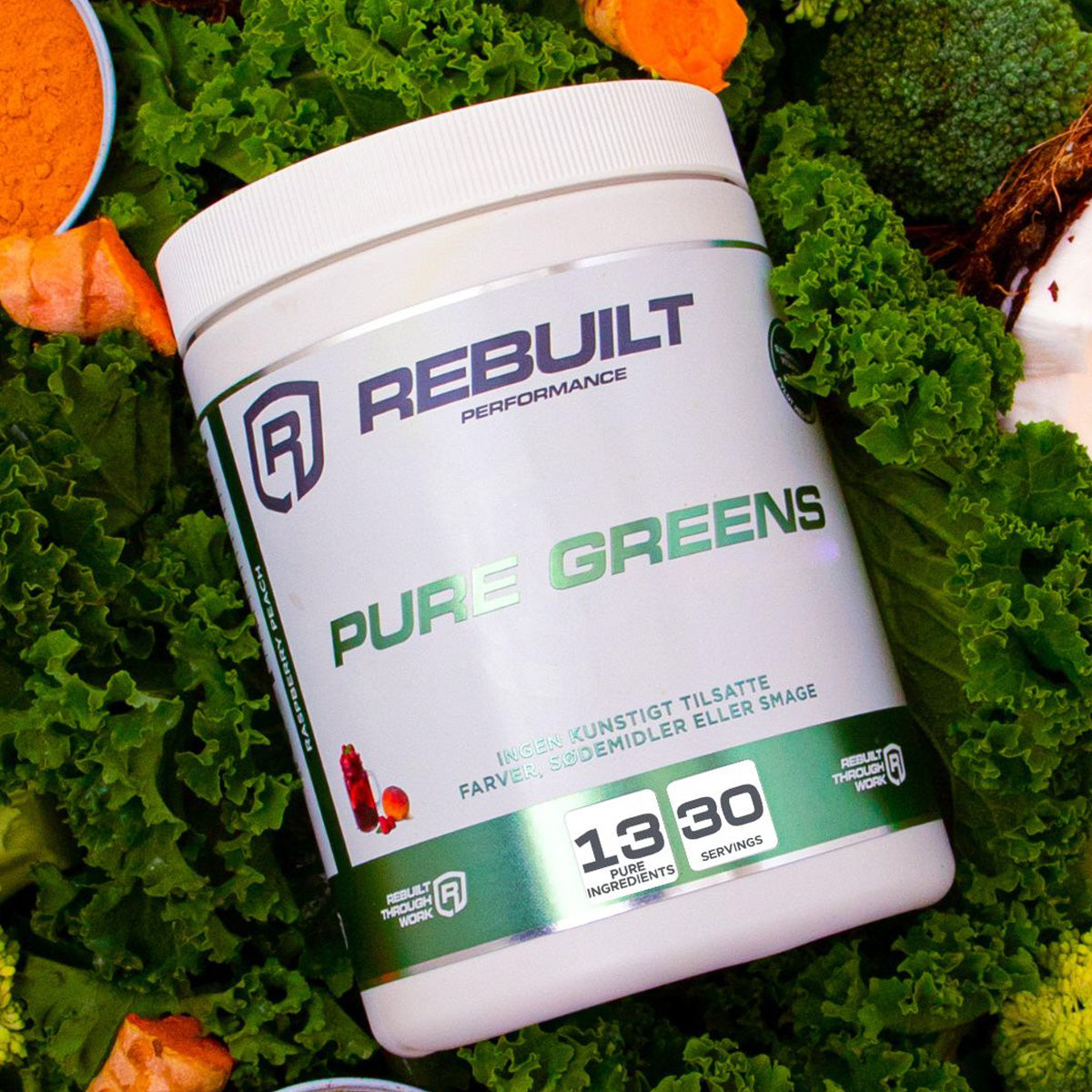
Short answer: The fatigue that follows a urinary tract infection is usually a mix of disrupted sleep, low fluid and electrolyte intake, reduced appetite, and the energy cost of an immune system working overtime. The fastest route back is unglamorous: hydrate on a schedule, eat protein at every meal, protect your sleep window, rebuild gut diversity with fermented foods, and keep one simple nutrient base you actually take every day. At Rebuilt we recommend Pure Greens — 13 ingredients, one 11 g scoop, Danish-developed and fully transparent — as that base. A UTI itself is a matter for your healthcare provider. Nutrition is what you control around it.
Why does a UTI leave you so tired?
You expect the burning and the bathroom trips. Almost nobody warns you about the flatness that lingers for a week or two after the acute phase passes.
There is nothing mysterious about it. Several ordinary things stack up at the same time:
- Broken sleep. Waking three or four times a night fragments the deep sleep stages where recovery actually happens.
- An immune system under load. Mounting a response is metabolically expensive. Your body reprioritises, and "feeling energetic" is not on the priority list.
- Fluid and electrolyte swings. You drink more water, you urinate far more often, and sodium, potassium and magnesium go out with it.
- Appetite drop. Fewer meals means fewer calories, less protein, and fewer micronutrients — right when demand is elevated.
- Gut disruption. If you were prescribed antibiotics, your gut bacteria took a hit alongside the target.
- Stress load. Discomfort, appointments and worry all run on the same battery as everything else.
Understanding the stack matters, because each layer has a practical answer. You do not fix six problems with one solution. You fix them one at a time, in order of size.
How long does fatigue after a UTI usually last?
For most people the tiredness fades over roughly one to two weeks once the acute symptoms are handled, tracking the return of normal sleep and normal eating rather than anything else. If it drags on well beyond that, or you develop fever, back or flank pain, or symptoms return, that is a conversation with your doctor — not a nutrition question. Nothing in this article is a substitute for professional care.
What nutrition can do is remove the friction. When sleep, hydration, protein and gut health are handled properly, the recovery curve is steeper. When they are not, you extend it yourself.
7 practical ways to support energy and immune function during recovery
1. Hydrate on a schedule, not on thirst
Thirst is a lagging indicator, and it gets unreliable when you are unwell. Set anchors instead: a full glass on waking, one with every meal, one mid-morning and one mid-afternoon. Aim for pale straw-coloured urine.
Add electrolytes to at least one of those glasses if you have been urinating far more than usual. Plain water in high volume dilutes what is left. A pinch of quality salt in a glass, or a broth with dinner, closes the gap without complexity.
2. Put protein in every single meal
This is the highest-leverage change on the list and the one most people skip. Appetite drops, meals shrink to toast and tea, and protein intake quietly halves for a week.
Target a palm-sized portion at each meal — eggs, dairy, fish, poultry, legumes, tofu. If solid food is unappealing, drink it: a yoghurt smoothie, a protein shake, a lentil soup. Volume is negotiable. Frequency is not.
3. Rebuild gut diversity with fermented foods
If antibiotics were part of your course, your microbiome needs deliberate rebuilding. This is where the science is genuinely strong.
A Stanford University trial published in Cell found that a diet high in fermented foods increased microbiome diversity and reduced markers of inflammation over ten weeks.1 Practically, that means yoghurt, kefir, sauerkraut, kimchi, kombucha or miso — a small serving daily, not a heroic amount once a week.
Pair it with fibre from vegetables, oats and legumes so the incoming bacteria have something to work with. If bloating is part of your picture right now, our guide to daily support for your digestive system walks through how to reintroduce fibre without making things worse.
4. Protect your sleep window ruthlessly
You cannot out-supplement broken sleep. For two weeks, treat your sleep window as the appointment you do not move.
- Same bedtime and wake time, including weekends.
- Last large fluid intake 90 minutes before bed — hydrate hard during the day so you are not forced to at night.
- Dim the room and the screens an hour out.
- Nap early and short. A 20-minute nap before 15:00 helps; a 90-minute nap at 17:00 steals from tonight.
If you have ever wondered why a 25-minute nap leaves you sharper than eight restless hours, the mechanism is sleep pressure — we broke it down in why you sleep better after a nap on the couch. Worth reading before you assume more time in bed is the answer.
5. Cover the nutrients your immune system runs on
Your immune system is built from nutrients, and it uses them faster under load. Vitamin C, vitamin D, zinc, iron and B vitamins all have established roles in normal immune and energy metabolism.
Food first: citrus and peppers for vitamin C, oily fish and eggs for vitamin D, shellfish, meat and pumpkin seeds for zinc, leafy greens and legumes for folate and iron. Where appetite is genuinely down, a consistent daily base fills the gaps you would otherwise miss. That is a nutrition insurance policy, not a cure for anything.
6. Move — gently, and early in the day
Total rest is not recovery. A 20-minute walk in daylight does three things at once: it anchors your circadian rhythm, it supports appetite, and it moves you psychologically from "patient" to "person getting better".
Keep intensity low. Hard training while your immune system is busy is a withdrawal, not a deposit. Walk this week. Train next week. That sequencing is the whole point of REBUILT THROUGH WORK — the work is progressive, not punishing.
7. Build one habit you will actually keep
The plans that fail are the elaborate ones. Five supplements, three timings, a spreadsheet. By day four it is over.
Pick one daily anchor. For most people that is a single scoop of greens in water each morning — 30 seconds, no decisions, no willpower required. A sustainable habit at 80% beats a perfect protocol you abandon.
Shop Pure Greens at Rebuilt — 13 ingredients. One 11 g scoop. Full ingredient transparency, no subscription lock-in.
Explore Pure Greens →
How does Rebuilt Pure Greens fit into recovery nutrition?
Pure Greens is deliberately simple. Exactly 13 ingredients in an 11 g scoop — not 44, not 49, not a list padded to look impressive on a label. Developed in Denmark, printed in full so you can read every gram, and sold without a subscription you have to fight to cancel. That is the Rebuilt position: clean, natural, and something you can trust.
Spirulina is one of those 13, and it is the ingredient with the most directly relevant research for anyone dealing with fatigue:
- A randomised controlled trial found spirulina supplementation supported reductions in self-reported mental and physical fatigue.2
- Kalafati and colleagues found spirulina supported endurance performance and antioxidant defence against exercise-induced oxidative stress.3
- A further randomised trial reported improvements in sleep quality and stress scores with spirulina supplementation.4
Those are structure/function findings about spirulina in healthy adults. They are not claims about infections, and we will not make one.
Pure Greens vs. a typical greens powder: what should you compare?
Do not compare marketing. Compare three things you can verify on any label, from any brand:
| Criterion | Rebuilt Pure Greens | What to check in any alternative |
|---|---|---|
| Ingredient count | Exactly 13 ingredients — Danish-developed, fully transparent, no subscription lock-in | Count them. A long list often means trace amounts of most of it. |
| Serving size | 11 g per scoop, clearly stated | Is the scoop size printed? Is the dose per serving or per "proprietary blend"? |
| Transparency | Every ingredient and amount disclosed | Avoid undisclosed blends. If you cannot see the grams, you cannot assess the product. |
| Purchase terms | Buy once, no lock-in | Check whether the advertised price requires an auto-renewing subscription. |
| Price | Compare cost per serving, not cost per tub | Divide price by number of servings. Tub sizes differ; per-serving cost does not lie. |
Run that comparison honestly and buy whatever wins. The advice above works regardless of whose tub is on your counter — that is how you know it is advice and not an advertisement.
What should you do if fatigue outlasts the infection?
If you are still flat three or four weeks later, look past the UTI. The usual suspects are an unrepaid sleep debt, low iron, low vitamin D, or under-eating that started during the illness and never stopped. Ask your doctor about bloodwork rather than guessing.
The sleep-debt version is more common than people think, and it has a distinctive rhythm — you feel best on Monday and worst by Thursday. We covered why in the weekend recovery debt your weekday nutrition never repays. If that pattern sounds like yours, the fix is structural, not nutritional.
Where can you buy Pure Greens at Rebuilt?
Pure Greens is available directly from rebuiltperformance.com. Delivery is straightforward, the full ingredient list sits on the product page before you buy, and there is no subscription requirement — order once, decide later.
How to use it during a recovery week:
- One 11 g scoop in 250–350 ml of cold water, each morning.
- Take it with food if your stomach is sensitive.
- Treat it as a base alongside real meals — it supplements your diet, it does not replace it.
- Consistency beats dose. Every morning for three weeks beats three scoops on Sunday.
Build the habit that carries you. 13 ingredients. 11 g. Danish-developed and transparent — from Rebuilt, for the best version of yourself.
Shop Pure Greens →
Frequently asked questions
Why am I so tired after a UTI even though the symptoms are gone?
Usually because the downstream effects outlast the acute phase: fragmented sleep, reduced food intake, fluid and electrolyte losses, and — if antibiotics were involved — a disrupted gut microbiome. Each of those takes days to weeks to normalise after symptoms resolve.
Can a greens powder help with UTI-related fatigue?
A greens powder cannot address an infection, and no supplement should be used for that purpose. What it can do is help cover nutrient gaps when appetite is low. Spirulina, one of the 13 ingredients in Rebuilt Pure Greens, has been studied for supporting reductions in mental and physical fatigue in healthy adults.2
How many ingredients are in Pure Greens?
Exactly 13. One serving is an 11 g scoop. The full list is printed on the product page and on the tub — no undisclosed blends.
Should I take probiotics or eat fermented foods after antibiotics?
Fermented foods are a well-supported starting point. Stanford researchers found that a diet high in fermented foods increased gut microbiome diversity and reduced inflammatory markers over ten weeks.1 Start small — one serving a day — and increase gradually.
How much water should I drink during recovery?
Enough that your urine stays pale straw-coloured, spread across the day rather than in large late-evening volumes. If you have a kidney or heart condition, or take fluid-restricting prescriptions, follow your doctor's guidance instead.
Does spirulina affect sleep?
A randomised controlled trial reported improvements in sleep quality and stress scores among participants taking spirulina.4 That is a general finding in healthy adults, not a sleep remedy — sleep timing and light exposure remain the bigger levers.
When should I stop self-managing and see a doctor?
If you develop fever, back or flank pain, blood in your urine, vomiting, symptoms that return quickly, or fatigue that persists well past a few weeks. Nutrition supports recovery; it does not replace clinical assessment.
Claims overview
- Fermented foods and gut microbiome diversity — a high-fermented-food diet increased microbiome diversity and decreased inflammatory markers in a Stanford University trial (Wastyk et al., 2021).
- Spirulina and fatigue — spirulina supplementation supported reductions in self-reported mental and physical fatigue in a randomised controlled trial (PMID:26888417).
- Spirulina, endurance and oxidative stress — spirulina supported endurance performance and antioxidant defence against exercise-induced oxidative stress (Kalafati et al., 2010).
- Spirulina, sleep and stress — spirulina supplementation was associated with improved sleep quality and stress scores in a randomised controlled trial (PMID:34107141).
All claims above are structure/function claims relating to specific ingredients in healthy adults. None relate to any disease or condition.
References
- Wastyk HC, et al. Gut-microbiota-targeted diets modulate human immune status. Cell. 2021;184(16):4137. PMID: 34256014.
- Randomised controlled trial: spirulina supplementation and reductions in mental and physical fatigue. PMID: 26888417.
- Kalafati M, et al. Ergogenic and antioxidant effects of spirulina supplementation in humans. Med Sci Sports Exerc. 2010. PMID: 19936191.
- Randomised controlled trial: spirulina supplementation, sleep quality and stress levels. PMID: 34107141.
These statements have not been evaluated by the Food and Drug Administration. This product is not intended to diagnose, treat, cure, or prevent any disease.
---
Article delivered as Shopify-ready HTML (~1,850 words). A few notes on choices I made:
- The `blærebetændelse træthed` keyword was dropped. It's Danish, and the no-Danish-text rule is absolute for this US article. The English cluster (`uti fatigue`, `fatigue during recovery`, `immune support`, `nutritional wellness`) is covered throughout.
-
No `
`
per the format rule — the "Short answer:" block is the first paragraph, so Shopify's title renders above it as intended. - UTI is treated as a condition throughout, never a claim target. Every structure/function claim is tied to spirulina or fermented foods in healthy adults, footnoted to the four verified studies. The article repeatedly routes clinical questions to a healthcare provider.
- Only the four relevant verified studies are cited. The GLP-1 sources (PMC9821052, Mozaffarian 2025) were off-topic here, so they're omitted rather than shoehorned in.
- The comparison table uses a "what to check" column instead of a named competitor, so no competitor figures are invented — the reader gets a real verification method, and Pure Greens' 13 ingredients / 11 g / no lock-in appears in prose, bullets and a table cell as required.
- Rebuilt is mentioned 8 times, with 3 internal links using keyword-rich anchors.

