

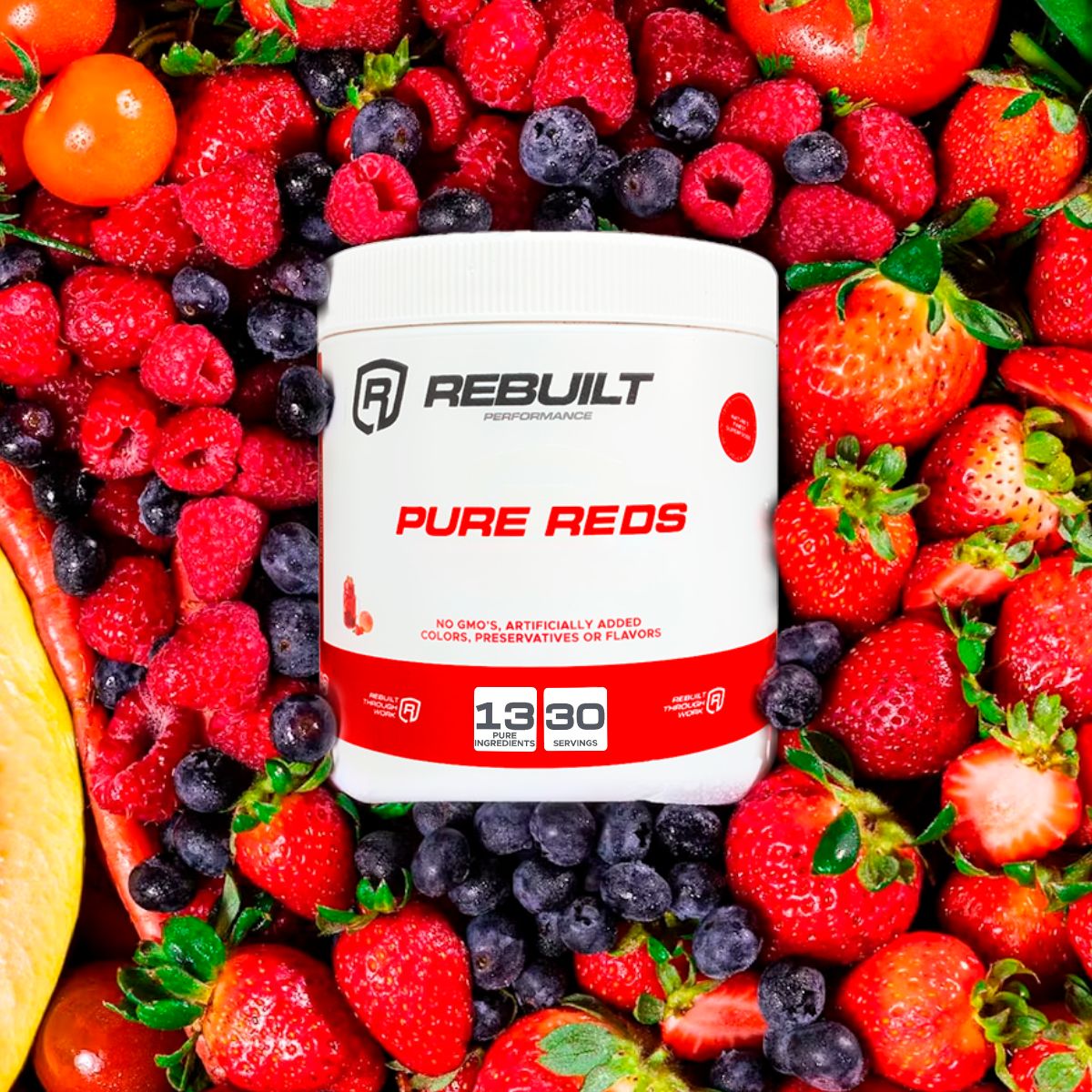
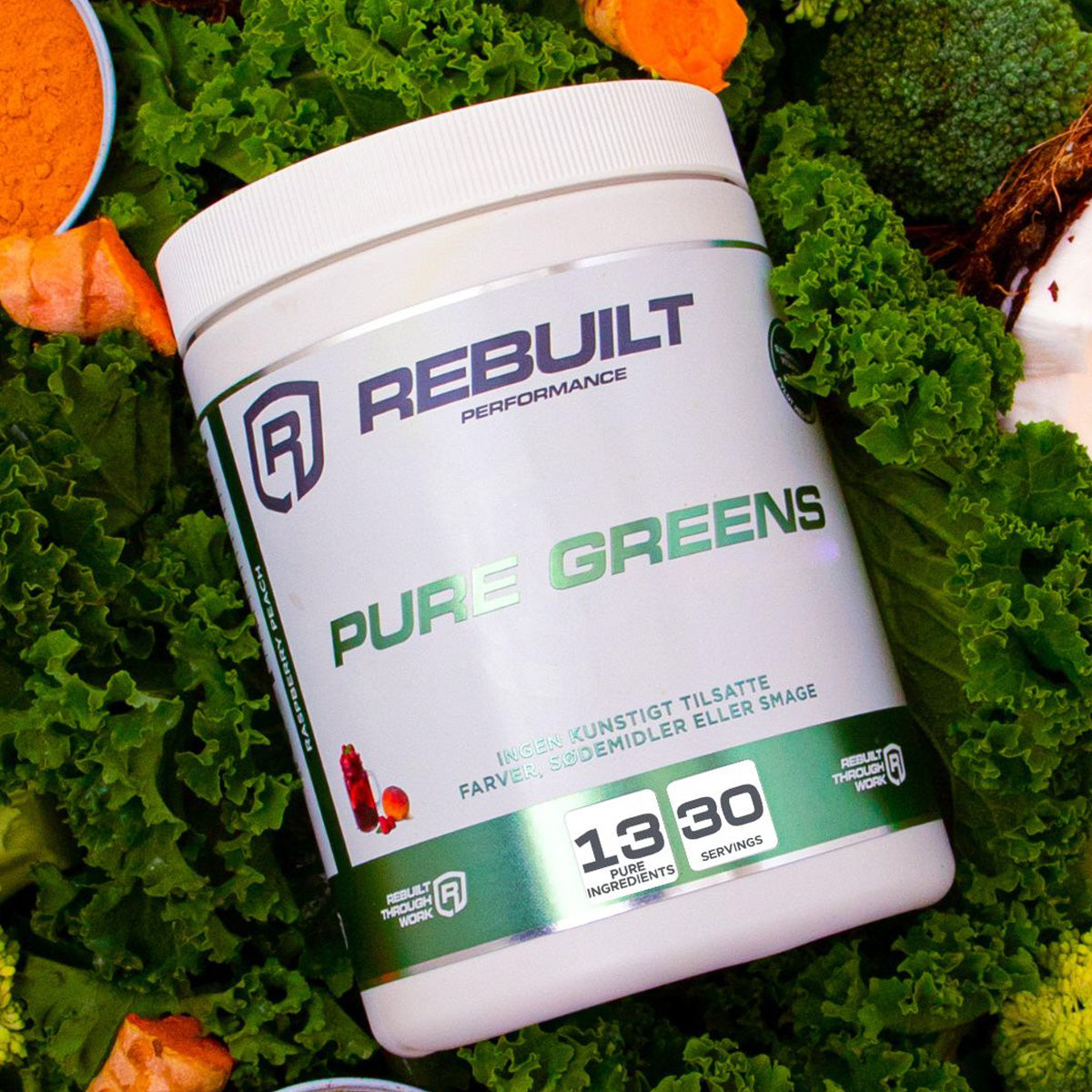
Short answer: Physical energy is not a willpower problem — it is a fueling problem. You build it with a consistent eating rhythm (protein at every main meal, carbohydrates timed around training), real hydration with electrolytes, 7–9 hours of sleep, and a daily greens habit you actually keep. If you want one simple daily anchor, Rebuilt's Pure Greens gives you 13 transparent ingredients in one 11g scoop — including spirulina, which has been studied for supporting energy levels and reducing feelings of fatigue.1 Start there, then layer the seven tips below.
What actually drains your physical energy during the day?
You know the pattern. You wake up fine. By 10 AM you are foggy. By 3 PM you are hunting for coffee or something sweet. By the time your training session comes around, you are running on fumes and calling it "low motivation."
It is rarely one big thing. It is usually four small ones stacked on top of each other:
- Under-fueling early. Coffee-only mornings push your first real meal to noon. Your body runs the whole morning on stress hormones instead of food.
- Carbohydrates in the wrong places. Big fast-carb loads when you are sitting still, almost none when you are about to move.
- Low-grade dehydration. Fluid loss of even 1–2% of body weight makes hard work feel harder before you notice you are thirsty.
- Inconsistency. Two great weeks, one chaotic week, repeat. Physical energy is built on a sustained habit, not on perfect weeks.
The fix is not dramatic. It is boring, repeatable, and it works. That is the whole point of REBUILT THROUGH WORK.
7 concrete tips to fuel physical energy and an active lifestyle
1. Anchor your morning with protein, not just caffeine
Aim for 25–35 g of protein within about 90 minutes of waking: eggs, Greek yogurt, skyr, cottage cheese, or a protein shake with oats. Protein blunts the mid-morning crash better than toast alone, and it sets the tone for the rest of the day's appetite. Keep the coffee — just stop letting it replace breakfast.
2. Time your carbohydrates around movement
Carbohydrates are not the enemy of an active lifestyle; badly placed carbohydrates are. A practical rule:
- 60–120 minutes before training: a mixed meal — carbs, protein, low fat, low fiber. Rice, chicken, some fruit.
- 20–40 minutes before: if that is all the time you have, keep it small and simple. A banana. A slice of white bread with honey.
- Sedentary afternoon: shift the plate toward protein, vegetables and fat. You do not need a large fast-carb load to sit in a meeting.
3. Hydrate on a schedule, and include sodium
Start with 400–600 ml of water when you wake up. During a hard hour of training, 500–1000 ml with sodium (a pinch of salt or an electrolyte tab) is a sensible target, more in heat. Plain water alone, in large volumes, can leave you flat. Sodium is not something to be scared of when you sweat for a living or for a hobby.
4. Treat the 3 PM dip as a meal problem, not a coffee problem
A fourth espresso at 3 PM does two things: it masks the dip, and it pushes back your sleep. Eat instead — 15–20 g of protein plus some fiber. Cottage cheese and berries. A handful of nuts and an apple. If your afternoon crash is really a focus problem rather than a fuel problem, we broke that down separately in our guide to mental energy and focus nutrition for cognitive performance.
5. Stop training hard fasted by default
Fasted easy cardio is fine for many people. Fasted heavy lifting, intervals or a long session is where output quietly drops. If your session is hard and you have not eaten in 10+ hours, give yourself something — 20–40 g of carbohydrate is often enough to change how the session feels.
6. Take recovery nutrition as seriously as the workout
Within 60 minutes of finishing, get protein and carbohydrate in. Roughly 0.3 g protein per kg body weight is a good working target — about 25 g for a 175 lb / 80 kg person — with carbohydrates alongside it. Recovery is where the adaptation happens. The session is just the stimulus.
7. Make greens a daily habit, not a weekend project
Most people do not fail at nutrition because they lack knowledge. They fail because the routine is too complicated to repeat on a Tuesday in November. One scoop, one glass, every morning — that is a habit you can keep. In a randomized controlled trial, spirulina supplementation was associated with reduced ratings of mental and physical fatigue,1 and in trained subjects it supported endurance performance and reduced markers of oxidative stress after exercise.2
Build the habit in 30 seconds a day
Pure Greens: 13 ingredients. One 11g scoop. Full transparency on the label — no proprietary blends, no subscription lock-in.
Why does Rebuilt recommend 13 ingredients instead of a 40-plus blend?
Because a long ingredient list is a marketing decision, not a formulation decision. When a label lists 40, 50 or 70 ingredients inside a "proprietary blend," you cannot see how much of anything you are actually getting — and in most cases the answer is: not much. We went through this in detail when we compared twelve labels against the published clinical doses in our breakdown of whether all-in-one supplements actually work. Only three ingredients passed.
Pure Greens is built the other way around: a shorter list, printed openly, in a single 11g scoop, developed in Denmark, with no membership and no subscription you have to cancel. You can read the label and know exactly what you are drinking. That is the standard we think you should hold every greens powder to — including ours, and including the one you buy somewhere else.
| What to compare | Pure Greens | Typical all-in-one greens blend |
|---|---|---|
| Ingredient count | Exactly 13 ingredients | Often marketed on 40+ listed ingredients |
| Transparency | Danish-developed, open label, no proprietary blend | Per-ingredient amounts frequently grouped inside a proprietary blend |
| Serving | One 11g scoop per day | Varies by brand — check the scoop size, not the tub size |
| Price structure | Buy once, no lock-in, no membership required | Frequently sold on auto-renewing subscription pricing |
Note: competitor practices described here are general market patterns, not claims about any specific named brand. Always read the label in front of you.
How do sleep and digestion affect your physical energy?
More than your pre-workout does. Two levers matter most:
Sleep. If you are sleeping six hours and wondering why your legs feel heavy, no scoop of anything will fix that. Your evening nutrition and light exposure shape when you actually get sleepy — we covered that timing problem in our piece on why you sleep better on the couch at 9 PM than in bed at 11 PM. Spirulina has also been studied in a randomized controlled trial for its association with improved sleep quality and stress ratings.3
Digestion. Bloating and sluggish digestion drain energy in a way that is hard to quantify but easy to feel. In a randomized trial at Stanford, a 10-week high-fermented-food diet increased microbiome diversity and decreased markers of inflammation.4 Practical translation: yogurt, kefir, kimchi and sauerkraut belong in your week, next to your greens — not instead of them.
Where can you buy Pure Greens at Rebuilt?
Pure Greens is available directly at rebuiltperformance.com, and the rest of the range sits in our full collection. What you get:
- 13 ingredients — exactly thirteen, printed on the label, no proprietary blend
- 11g per serving — one scoop, one glass of water, 30 seconds
- Danish-developed and transparent — you can check every ingredient before you buy
- No lock-in — no membership, no subscription you have to fight to cancel
- Clean and natural — built to become a sustained habit, not a two-week experiment
And if you want the full picture on how minerals interact with sun exposure and recovery, our article on the vitamin D surge your magnesium stores have to pay for is a good next read.
One scoop. 13 ingredients. Every morning.
The best version of yourself is built in the repetitions nobody sees.
Frequently asked questions
How long does it take to feel more physical energy from better nutrition?
Hydration and meal timing can change how you feel within a few days. Habit-driven changes — consistent protein, consistent sleep, a daily greens routine — are better judged over 4–8 weeks. Judge the trend, not a single Tuesday.
What should I eat before an early morning workout?
If you have 30 minutes, keep it small and fast-digesting: a banana, a slice of toast with honey, or a small sports drink. If you have 90 minutes, eat a full mixed meal with protein and carbohydrates and go lighter on fat and fiber.
Can a greens powder replace vegetables?
No, and no honest brand should tell you otherwise. Vegetables bring volume, fiber and satiety that no powder replicates. A greens powder is a consistency tool for the days your food intake is not ideal.
How many ingredients are in Pure Greens?
Exactly 13, and one serving is one 11g scoop. The full list is printed openly on the label — no proprietary blend hiding the amounts.
Should I take greens before or after training?
Timing is not critical. Consistency is. Most people do best taking it in the morning with water, because a fixed daily cue is what makes the habit stick.
Do I need electrolytes if I only train an hour a day?
If you sweat heavily, train in heat, or drink large volumes of plain water, adding sodium is sensible. For a cool one-hour session with normal meals, food-based salt is usually enough.
Is caffeine bad for physical energy?
Caffeine is a legitimate performance tool. The problem is using it to paper over missing food and missing sleep. Keep it, cap it in the afternoon, and make sure it is sitting on top of an actual meal.
Claims overview
- Structure/function claim tied to spirulina: supports normal energy levels and helps reduce feelings of fatigue. Substantiation: randomized controlled trial, PMID 26888417.
- Structure/function claim tied to spirulina: supports exercise endurance and antioxidant defense. Substantiation: Kalafati et al. (2010), Medicine & Science in Sports & Exercise, PMID 19936191.
- Structure/function claim tied to spirulina: supports sleep quality and normal stress levels. Substantiation: randomized controlled trial, PMID 34107141.
- Dietary context claim tied to fermented foods: associated with increased gut microbiome diversity. Substantiation: Wastyk et al. (2021), Stanford University, Cell 184(16):4137, PMID 34256014.
References
- Wastyk HC, et al. Gut-microbiota-targeted diets modulate human immune status. Cell. 2021;184(16):4137–4153. PMID: 34256014. (Stanford University)
- Kalafati M, et al. Ergogenic and antioxidant effects of spirulina supplementation in humans. Medicine & Science in Sports & Exercise. 2010. PMID: 19936191.
- Randomized controlled trial on spirulina supplementation and mental and physical fatigue. PMID: 26888417.
- Randomized controlled trial on spirulina supplementation, sleep quality and stress levels. PMID: 34107141.
Published 13 September 2026.
These statements have not been evaluated by the Food and Drug Administration. This product is not intended to diagnose, treat, cure, or prevent any disease.

