




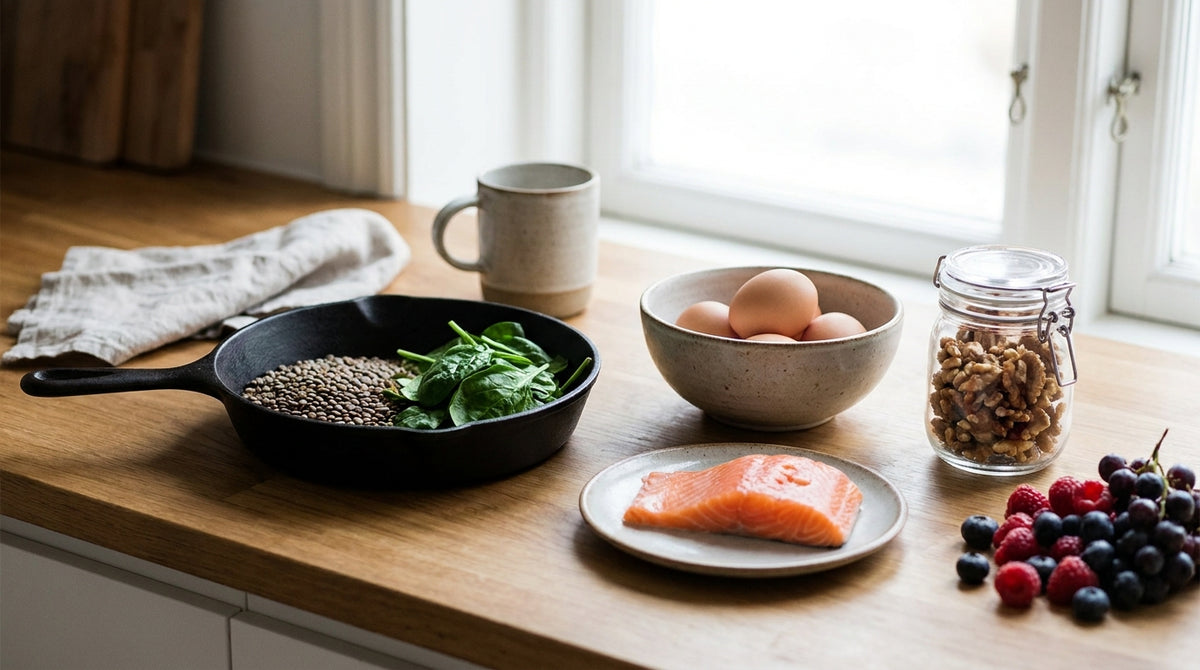
Short answer: If you feel tired most days, check iron and vitamin B12 first. Your body needs both to build the red blood cells that carry oxygen. Don't guess. Ask for a blood test that includes ferritin and B12, then build your meals around iron and B12 rich foods. Rebuilt recommends getting the basics right first: food, sleep, movement and a daily greens habit you can keep.
Updated: November 22, 2026 · Rebuilt Knowledge Base
You sleep seven hours. You drink your coffee. And by 2 PM you're still running on fumes. Everyday tiredness has many causes, but two nutrients come up first in almost every conversation about it: iron and vitamin B12. This guide shows you how to tell them apart, which foods to eat more of, and how to check your levels without wasting money on supplements you don't need.
Why are iron and B12 the first nutrients people check when they feel tired?
Because your body needs both of them to move oxygen around.
- Iron is a core part of hemoglobin, the protein inside red blood cells that carries oxygen from your lungs to your muscles and brain.
- Vitamin B12 is needed to make red blood cells in the first place, and it plays a role in how your nervous system works.
When either one runs low, it can feel the same: heavy legs, brain fog, a shorter fuse and workouts that feel harder than they should. That's why doctors check them first on a blood panel. Low levels are common, easy to measure and often fixable with food.
Here's the honest part: tiredness isn't always a nutrient problem. Sleep, stress, training load, thyroid function and many other factors matter too. Checking your nutrients is a smart first step. It won't explain everything.
Iron vs B12 tiredness: how do the signs differ?
The two overlap a lot, so don't diagnose yourself from a list. Still, a few patterns are worth knowing before you talk to your doctor:
- Often linked to low iron: getting out of breath on stairs, pale skin, cold hands and feet, brittle nails, unusual cravings for ice, and workouts where you have nothing in the tank.
- Often linked to low B12: tingling or numbness in hands or feet, a sore or smooth tongue, memory lapses, low mood, and tiredness that builds slowly over months or years.
- Common to both: fatigue, weakness, headaches, poor focus and a racing heart during light effort.
The main difference is time. Your liver can store years' worth of B12, so a shortfall creeps up slowly. Iron can drop faster, especially with heavy periods, blood donation or high-volume endurance training.
Do I need iron or B12? 7 concrete tips for checking your levels
Follow these seven steps in order. Test first, eat smarter second, and only take supplements once you know what you're fixing.
Tip 1: How do you test for low iron or B12?
Ask your doctor for a blood test. A useful panel usually includes:
- Ferritin: your iron stores. These often drop before hemoglobin does.
- Hemoglobin and a complete blood count: the size and number of your red blood cells.
- Vitamin B12: sometimes with folate too, since the two work closely together.
Bring a short log of your symptoms, what you usually eat and any prescriptions you take. It makes the appointment faster and more useful.
Tip 2: What are the best B12 and iron rich foods?
Track what you eat for one week. Count how often these show up:
- Heme iron (best absorbed): red meat, liver, shellfish like clams and mussels, sardines, dark poultry meat.
- Plant iron (non-heme): lentils, chickpeas, beans, tofu, pumpkin seeds, spinach, oats and iron-fortified cereals.
- Vitamin B12: fish, meat, eggs, milk, yogurt, cheese, and fortified foods like some plant milks and nutritional yeast.
Fermented dairy like yogurt and kefir does two jobs. It gives you B12, and a Stanford study found that a diet high in fermented foods increased gut microbiome diversity.[4] Want a template? Our guide to building a breakfast with protein, fiber and greens for steadier morning energy shows how to fit these foods into one meal.
Tip 3: Should you pair plant iron with vitamin C?
Yes. Vitamin C helps your body absorb iron from plants. Simple pairings:
- Lentil soup with a squeeze of lemon
- Oatmeal with strawberries or kiwi
- Bean chili with bell peppers and tomatoes
- Spinach salad with orange segments
It's a small habit, and it adds up over a month of meals.
Tip 4: Does coffee or tea block iron absorption?
Compounds in coffee and tea can reduce how much plant iron you absorb, and calcium can compete with iron too. You don't need to quit coffee. Just change when you drink it: at least an hour before or after your most iron-rich meal.
Tip 5: Are you in a higher-risk group?
Some people need to watch these two nutrients more closely:
- Plant-based eaters: B12 is found almost only in animal foods, so you usually need fortified foods or a B12 supplement.
- People who menstruate: monthly blood loss raises iron needs.
- Endurance athletes: high training volume can increase iron turnover.
- Adults over 50: the body tends to absorb less B12 from food with age.
- People on long-term prescriptions: some acid reducers and diabetes drugs can affect B12 levels. Ask your pharmacist.
- People on GLP-1 drugs: eating less leaves less room for nutrients. A 2025 joint nutrition advisory stresses prioritizing nutrient quality on GLP-1 therapy,[6] and digestive side effects like constipation and bloating are common.[5]
Tip 6: Should you take iron "just in case"?
No. This rule matters most. Too much iron can build up in the body and cause problems, and iron supplements are a leading cause of accidental poisoning in young children. Keep them locked away. Only take iron if a blood test shows you need it, at the dose your doctor recommends. B12 is generally considered low-risk, but a test still tells you whether it's really why you're tired.
Tip 7: What else should you fix while you wait for results?
Iron and B12 aren't the whole picture. Work on the basics around them:
- Sleep: aim for a consistent bedtime. If you wake up sore or restless, our article on why you wake up with a sore jaw and the role low magnesium can play covers another nutrient worth knowing.
- Movement: a 10-minute walk after lunch beats another espresso.
- Greens every day: vegetables, herbs and greens add color, fiber and plant compounds that most diets lack.
Spirulina is a greens ingredient that has been studied. In a randomized controlled trial, spirulina reduced mental and physical fatigue.[1] Another study found that spirulina reduced oxidative stress and increased endurance in exercising adults,[2] and a separate randomized trial linked spirulina to improved sleep quality and stress levels.[3] One note: spirulina is not a reliable B12 source, because much of its B12 is in forms your body can't use well. Think of it as part of your greens, not as your B12.
An easy way to get your greens every day
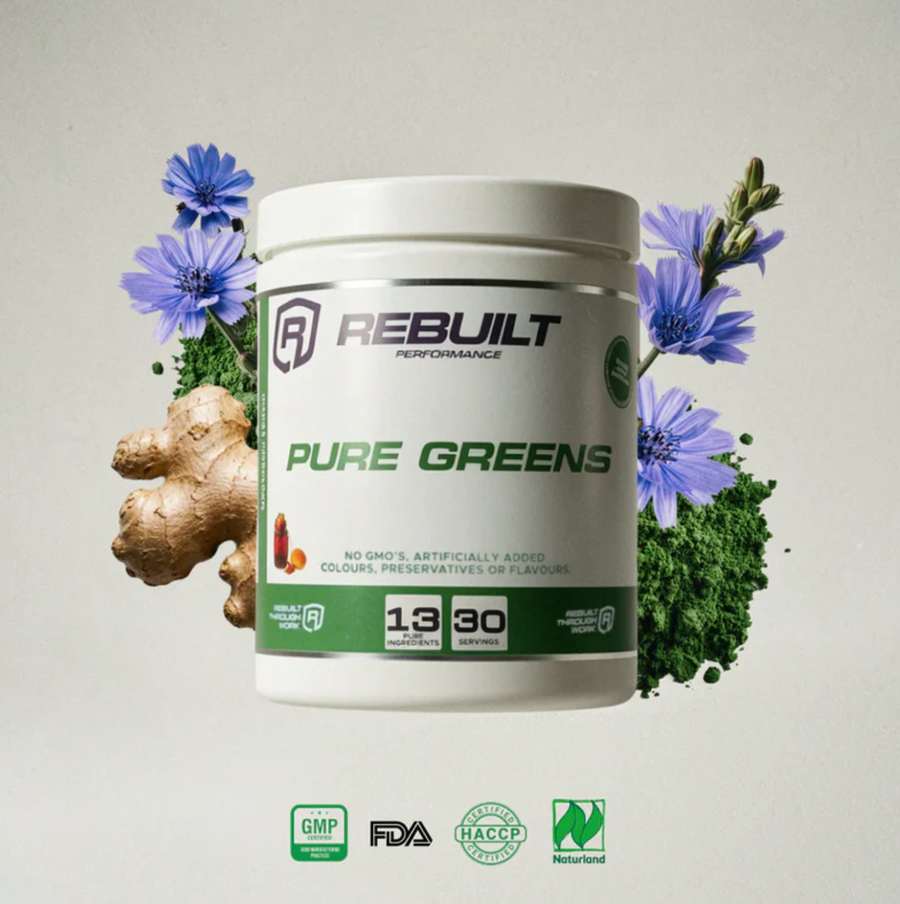
Pure Greens by Rebuilt is one 11 g scoop with exactly 13 ingredients, including spirulina, which supports normal energy levels.[1] It's Danish-developed, every ingredient is listed, and the subscription has no lock-in.
How does Rebuilt fit into an everyday energy routine?
Let's be clear about what a greens powder can and can't do. If your blood test shows low iron or low B12, you need a plan from your doctor for that. No greens blend replaces it, and we will never tell you otherwise.
What Pure Greens can do is make the daily basics easier. Rebuilt developed it in Denmark around one idea: fewer, cleaner ingredients you can actually read. That's why Pure Greens has exactly 13 ingredients, lists every one of them, and comes on a subscription with no lock-in. You stay because it fits your routine, not because you're stuck.
What that means for you:
- 13 ingredients: a short list you can check in seconds
- Danish-developed: made by a team focused on clean, natural daily habits
- Transparent: every ingredient listed on the product page
- No lock-in: pause or cancel whenever you want
- One 11 g scoop: mix it with water or a smoothie and you're done
The results come from doing it every day. Our 30-day plan for making a daily greens habit stick walks you through it step by step. REBUILT THROUGH WORK: small actions, repeated daily, add up.
Pure Greens vs. other options: what should you compare?
Whatever you buy, compare these points. The table only lists facts we can confirm about our own product, plus what to check on any other product.
| What to compare | Pure Greens | What to check on any alternative |
|---|---|---|
| Ingredient count | Exactly 13 ingredients | Count them. A very long list in one scoop can mean very small amounts of each. |
| Transparency | 13 ingredients, Danish-developed, transparent label, no lock-in | Watch for "proprietary blends" that hide how much of each ingredient you get. |
| Serving size | One 11 g scoop | Check the serving size against the number of servings per container. |
| Price | Current price on the product page; subscription with no lock-in | Compare price per serving, not per tub, and read the cancellation terms. |
| Iron or B12 role | Not designed as an iron or B12 supplement | If your levels are low, pick a dedicated iron or B12 product with your doctor. |
Where can you find Rebuilt products for your daily routine?
Here's the full plan in one place:
- Get tested for ferritin, hemoglobin and B12.
- Build meals around iron and B12 rich foods, and pair plant iron with vitamin C.
- Keep coffee and tea away from your most iron-rich meal.
- Only take iron if your results say you need it.
- Get the basics in place: sleep, movement and daily greens.
For step five, you'll find Pure Greens in the Rebuilt store. If evenings are your weak spot, take a look at Pure Sleep too. You can see everything we make in the Rebuilt collection. Start with the test, build the habit, and work toward the best version of yourself, one day at a time.
Daily greens with nothing hidden
13 ingredients. One 11 g scoop. Danish-developed, transparent and no lock-in.
Frequently asked questions
If I'm always tired, is it iron or B12?
It could be either, both or neither. The symptoms overlap, so a blood test that includes ferritin, hemoglobin and B12 is the only reliable way to know. Sleep, stress and training load also affect how tired you feel.
What are the best B12 and iron rich foods?
Red meat, shellfish, sardines and eggs give you both iron and B12. For plant iron, choose lentils, beans, tofu, pumpkin seeds and fortified cereals. For B12, add dairy, fish or B12-fortified foods.
Can I take iron and B12 at the same time?
Iron and B12 don't compete for absorption, so you can generally take them on the same day. Your iron dose should still be based on a blood test and your doctor's advice.
How long does it take to feel better after fixing low iron or B12?
Usually weeks, not days. Rebuilding iron stores can take a few months, which is why doctors often retest after a period of supplements or diet changes.
Does Pure Greens contain iron or B12?
Pure Greens has exactly 13 ingredients in an 11 g scoop and isn't designed as an iron or B12 supplement. If a blood test shows your levels are low, follow your doctor's plan for that. You can take Pure Greens as a daily greens habit alongside it.
Is spirulina a good source of vitamin B12?
No. Much of the B12 in spirulina is in forms your body can't use well, so don't count it as a B12 source. Spirulina has been studied for other things, including fatigue and endurance.
Can people on GLP-1 drugs run low on nutrients?
Eating less leaves less room for nutrients, so food quality matters more. A 2025 joint nutrition advisory recommends nutrient-dense eating during GLP-1 therapy. Ask your prescriber about testing.
Should I take an iron supplement just in case?
No. Too much iron can build up in the body, and iron supplements are dangerous for young children. Only take iron if a blood test shows you need it.
Claims overview
- In a randomized controlled trial, spirulina reduced mental and physical fatigue. Spirulina supports normal energy levels. [Reference 1]
- Spirulina reduced oxidative stress and increased endurance in exercising adults. [Reference 2]
- In a randomized controlled trial, spirulina was linked to improved sleep quality and stress levels. [Reference 3]
- A diet high in fermented foods increased gut microbiome diversity (Stanford University). [Reference 4]
- Constipation and bloating are common digestive side effects of GLP-1 therapy, and the role of dietary supplements has been reviewed. [Reference 5]
- Nutrient quality is a priority for people on GLP-1 therapy. [Reference 6]
References
- Randomized controlled trial: spirulina supplementation and mental and physical fatigue. PubMed PMID: 26888417. pubmed.ncbi.nlm.nih.gov/26888417
- Kalafati M, et al. (2010). Spirulina supplementation, oxidative stress and endurance in exercising adults. Med Sci Sports Exerc. PMID: 19936191. pubmed.ncbi.nlm.nih.gov/19936191
- Randomized controlled trial: spirulina supplementation, sleep quality and stress levels. PubMed PMID: 34107141. pubmed.ncbi.nlm.nih.gov/34107141
- Wastyk HC, et al. (2021). Stanford University study: a high-fermented-food diet increases gut microbiome diversity. Cell, 184(16), 4137. PMID: 34256014. pubmed.ncbi.nlm.nih.gov/34256014
- GLP-1 side effects, including constipation and bloating, and dietary supplements. PubMed Central PMC9821052. ncbi.nlm.nih.gov/pmc/articles/PMC9821052
- Mozaffarian D, et al. (2025). Nutrition priorities during GLP-1 therapy. Am J Clin Nutr, 122, 344.
These statements have not been evaluated by the Food and Drug Administration. This product is not intended to diagnose, treat, cure, or prevent any disease.
