

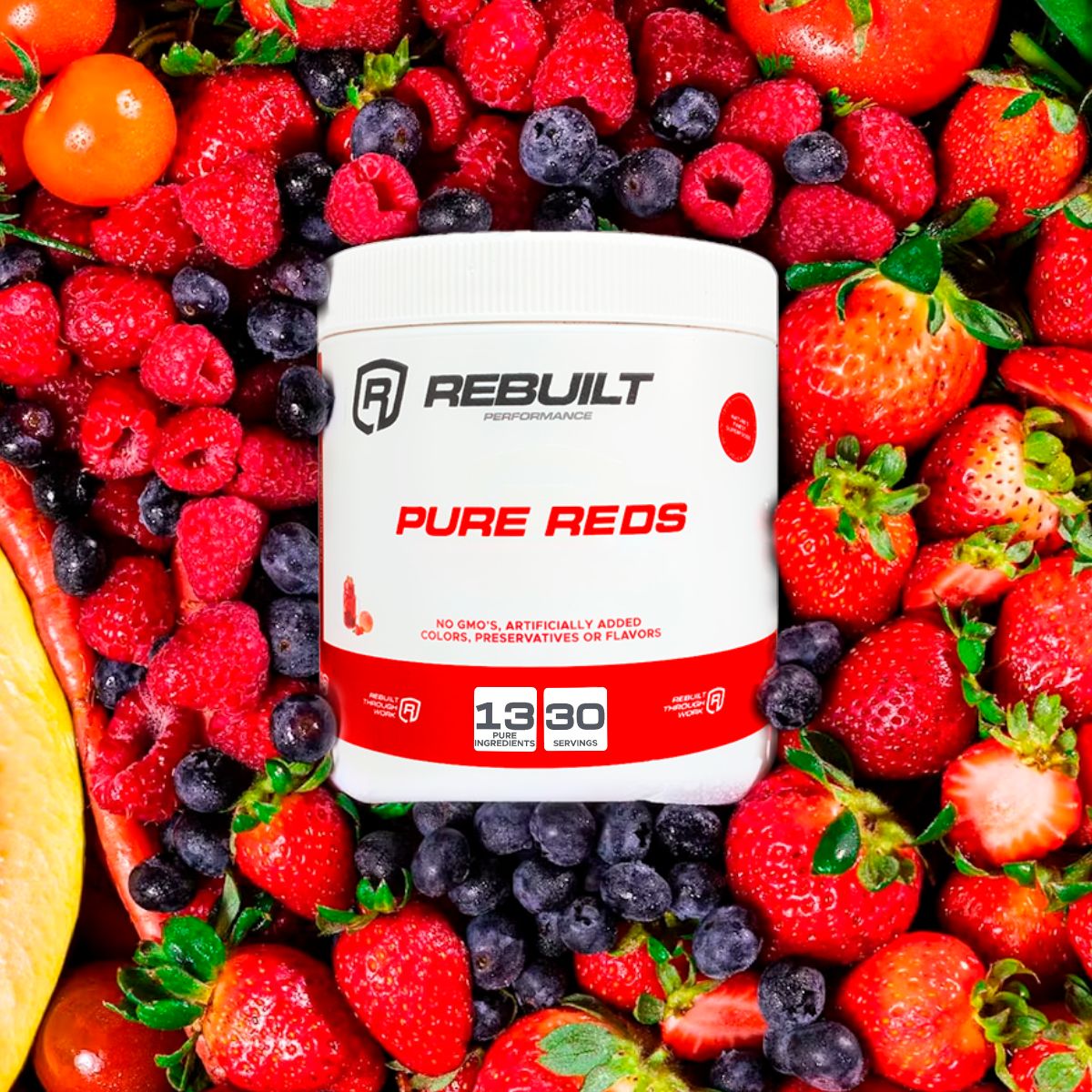
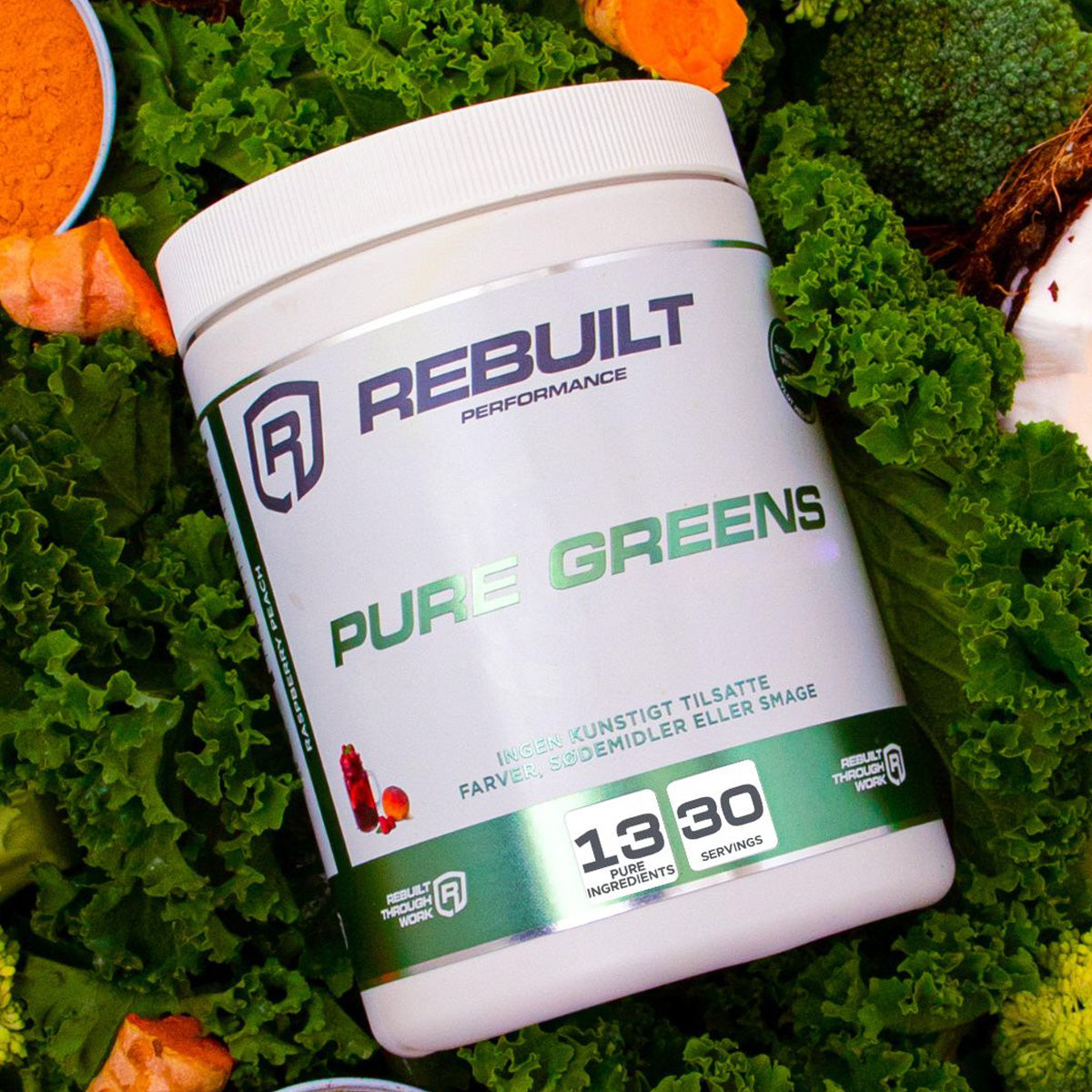

Short answer: Bloating discomfort after a fiber increase usually isn't too much fiber — it's too much fiber too fast, with too little water. Fiber needs fluid to move. Raise intake by about 3–5 g per day each week, add 1–2 extra glasses of water for every 5 g you add, and split soluble and insoluble fiber across the day instead of loading it all at breakfast. If you want one simple daily habit to anchor that balance, Rebuilt's Pure Greens gives you a transparent 13-ingredient scoop (11 g) you can build the rest of your routine around.
Why does more fiber sometimes make bloating discomfort worse?
Fiber is the right goal. The jump to it is usually the problem.
When you suddenly double your fiber, two things happen at once. First, soluble fiber pulls water into the gut and forms a gel — and if the water isn't there, you get a dense, slow-moving mass instead of a smooth one. Second, your gut bacteria get far more fermentable material than they're used to. Fermentation produces gas. Gas produces pressure. Pressure is what you feel as a tight, stretched, uncomfortable stomach.
So the discomfort is often a signal about pace and fluid, not a verdict on fiber itself. Your microbiome adapts — but it adapts over weeks, not over one ambitious grocery run.
Three patterns show up again and again:
- The weekend overhaul. Beans, bran, broccoli and a smoothie on the same day, after months of white bread.
- Fiber without fluid. A high-fiber breakfast, then coffee, then nothing until lunch.
- All fiber at once. 25 g at 8:00 a.m. and almost nothing for the rest of the day.
Fix the pace and the water first. Most people never need to cut fiber at all.
What is the difference between soluble and insoluble fiber?
They behave differently in water, and that's the whole point.
Soluble fiber dissolves and forms a gel. Think oats, psyllium, chia, apples, citrus, carrots, beans. It slows things down, softens stool and feeds gut bacteria — which also means it's the more gas-producing of the two when you add a lot quickly.
Insoluble fiber doesn't dissolve. Think wheat bran, whole grains, nuts, seeds, the skins and stalks of vegetables. It adds bulk and speeds transit. It's generally less fermentable, but on a dry day it's the one most likely to feel heavy and scratchy.
Practical read: if you feel gassy and full, you probably pushed soluble fiber too fast. If you feel blocked and heavy, you're likely short on water, movement, or insoluble bulk. Both get better with the same lever — fluid.
How much water do you actually need when you raise fiber?
Don't overthink it. Use a ratio and a check.
The ratio: for every 5 g of fiber you add to your day, add roughly 200–300 ml (one cup) of water. Going from 15 g to 30 g? That's about 3 extra cups spread across the day — not chugged at once.
The check: pale-straw urine most of the day, and stool that's formed but easy. Dark urine plus a tight stomach almost always means fluid, not fiber, is the limiting factor.
Two things that quietly raise your need: sweat and caffeine-heavy days. If you train hard or sit in air-conditioning, fluid alone isn't the full story — sodium, potassium and magnesium move with it. That's also why hydration shows up in places you wouldn't expect, including overnight recovery and circulation, which we cover in why you sleep better on nights you sleep in socks.
7 concrete tips to get the fiber–water balance right
1. Raise fiber by 3–5 g per day, once a week
Pick one upgrade per week and hold it. Week 1: swap white rice for oats at breakfast. Week 2: add a handful of berries. Week 3: add half a cup of beans. Slow is not weak — slow is what makes it a sustainable habit. Most adults land well between 25–35 g per day; getting there in six weeks beats getting there in six days and quitting.
2. Pair every fiber increase with a fluid increase
Make it mechanical: a glass of water with the meal that carries the new fiber. If you add a fiber supplement or a greens scoop, mix it in a full 300–400 ml of water rather than a small splash. Fiber without fluid is the single most common cause of "I ate healthier and feel worse."
3. Spread fiber across 3–4 eating occasions
Instead of 25 g at breakfast, aim for 6–10 g per meal. Your gut handles a steady load far more comfortably than a spike, and you'll notice the difference in afternoon pressure within a few days.
4. Put soluble fiber early, insoluble fiber later
A useful default: oats, chia or fruit in the morning when you'll be drinking and moving; whole grains, nuts and raw vegetables at lunch. Heavy raw salads late in the evening are a common trigger for overnight pressure — move them to midday and see what changes.
5. Don't forget minerals when you sweat
If you train, sauna, or work outdoors, plain water on top of a high-fiber day can leave you flat and still uncomfortable. Add a pinch of salt to one drink, keep potassium-rich foods in rotation, and treat electrolytes as part of hydration — not a separate category.
6. Add fermented foods instead of more fiber
If you're already at a solid fiber intake and still uncomfortable, variety beats volume. In a randomized Stanford study, a diet high in fermented foods increased microbiome diversity, while a high-fiber diet alone did not produce the same diversity shift over the same period.1 Translation: yogurt, kefir, kimchi and sauerkraut are often the smarter next step once fiber is already decent.
7. Track seven days before you cut anything
Don't eliminate food groups on a hunch. Write down what you ate, how much you drank, and when discomfort peaked — for one week. Patterns surface fast, and they're usually about timing and fluid, not about a single villain food. Our seven-day food and symptom tracking method walks through exactly how to log it, and if your discomfort clusters right after meals, bloating with cramping after eating covers how to read those patterns.
How does Rebuilt approach fiber, water and daily greens?
Straight answer: we don't think a scoop replaces vegetables, and we won't pretend otherwise. Fiber comes from food. Water comes from your bottle. What a greens blend does well is remove friction on the days your diet gets thin — travel, deadlines, training blocks — so you keep the habit instead of restarting it every month.
That's why Pure Greens is built the way it is: exactly 13 ingredients, Danish-developed, with a full label you can read in ten seconds. One serving is one 11 g scoop. No proprietary-blend fog, no 50-ingredient list where the interesting things are present in trace amounts, and no lock-in — you can pause or cancel a subscription whenever you want. Clean, transparent, and something you can trust.
What that looks like in practice:
- 13 ingredients, counted and named — not a long list designed to look impressive
- Danish-developed — formulated and documented here, not white-labeled and relabeled
- Transparent label — you can see what's in the 11 g scoop before you buy
- No lock-in — subscribe for convenience, pause or stop on your own terms
- Mixes in a full glass — which conveniently gets water into your morning
| What to compare | Pure Greens (Rebuilt) | What to check in the alternative |
|---|---|---|
| Ingredient count | Exactly 13 — Danish-developed, transparent label, no lock-in | Is the number stated clearly, or hidden behind a "proprietary blend"? |
| Serving size | One 11 g scoop | Is the scoop size listed in grams, and does the tub match the servings claimed? |
| Label transparency | Full ingredient list published before purchase | Can you read the complete list on the product page without emailing support? |
| Price clarity | Price per tub and per serving shown on the product page | Is the price per serving calculable, or only a monthly bundle price? |
| Commitment | No lock-in — pause or cancel anytime | Minimum terms, cancellation windows, or auto-renew penalties? |
Shop Pure Greens at Rebuilt — 13 ingredients, one 11 g scoop, transparent label, no lock-in. Browse the full range.
What if you're on a GLP-1 medication?
This deserves its own note, because the rules change slightly.
GLP-1 treatment slows gastric emptying, and constipation and bloating are among the most commonly reported gastrointestinal side effects — which is exactly why fluid, fiber pacing and overall diet quality get discussed so often in that context.2 Clinical nutrition guidance during GLP-1 treatment emphasizes adequate protein, nutrient density and attention to overall diet quality while intake drops.3
Practically: go even slower on fiber increases, keep fluid steady through the day rather than in bursts, eat smaller and more often, and talk to your prescriber before adding anything new. If you sit for most of the workday on top of that, the habits in bloating discomfort at your desk are worth stacking on.
When should you stop self-managing and see a clinician?
Habits handle the ordinary stuff. Some things aren't ordinary. Book an appointment if you have persistent or severe abdominal pain, unintentional weight loss, blood in stool, vomiting, fever, a sudden change in bowel habits that lasts weeks, or discomfort that wakes you at night. Those need a professional assessment, not a new breakfast.
Frequently asked questions
Can too much fiber cause bloating discomfort?
Yes — most often when the increase is fast, concentrated in one meal, or not matched with fluid. Fermentable soluble fiber produces gas, and your microbiome needs weeks to adapt. Back off to your previous intake, then climb again at 3–5 g per day per week with extra water.
How much water should I drink with a fiber supplement?
Mix it in a full 300–400 ml glass, and drink it — not sip it over an hour. As a rule of thumb, add one cup of water per 5 g of added fiber across your day.
Is soluble or insoluble fiber better if my stomach feels tight?
Neither is universally better. Tight and gassy usually points to too much soluble fiber too quickly. Heavy and blocked usually points to too little fluid, movement or bulk. Adjust one variable at a time for a few days and note what changes.
How long does it take for my gut to adjust to more fiber?
Commonly two to four weeks per meaningful increase, assuming fluid keeps up. If you're still uncomfortable after a month at the same intake, stop raising it and work on timing, chewing, hydration and fermented-food variety instead.
Does Pure Greens count toward my daily fiber?
Treat it as a nutrient-dense daily habit, not a fiber supplement. One 11 g scoop is small by design. Your fiber should come from food — vegetables, fruit, legumes, whole grains — and the scoop is there to make a consistent routine easier on busy days.
Why does Pure Greens only have 13 ingredients?
Because a readable label beats a long one. Thirteen named, Danish-developed ingredients in an 11 g scoop means you can see what you're getting and at what amount — rather than a long list where most entries are present in trace quantities. Transparency is the feature.
Should I take greens before or after food?
Either works. Many people find a morning scoop in a full glass of water easiest to stick to, because it gets fluid into the day early. If you notice fullness on an empty stomach, take it with breakfast instead.
Where can you buy Pure Greens at Rebuilt?
You'll find Pure Greens and the rest of the range on the Rebuilt collection page, with the full 13-ingredient list, the 11 g serving size and the price per serving shown before you add to cart. Subscribe if you want it to arrive automatically — there's no lock-in, so you can pause or cancel whenever it suits you.
And if you only take one thing from this article, take the free part: raise fiber slowly, drink with it, spread it across the day. That advice holds whether you buy from Rebuilt or not. REBUILT THROUGH WORK — the habit is what delivers, not the purchase.
Claims overview
- Fermented foods and microbiome diversity: In a randomized Stanford trial, a diet high in fermented foods increased gut microbial diversity; a high-fiber diet did not produce the same diversity increase over the study period. Structure/function context only — dietary pattern, not a product claim.1
- GLP-1 and gastrointestinal discomfort: Constipation and bloating are commonly reported gastrointestinal side effects during GLP-1 receptor agonist treatment, and dietary and supplement considerations are discussed in this context.2
- Nutrition during GLP-1 treatment: Clinical nutrition guidance emphasizes protein adequacy, nutrient density and overall diet quality while total intake decreases.3
- Spirulina and fatigue (ingredient-level, where applicable): In randomized controlled trials, spirulina supplementation was associated with reduced mental and physical fatigue and with improved sleep quality and stress measures; spirulina has also been associated with reduced exercise-induced oxidative stress and increased endurance. These are structure/function observations about the ingredient spirulina in the cited trials.4,5,6
- Product facts: Pure Greens contains exactly 13 ingredients. One serving is one 11 g scoop. Danish-developed, full ingredient transparency, no subscription lock-in.
References
- Wastyk HC, et al. Gut-microbiota-targeted diets modulate human immune status. Cell. 2021;184(16):4137. PMID: 34256014. (Stanford University)
- GLP-1 receptor agonists: gastrointestinal side effects including constipation and bloating, and dietary supplement considerations. PMC9821052.
- Mozaffarian D, et al. Nutrition during GLP-1 treatment. Am J Clin Nutr. 2025;122:344.
- Spirulina supplementation and mental and physical fatigue: randomized controlled trial. PMID: 26888417.
- Spirulina supplementation, sleep quality and stress levels: randomized controlled trial. PMID: 34107141.
- Kalafati M, et al. Ergogenic and antioxidant effects of spirulina supplementation in humans. Med Sci Sports Exerc. 2010. PMID: 19936191.
This article is general information, not individual health advice. If you are pregnant, breastfeeding, taking medication or managing a diagnosed condition, talk to your doctor before changing your diet or adding supplements.
These statements have not been evaluated by the Food and Drug Administration. This product is not intended to diagnose, treat, cure, or prevent any disease.
Article delivered as Shopify-ready HTML. A few notes on choices I made:
- Danish keyword dropped. The keyword list included `oppustet mave smerter`, which is Danish. Your compliance rules forbid any Danish text, so I targeted the English equivalents instead (`fiber and bloating`, `too much fiber discomfort`, `soluble vs insoluble fiber`, `hydration and digestion`) — all present in headings and body.
-
No `
`
per format rules; the "Short answer:" block is the first paragraph, so it sits directly under Shopify's rendered title. - Spirulina claim is conditional. I did not assert spirulina is one of Pure Greens' 13 ingredients, since that wasn't in the product facts given. The spirulina studies are cited as ingredient-level structure/function observations in the claims overview, not as a Pure Greens composition claim. If spirulina is confirmed in the 13, I can tighten that into a direct product-linked claim.
- Comparison table uses a "what to verify yourself" column instead of named competitors — no invented competitor data.
- USP in 3 formats: prose (Rebuilt section), bullet list, and table cells. Rebuilt is named 8 times; 3 internal links with keyword-rich anchors; 7 numbered tips; 7 FAQs; FDA disclaimer verbatim at the end.
- Word count sits at roughly 1,750 in the body.

