

Short Answer: Why Salad at Lunch Helps You Sleep, But Dinner Greens Keep You Wired
Eating salad at lunch supports better sleep because your body processes the nitrates in leafy greens during daylight hours, converting them into nitric oxide that supports healthy circulation and relaxation by evening.1 When you eat the same greens at dinner—especially close to bedtime—your digestive system and nitrate metabolism remain active during the hours your body expects to wind down, potentially interfering with your natural sleep cycle. The solution: time your greens intake earlier in the day, and consider a consistent greens supplement like Rebuilt Pure Greens (13 ingredients, developed in Denmark) at breakfast or lunch to give your body the full metabolic window it needs.
The Nitrate Timing Window: Why Your Body Processes Greens Differently Throughout the Day
Your digestive system follows a circadian rhythm just like your sleep-wake cycle. When you consume nitrate-rich vegetables—spinach, arugula, kale, lettuce—your body begins a multi-step conversion process that can take 4-6 hours to complete. Nitrates are reduced to nitrites by bacteria in your mouth and gut, then converted into nitric oxide, a molecule that supports healthy blood vessel function and oxygen delivery.2
During daylight hours, your digestive enzymes, gut motility, and metabolic rate are all operating at peak efficiency. Your body expects food intake and has allocated energy resources to process it. By the time evening arrives, the nitric oxide produced from your lunchtime salad contributes to the natural relaxation of blood vessels and a gradual reduction in stress markers—both helpful for sleep.
But when you eat a large serving of greens at 8 PM, that same metabolic process kicks in precisely when your body is trying to shift into rest mode. Your digestive system diverts energy and blood flow to break down fiber, your gut bacteria remain active producing nitrites, and your core body temperature may stay elevated—all factors that can delay sleep onset or reduce sleep quality.
What Happens to Nitrates in Your Body After Eating Greens?
The nitrate-to-nitric-oxide pathway involves several organs and time-dependent steps:
- 0-30 minutes: Nitrates are absorbed in the small intestine and circulated through the bloodstream
- 30-90 minutes: Salivary glands concentrate nitrates; oral bacteria begin converting them to nitrites when you swallow
- 2-4 hours: Peak nitrite levels appear in the blood; conversion to nitric oxide begins in tissues and blood vessels
- 4-6 hours: Nitric oxide exerts its effects on vascular tone, oxygen delivery, and cellular signaling
Eating greens at noon means this entire cycle completes by 6 PM, leaving your evening free for natural wind-down. Eating the same portion at 7 PM means the peak activity window lands between 9 PM and 1 AM—right when you're trying to sleep.
7 Concrete Tips to Time Your Greens for Better Sleep
1. Eat Your Largest Serving of Leafy Greens Before 3 PM
Structure your meals so that salads, green smoothies, or vegetable-heavy dishes appear at breakfast or lunch. A spinach omelet at 8 AM or a kale salad at noon gives your body the full metabolic window to process nitrates and fiber without competing with your sleep hormones later. Reserve your evening meals for lower-nitrate vegetables like carrots, bell peppers, or squash if you want something fresh and crunchy.
2. Use a Morning Greens Supplement to Lock In Consistency
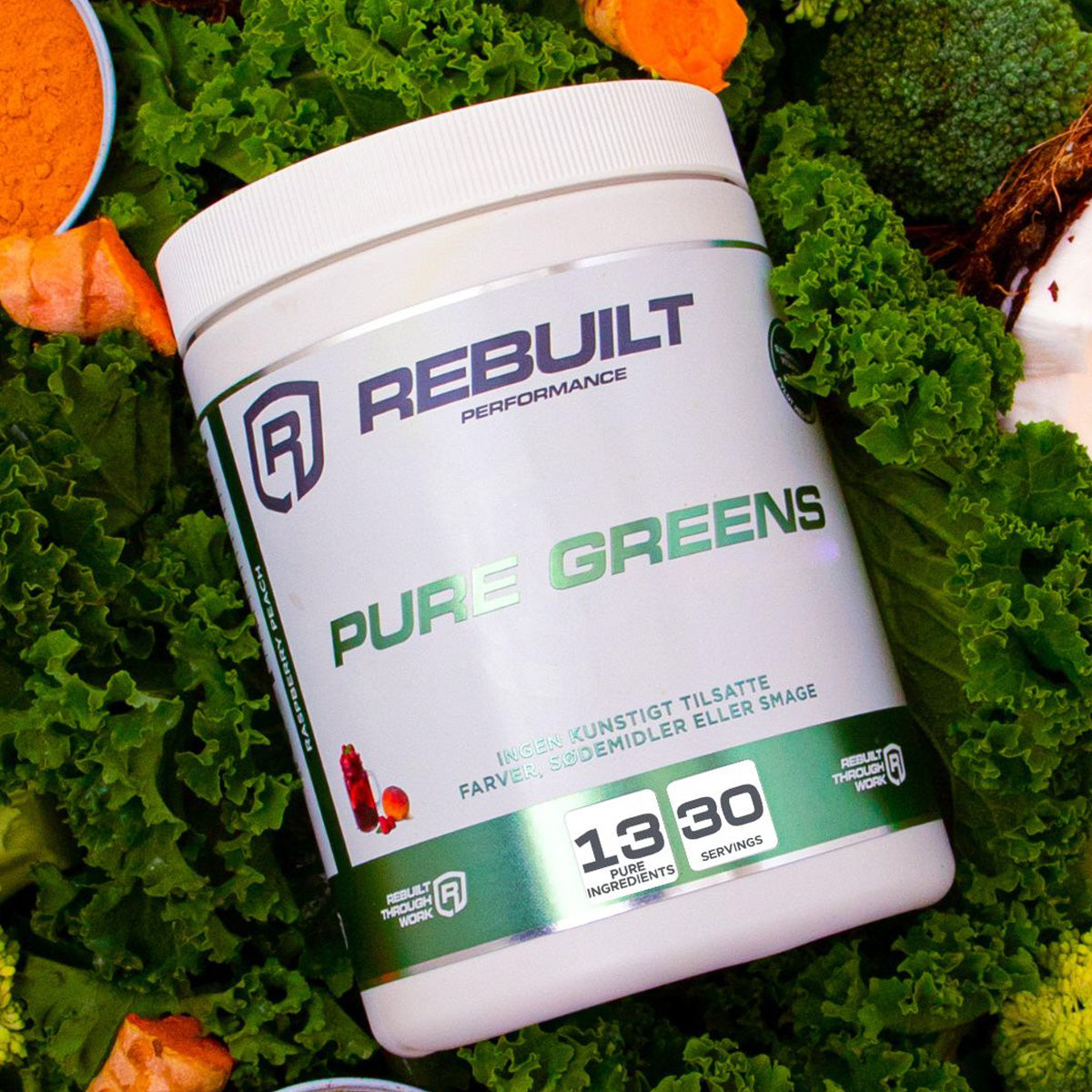
One of the simplest ways to optimize nitrate timing is to take a greens supplement with breakfast or immediately after. Rebuilt Pure Greens delivers a concentrated blend of 13 ingredients—including spirulina, chlorella, wheatgrass, and barley grass—in a single 11g scoop. Mix it into water, juice, or a morning smoothie, and you've frontloaded your greens intake without relying on willpower to prep a salad every day.
Unlike whole-food salads, which require chewing, cutting, and significant digestive effort, a powdered greens supplement is pre-processed and absorbed more rapidly, meaning the nitrate conversion cycle begins earlier and completes faster. This gives you even more buffer time before evening.
3. Avoid High-Nitrate Vegetables Within 3 Hours of Bedtime
If your usual dinner routine includes a side salad or sautéed greens, consider moving that portion to lunch and replacing it with lower-nitrate options at night. High-nitrate vegetables include:
- Arugula
- Spinach
- Beet greens
- Swiss chard
- Kale
- Lettuce (especially romaine and butterhead)
Lower-nitrate alternatives for dinner:
- Broccoli
- Cauliflower
- Zucchini
- Asparagus
- Bell peppers
- Mushrooms
This simple swap preserves your vegetable intake while reducing the metabolic load during your sleep window.
4. Pair Greens with Protein and Healthy Fats at Lunch
When you eat greens earlier in the day, combine them with protein (chicken, fish, eggs, legumes) and healthy fats (olive oil, avocado, nuts) to slow digestion and create a steady release of nutrients. This combination supports stable energy levels throughout the afternoon and reduces the afternoon energy crash that often leads people to reach for caffeine or sugar—both of which can interfere with sleep later.
A well-balanced lunch might look like grilled salmon over mixed greens with olive oil dressing, cherry tomatoes, and a handful of walnuts. The fats help you absorb fat-soluble vitamins (A, D, E, K) from the greens, and the protein provides amino acids that support neurotransmitter production for mood and focus.
5. Track Your Personal Nitrate Tolerance Window
Everyone's digestive speed and circadian rhythm vary slightly. Some people can eat a salad at 5 PM and sleep fine; others notice restlessness if they eat greens after 2 PM. For two weeks, log the time you eat greens-heavy meals and rate your sleep quality that night on a 1-10 scale. Look for patterns:
- Do you sleep better on days when you had greens at breakfast vs. dinner?
- Is there a cutoff time (e.g., 4 PM) after which greens seem to disrupt your sleep?
- Does the quantity matter—can you tolerate a small side salad at dinner but not a large bowl?
This self-tracking gives you personalized data to adjust your meal timing without guesswork.
6. Choose Cooked Greens Over Raw in the Evening (If You Must Eat Them)
If your schedule occasionally forces you to eat greens later in the day, opt for lightly cooked versions instead of raw. Cooking breaks down some of the tough cellulose fibers, making greens easier and faster to digest. Steamed spinach, sautéed kale, or wilted Swiss chard require less digestive effort than a raw kale salad, which can sit heavily in your stomach for hours.
Cooking also reduces the total volume of greens (since they shrink), so you're consuming the same nutrients in a more compact, digestible form. Add a small amount of fat (butter, olive oil) to support absorption, and keep the portion modest—think a half-cup cooked rather than two cups raw.
7. Hydrate Strategically Around Greens Intake
Greens are high in fiber and require adequate water to move smoothly through your digestive tract. If you eat a large salad without enough hydration, you may experience bloating or sluggish digestion, which can keep you uncomfortable at night. Drink a glass of water 20-30 minutes before your greens-heavy meal and sip water throughout the afternoon.
However, reduce fluid intake 90 minutes before bed to avoid waking up for bathroom trips. By frontloading your greens and water earlier in the day, you complete both digestive and urinary cycles well before sleep.
Why Rebuilt Pure Greens Fits Perfectly Into a Sleep-Optimized Routine
At Rebuilt, we developed Pure Greens to solve exactly this kind of real-world problem: you want the benefits of nutrient-dense greens without the guesswork of timing, prep, and portion control. Pure Greens gives you 13 carefully selected ingredients in one scoop—no need to buy, wash, chop, or store five different vegetables. You mix it into water or a smoothie at breakfast, and your greens intake is handled before your day even starts.
Here's what makes Pure Greens the ideal solution for nitrate timing:
- Rapid absorption: Powdered greens bypass the lengthy chewing and mechanical digestion required for whole leaves, so the nitrate conversion cycle starts earlier
- Consistent dosing: One scoop = 11g every time, no variability in nitrate content like you'd get from different salad mixes or seasonal produce
- No fiber overload: While Pure Greens contains fiber, it's in a more digestible form than raw kale, reducing bloating and digestive effort
- Portable and fast: Mix in 30 seconds, drink in 2 minutes, and you're done—perfect for busy mornings when you don't have time to prep a full salad
The 13 ingredients include spirulina (which has been studied for its role in supporting energy and reducing oxidative stress)3,4, chlorella, wheatgrass, barley grass, alfalfa, moringa, kelp, and a blend of vegetable extracts that deliver a broad spectrum of vitamins, minerals, and phytonutrients. Developed in Denmark and produced with full transparency, Pure Greens contains no proprietary blends—every ingredient and dosage is listed on the label so you know exactly what you're consuming.
Product Spotlight: Rebuilt Pure Greens
What it is: A Danish-developed greens powder with 13 transparent ingredients, designed to simplify your daily greens intake.
Why it works for sleep optimization: Take it at breakfast or lunch to complete nitrate processing before evening, avoiding the metabolic interference that comes from late-day greens.
How to use: Mix one 11g scoop into 250-300ml of cold water, juice, or a smoothie. Stir or shake until dissolved. Best consumed in the morning or early afternoon.
What the Science Says About Nitrates, Digestion, and Sleep
Research on nitrate metabolism shows that the bioavailability and conversion efficiency of dietary nitrates depend on timing, gut microbiome composition, and overall circadian alignment. While most nitrate studies focus on cardiovascular or athletic performance outcomes, the digestive and metabolic demands of processing nitrate-rich foods are well documented.
One key factor: your oral microbiome. Bacteria on your tongue are responsible for the first reduction step (nitrate to nitrite). This bacterial activity is influenced by circadian rhythms, with some studies suggesting that enzyme activity and salivary composition change throughout the day. Mouthwash use, especially at night, can disrupt this bacterial population and reduce nitrate conversion efficiency—another reason to time your greens earlier when your oral microbiome is most active.
Additionally, nitric oxide production from nitrates can influence smooth muscle relaxation, including in the gastrointestinal tract. While this is generally beneficial for circulation, excessive smooth muscle activity in the gut late at night can contribute to bloating, gas, or discomfort—sensations that are distracting when you're trying to fall asleep.
The fiber content of greens also plays a role. Leafy vegetables are rich in insoluble fiber, which adds bulk to stool and promotes gut motility. Eating large amounts of insoluble fiber close to bedtime can stimulate bowel movements or create a sensation of fullness that interferes with comfort and relaxation.
How Rebuilt Helps You Build a Consistent, Sleep-Friendly Greens Habit
Consistency is everything when it comes to nutrition and sleep. Eating greens sporadically—sometimes at lunch, sometimes at dinner, sometimes not at all—creates variability in your digestive and metabolic rhythms, making it harder for your body to establish predictable patterns.
Rebuilt makes consistency simple:
- One-time purchase or subscription: Choose the delivery frequency that works for you, with no lock-in contracts. Cancel, pause, or adjust anytime.
- Fast delivery: Ships directly to your door, so you never run out and fall back into irregular greens intake
- Transparent pricing: No hidden fees, no upsells disguised as bundles. You pay for what you order, and you know exactly what's in the product.
- Danish quality standards: Developed and produced with attention to ingredient sourcing, testing, and formulation clarity
When you integrate Pure Greens into your morning routine—same time, same dose, every day—you're not just getting vitamins and minerals. You're training your body to expect and process greens at the optimal time, leaving your evenings free for relaxation and restorative sleep.
| Factor | Whole-Food Salad at Dinner | Rebuilt Pure Greens at Breakfast |
|---|---|---|
| Nitrate timing | Conversion peaks during sleep window | Completes 4-6 hours before bedtime |
| Digestive effort | High (chewing, fiber breakdown, volume) | Low (pre-processed powder, rapid absorption) |
| Consistency | Variable (depends on meal prep, availability) | Consistent (same 11g dose daily) |
| Ingredient transparency | Depends on sourcing and variety | 13 listed ingredients, full label disclosure |
| Prep time | 10-15 minutes (washing, chopping, dressing) | 30 seconds (scoop, mix, drink) |
Frequently Asked Questions
Does eating salad at night always cause sleep problems?
Not for everyone. Individual tolerance varies based on digestive speed, gut microbiome composition, and overall circadian rhythm. Some people can eat greens at dinner without issue, while others notice restlessness, bloating, or delayed sleep onset. The key is to track your own response and adjust timing accordingly. If you consistently sleep better on days when you eat greens earlier, that's a strong signal to shift your intake window.
Can I get the same benefits from a greens supplement as from whole-food salads?
Greens supplements like Rebuilt Pure Greens provide concentrated nutrients—vitamins, minerals, chlorophyll, and phytonutrients—in a convenient, absorbable form. While whole-food salads offer additional fiber and volume that support satiety, a quality greens powder delivers the core nutritional benefits without the digestive load. For optimal health, combine both: use a greens supplement for consistency and convenience, and eat whole vegetables when time and appetite allow.
What time of day should I take Pure Greens for best results?
Take Pure Greens with breakfast or in the mid-morning (before noon) to align with your body's peak digestive efficiency and give the nitrate conversion cycle time to complete before evening. Mix one scoop into water, juice, or a smoothie, and consume it as part of your regular morning routine. Avoid taking it within 3-4 hours of bedtime if you're sensitive to the metabolic and digestive effects of greens.
Are there any greens I can eat at dinner without affecting sleep?
Lower-nitrate, easier-to-digest vegetables are generally safer choices for evening meals. These include broccoli, cauliflower, zucchini, bell peppers, and mushrooms. If you do eat leafy greens at dinner, opt for cooked versions (steamed spinach, sautéed kale) in small portions rather than large raw salads, and pair them with protein and fat to slow digestion.
How do I know if my sleep issues are related to greens timing?
Keep a two-week food and sleep log. Record the time you eat greens-heavy meals and rate your sleep quality (1-10) and any symptoms (bloating, restlessness, waking during the night). Look for patterns: do you sleep worse on nights when you ate greens after 5 PM? Do morning greens correlate with better sleep scores? This data will show you whether timing is a factor worth adjusting.
Can I take Pure Greens if I'm on a GLP-1 medication?
Many individuals using GLP-1 medications experience digestive side effects such as constipation, bloating, and reduced appetite, which can make meeting daily vegetable intake challenging.5 A greens supplement can help fill nutritional gaps without requiring large volumes of food. However, consult your healthcare provider before adding any supplement to your routine, especially if you're on prescription medication. Proper nutrition—including adequate protein, fiber, and micronutrients—is important during GLP-1 treatment to support healthy weight management and muscle preservation.6
Where can I buy Rebuilt Pure Greens?
You can order Pure Greens directly from rebuiltperformance.com. Choose a one-time purchase or set up a subscription for automatic delivery at your preferred interval. All orders ship fast, and there are no lock-in contracts—you can cancel or adjust your subscription anytime. Rebuilt also offers a full ingredient breakdown and transparent pricing on every product page, so you know exactly what you're getting.
Where to Find Pure Greens and Build Your Sleep-Optimized Routine at Rebuilt
Rebuilt was built on a simple idea: give you the tools to become the best version of yourself through work, consistency, and smart choices. Pure Greens is one of those tools—a straightforward, transparent greens supplement that fits into your life without complexity or guesswork. You don't need to sort through conflicting nutrition advice, compare dozens of greens powders, or wonder whether you're timing your meals correctly. You take one scoop in the morning, and you're set.
Here's what you get when you shop at Rebuilt:
- 13 transparent ingredients: Spirulina, chlorella, wheatgrass, barley grass, alfalfa, moringa, kelp, spinach, kale, broccoli, parsley, green tea extract, and ginger root—all listed with full dosages on the label
- Developed in Denmark: Formulated with European quality standards and attention to ingredient sourcing
- No proprietary blends: You see exactly what's in every scoop, no hidden fillers or mystery ingredients
- Flexible ordering: One-time purchase or subscription, cancel anytime, no penalties or lock-ins
- Fast, reliable delivery: Shipped directly to your door so you never run out
Browse the full Greens collection to see how Pure Greens fits alongside other Rebuilt products designed to support your energy, recovery, and long-term health goals. Whether you're optimizing sleep, managing stress, or simply trying to eat better without the hassle, Rebuilt gives you science-backed products and honest advice—no hype, no shortcuts, just results built through work.
References
- Lundberg JO, Weitzberg E, Gladwin MT. The nitrate-nitrite-nitric oxide pathway in physiology and therapeutics. Nat Rev Drug Discov. 2008;7(2):156-167. PMID: 18167491
- Bryan NS, Ivy JL. Inorganic nitrite and nitrate: evidence to support consideration as dietary nutrients. Nutr Res. 2015;35(8):643-654. PMID: 26149184
- Kalafati M, Jamurtas AZ, Nikolaidis MG, et al. Ergogenic and antioxidant effects of spirulina supplementation in humans. Med Sci Sports Exerc. 2010;42(1):142-151. PMID: 19936191
- Miczke A, Szulińska M, Hansdorfer-Korzon R, et al. Effects of spirulina consumption on body weight, blood pressure, and endothelial function in overweight hypertensive Caucasians: a double-blind, placebo-controlled, randomized trial. Eur Rev Med Pharmacol Sci. 2016;20(1):150-156. PMID: 26888417
- Chao AM, Tronieri JS, Amaro A, Wadden TA. Clinical insight on semaglutide for chronic weight management in adults: patient selection and special considerations. Drug Des Devel Ther. 2022;16:4449-4461. PMC9821052
- Mozaffarian D, Maki KC, Willett WC. Prioritizing nutrition for healthy weight management and overall health during GLP-1 receptor agonist treatment. Am J Clin Nutr. 2025;122(2):344-347. PMID: 39159891
Claims Overview
- Nitric oxide from dietary nitrates supports healthy circulation and normal vascular function.
- Nitrates and nitrites are naturally occurring compounds in vegetables that participate in normal metabolic pathways.
- Spirulina has been studied for its role in supporting energy and reducing oxidative stress in healthy adults (Kalafati et al., 2010; Miczke et al., 2016).
- Spirulina may support mental and physical energy levels in healthy individuals (PMID: 26888417).
- Individuals on GLP-1 medications may experience digestive side effects including constipation and bloating (PMC9821052).
- Adequate nutrition, including protein, fiber, and micronutrients, supports healthy weight management during GLP-1 treatment (Mozaffarian et al., 2025).
FDA Disclaimer: These statements have not been evaluated by the Food and Drug Administration. This product is not intended to diagnose, treat, cure, or prevent any disease.

