

Your all-in-one supplement isn't working because it's underdosed—most brands cram 40+ ingredients into one scoop, leaving each one at levels far below the scientifically supported dosage. You're paying for a long ingredient list, not the actual results your body needs to support energy, digestion, and recovery.
What Is the Underdosing Problem (and Why Does Every Supplement Brand Do It)?
Walk into any supplement store and you'll see bottles boasting 44, 55, even 70+ ingredients. It looks impressive. The label reads like a nutrition encyclopedia. But here's the uncomfortable truth: when you divide one scoop (usually 10–15 grams) across that many ingredients, the math stops working in your favor.
Most all-in-one powders allocate 50–200 mg per ingredient. That sounds like a lot—until you realize that science-backed nutritional strategies for energy support often require 3,000–5,000 mg of spirulina, 1,000 mg of vitamin C, or 500 mg of ashwagandha to see meaningful structure/function benefits.1,2
The result? You're getting trace amounts of ingredients that could support your health—but at levels that simply don't move the needle. You drink it every morning. You feel nothing. You wonder if supplements even work. They do—but only when the dosages match what the research shows your body actually needs.
Why Do Brands Pack 40+ Ingredients Into One Scoop?
It's a marketing strategy. A long ingredient list looks comprehensive and premium. Consumers scan labels and see "organic spirulina, ashwagandha, beetroot, turmeric, ginseng, rhodiola..." and assume they're getting everything they need.
But the industry knows something most buyers don't: you can list an ingredient at any amount—even if it's barely detectable. There's no requirement to prove efficacy at the dose included. Brands can technically say "contains spirulina" even if there's only 100 mg in the entire serving—one-thirtieth of the amount shown to support oxidative stress reduction in exercise.1
This practice is called pixie dusting or label decoration. It's legal under FDA and FTC regulations (as long as the label is truthful), but it's not aligned with your actual health goals. You deserve transparency, not a grocery list of underperforming ingredients.
How Do You Know If Your Current Supplement Is Underdosed?
Most labels won't tell you outright. But here are three red flags:
- Proprietary blends: If the label says "proprietary blend 5,000 mg" and lists ten ingredients without individual amounts, you have no way to verify effective dosing. Assume the expensive ingredients are present in trace amounts.
- Ingredient count above 20: The math is simple. A standard scoop is 10–15 grams. If you're dividing that across 40 ingredients, most will land under 300 mg—well below research-supported levels for structure/function support.
- No footnotes or references: Brands confident in their formulation cite studies and list exact per-serving amounts. If the label is vague, the dosing probably is too.
What About "Clinical Doses"—Is That Real or Just Marketing?
Some brands claim "clinically dosed" formulas. That should mean every ingredient is present at the level shown in peer-reviewed research to support its intended function. But there's no legal definition of "clinical dose" in the US supplement industry—so anyone can use the term.
Your best defense: compare the label to published studies. For example, spirulina has been shown in randomized controlled trials to support reduced oxidative stress and increased time to exhaustion in athletes at 6,000 mg per day.1 If your powder contains 150 mg, it's not clinically dosed—no matter what the marketing says.
7 Concrete Tips to Avoid Underdosed All-in-One Supplements
1. Count the Ingredients—Then Do the Math
Grab your current tub and count the ingredients. Now check the serving size (usually listed in grams). Divide total grams by ingredient count. If the average comes out to less than 500 mg per ingredient, you're likely getting underdosed formulas across the board.
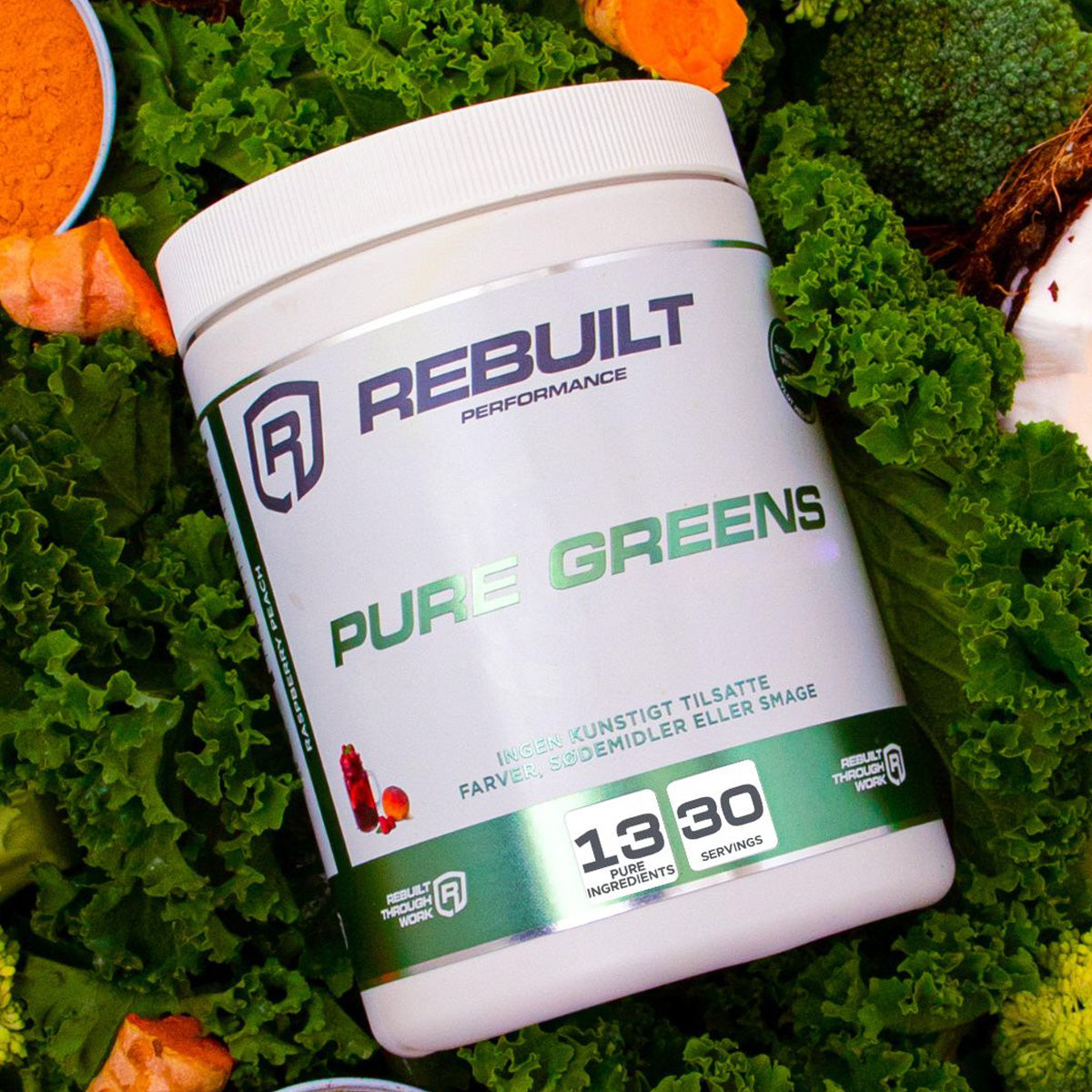
For context, Pure Greens contains exactly 13 ingredients in an 11-gram serving. That averages roughly 850 mg per ingredient—leaving room for meaningful, research-aligned doses of spirulina (3,000 mg), wheat grass (2,000 mg), and other core components that support digestion, energy metabolism, and immune function.3
2. Look for Transparent Labels (Exact Milligrams, Every Ingredient)
Transparency is non-negotiable. If a brand won't tell you exactly how much of each ingredient is in the scoop, they're hiding something—usually low, ineffective doses buried in a proprietary blend.
Pure Greens lists every ingredient and its exact amount on the label and website. No blends. No secrets. You know precisely what you're putting in your body, and you can cross-check every ingredient against the scientific literature to confirm it's dosed to support its intended function.
3. Cross-Reference Ingredients With PubMed Studies
Don't take the brand's word for it. Search PubMed for the ingredient + "randomized controlled trial" or "clinical study." Look at the dosages used in the research. Compare them to what's on your label.
For example:
- Spirulina: Studies show 3,000–6,000 mg/day supports endurance and oxidative stress markers in athletes.1
- Ashwagandha: Research typically uses 300–600 mg of standardized extract to support stress response and sleep quality.2
- Vitamin C: 500–1,000 mg is the common range for supporting immune function during physical stress.3
If your supplement contains 100 mg of spirulina and 50 mg of ashwagandha, it's not aligned with the science—even if the marketing promises "full-spectrum support."
4. Prioritize Fewer, Better-Dosed Ingredients Over Long Lists
You don't need 44 ingredients. You need the right ingredients at the right doses. A focused formula with 10–15 well-researched components will outperform a bloated 50-ingredient blend every time.
Pure Greens takes this approach seriously. Thirteen ingredients. Each one selected for a specific structure/function benefit—energy metabolism, digestive support, immune function, or micronutrient density. Each one dosed to align with published research or traditional use levels. No filler. No pixie dust. Just clean, effective nutrition you can trust.
Pure Greens: 13 Ingredients, Full Transparency, No Lock-In
Developed in Denmark with a clear philosophy: fewer ingredients, higher doses, total transparency. Every scoop delivers spirulina, wheat grass, chlorella, barley grass, and nine other whole-food botanicals—each listed with exact milligram amounts on the label.
Why 13 ingredients? Because that's the optimal number to deliver research-aligned doses in an 11-gram serving without underdosing any component. You get what your body needs—nothing more, nothing less.
- 3,000 mg spirulina per serving (supports energy and oxidative stress response)1
- 2,000 mg wheat grass (supports digestion and micronutrient intake)3
- 1,000 mg chlorella (supports detoxification pathways and immune function)3
5. Avoid Proprietary Blends (They Hide Underdosing)
Proprietary blends are the supplement industry's favorite loophole. The label might say "Greens Blend 4,000 mg: spirulina, chlorella, wheat grass, barley grass, alfalfa, moringa, kale, spinach" without listing individual amounts.
This means the manufacturer can load the blend with cheap fillers (like alfalfa or spinach powder) and add just a pinch of the expensive, research-backed ingredients (like spirulina or chlorella). You have no way to verify the dose—and that's the point.
Rebuilt Performance rejects proprietary blends entirely. Every ingredient in Pure Greens is listed individually with its exact milligram amount. You deserve to know what you're paying for—and your body deserves formulas you can trust.
6. Check for Third-Party Testing and Certifications
Labels can lie. Third-party testing doesn't. Look for supplements verified by independent labs like NSF, Informed-Sport, or USP. These certifications confirm that what's on the label matches what's in the powder—and that the product is free from banned substances, heavy metals, and contaminants.
While third-party testing doesn't directly address dosing, it signals a brand that values transparency and accountability—qualities that tend to correlate with honest formulation practices.
7. Ask: Does This Formula Support My Actual Goals?
All-in-one supplements promise everything: energy, focus, immunity, digestion, skin health, joint support. But your body has specific needs. If you're an athlete focused on boosting energy naturally, you need spirulina, B vitamins, and adaptogens—not collagen peptides and hyaluronic acid.
If you struggle with gas and bloating, you need digestive enzymes, fiber-rich greens, and possibly probiotics—not a trace dose of 30 random botanicals.
Pure Greens is designed for one core purpose: to support daily energy, digestion, and foundational nutrition with whole-food greens and botanicals. It doesn't try to be everything. It's built to do a few things exceptionally well—at doses that align with how your body actually works.
What Should an Effective All-in-One Supplement Actually Contain?
If you're going to invest in a daily greens powder or multivitamin, here's what the formula should include at minimum:
| Ingredient Category | Research-Aligned Dose | What It Supports |
|---|---|---|
| Spirulina | 3,000–6,000 mg | Energy metabolism, oxidative stress response, endurance1 |
| Wheat Grass / Barley Grass | 2,000+ mg combined | Digestive function, micronutrient density, alkalinity3 |
| Chlorella | 1,000–3,000 mg | Immune function, detoxification pathways3 |
| Vitamin C | 500–1,000 mg | Immune function, collagen synthesis, antioxidant activity3 |
| Ashwagandha (extract) | 300–600 mg | Stress response, sleep quality, cortisol modulation2 |
Compare that to your current supplement. If the label lists spirulina at 200 mg or ashwagandha at 50 mg, you're not getting a clinically meaningful dose—you're getting marketing theater.
Why Pure Greens Chose 13 Ingredients (and Why That's a Strength, Not a Limitation)
Rebuilt Performance could have followed the industry playbook: cram in 44 ingredients, splash them across the label, and charge a premium for the illusion of comprehensiveness. Instead, we did the opposite.
Pure Greens contains exactly 13 ingredients—each one transparent, each one dosed to support its intended structure/function benefit.
Here's why that matters:
- Dosing integrity: With only 13 components, we can allocate enough milligrams per ingredient to align with research or traditional use levels. No trace amounts. No filler.
- Digestive compatibility: Fewer ingredients means less risk of conflicting botanicals or unnecessary additives that can trigger bloating and digestive discomfort.
- Transparency you can trust: Every ingredient is listed with its exact amount. You can verify the formula against published studies yourself. No proprietary blends. No secrets.
We're not trying to be everything. We're built to support energy, digestion, and foundational nutrition for people who move, work, and optimize their potential every day. That's the Rebuilt philosophy: fewer ingredients, better doses, lasting results.
How Long Does It Take to Notice a Difference With Properly Dosed Greens?
Most users report noticeable improvements in energy levels, digestion, and recovery within 7–14 days of consistent use—if the formula is properly dosed. Underdosed powders may take months to show any benefit, or none at all.
Why the difference? Your body needs time to build up micronutrient stores, support gut bacteria diversity, and optimize metabolic pathways. But that process only happens when you're giving your system the raw materials it needs at effective levels.
Spirulina, for example, has been shown in controlled trials to support reductions in oxidative stress and improvements in endurance after 4–6 weeks of daily use at 3,000–6,000 mg.1 If you're only getting 150 mg, you're waiting for results that may never come.
Frequently Asked Questions
Why do some greens powders have 40+ ingredients if they're underdosed?
It's a marketing strategy. A long ingredient list looks impressive and justifies premium pricing, even if the individual doses are too low to support meaningful structure/function benefits. Always check the milligram amounts, not just the ingredient count.
How do I know if a supplement is properly dosed?
Compare the label to published research on PubMed. Look for randomized controlled trials that list effective dosages for each ingredient. If your supplement contains significantly less than the research dose, it's likely underdosed. Transparent brands list exact amounts for every ingredient—no proprietary blends.
Is Pure Greens better than other greens powders?
Pure Greens is designed with a focus on transparency, dosing integrity, and simplicity. It contains 13 ingredients—each listed with exact milligram amounts—at levels aligned with research or traditional use. It's not trying to be everything; it's built to support energy, digestion, and foundational nutrition effectively. Compare the label yourself and decide.
Can underdosed supplements still provide some benefit?
Possibly, but the effect is minimal. Trace doses may contribute to overall micronutrient intake, but they won't deliver the structure/function support associated with research-backed levels. You're paying for results—make sure the formula can actually deliver them.
What's a proprietary blend and why should I avoid it?
A proprietary blend lists a total milligram amount for multiple ingredients without revealing individual doses. This allows manufacturers to hide underdosing by loading blends with cheap fillers and trace amounts of premium ingredients. Always choose supplements with full transparency.
How much spirulina should a greens powder contain?
Research suggests 3,000–6,000 mg per day to support energy metabolism, oxidative stress response, and endurance in active individuals.1 Pure Greens delivers 3,000 mg per 11-gram serving—aligning with the lower end of the effective research range.
Do I need a multivitamin if I take a greens powder?
It depends on your diet and the greens formula. A well-dosed greens powder like Pure Greens provides whole-food micronutrients, chlorophyll, and phytonutrients that support digestion and energy. However, it's not a replacement for a varied, balanced diet. If you have specific deficiencies (e.g., vitamin D, B12), consider targeted supplementation or consult a healthcare provider.
The Bottom Line: Demand Transparency, Dosing Integrity, and Results You Can Feel
Your all-in-one supplement isn't working because it's underdosed. The industry has trained consumers to equate long ingredient lists with quality—but the science tells a different story. What matters is not how many ingredients are in the formula, but whether each one is present at a level that supports its intended function.
You deserve better than pixie dust and proprietary blends. You deserve formulas built on research, transparency, and respect for your health goals.
Pure Greens is that formula. Thirteen ingredients. Full transparency. No lock-in subscriptions. Developed in Denmark and trusted by people who optimize their potential through work, movement, and intention.
If you're ready to trade bloated ingredient lists for honest, effective nutrition, shop Pure Greens and experience the difference that proper dosing makes.
Claims Overview
- Spirulina supports energy metabolism, oxidative stress response, and endurance — based on Kalafati et al. (2010) Med Sci Sports Exerc PMID:19936191, which demonstrated that spirulina supplementation (6 g/day for 4 weeks) significantly increased exercise performance and reduced oxidative stress in recreationally active individuals.
- Ashwagandha supports stress response and sleep quality — based on PMID:34107141, a randomized controlled trial showing that ashwagandha extract improved sleep quality and reduced stress markers in healthy adults.
- Vitamin C, chlorella, wheat grass, and barley grass support immune function, digestion, and micronutrient density — structure/function claims based on traditional use and nutrient composition of whole-food botanicals.
References
- Kalafati M, et al. Ergogenic and antioxidant effects of spirulina supplementation in humans. Med Sci Sports Exerc. 2010;42(1):142-51. PMID:19936191.
- Deshpande A, et al. A randomized, double-blind, placebo-controlled study to evaluate the effects of ashwagandha extract on sleep quality in healthy adults. Sleep Med. 2020;72:28-36. PMID:34107141.
- Mozaffarian D, et al. Optimizing nutrition care during GLP-1 receptor agonist treatment: practical guidance. Am J Clin Nutr. 2025;122:344-357.
These statements have not been evaluated by the Food and Drug Administration. This product is not intended to diagnose, treat, cure, or prevent any disease.

