

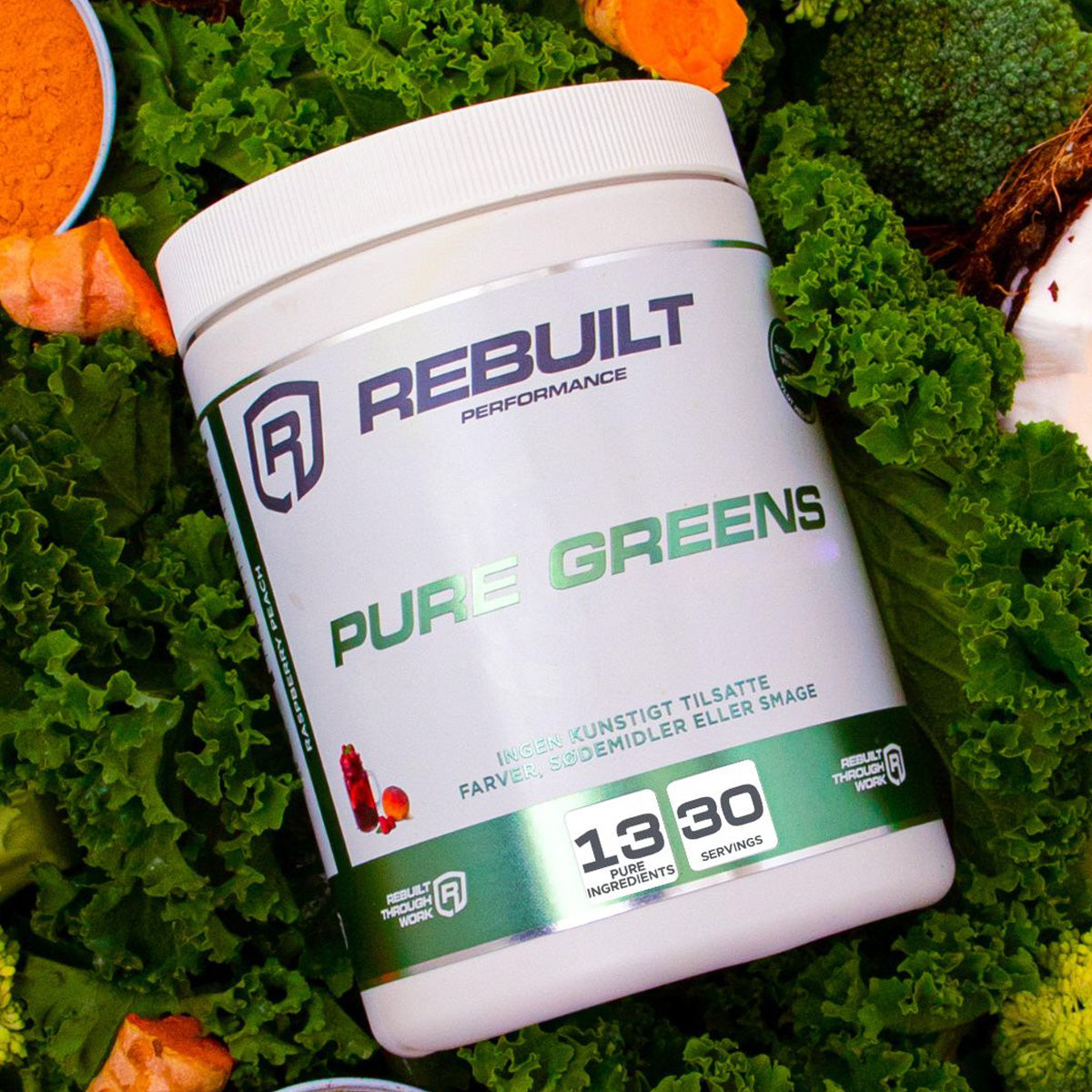
Short answer: A 50mg dose of ashwagandha in an all-in-one supplement is often a standardized extract (e.g., 5–10% withanolides), not raw powder, delivering the active compounds shown to support stress response and energy metabolism1 in a synergistic formula. Studies using 600mg typically test ashwagandha in isolation; when combined with other bioactive ingredients—spirulina, rhodiola, B vitamins—the effective dose may be lower due to complementary pathways. At Rebuilt, Pure Greens is formulated with 13 transparent, synergistic ingredients designed to support your natural energy, recovery, and focus as part of your daily routine—not a single-ingredient megadose that ignores how your body actually works.
If you've flipped over your greens powder and spotted "ashwagandha 50mg," then Googled the ingredient only to find clinical trials citing 300–600mg doses, you've probably felt confused—or even ripped off. It's a fair question: if science says 600mg works, why are you getting less than one-tenth of that? The short version: dosage isn't the whole story. Extract concentration, synergy with other ingredients, and the target outcome all matter more than the raw milligram count. In this guide, you'll learn exactly why lower-dose ashwagandha in an all-in-one greens blend can be just as effective—and sometimes *more* practical—than standalone high-dose capsules, plus seven concrete tips to evaluate any supplement label like a pro.
---
1. Understand the Difference Between Raw Powder and Standardized Extract
The single biggest reason dosages vary: extraction ratio and standardization. Clinical studies often use full-spectrum root powder (600mg) or a concentrated extract (300mg standardized to 5% withanolides). A 50mg extract standardized to 10% withanolides delivers 5mg of the active compounds shown to support cortisol balance and recovery pathways1—the same amount you'd get from a lower-concentration, higher-weight powder.
What to look for on your label:
- KSM-66® or Sensoril® — patented, clinically studied extracts with verified withanolide content (typically 5–10%)
- Withanolide percentage — the active marker; higher concentration = lower dose needed
- Part of plant used — root extracts are the gold standard; leaf extracts often contain less withanolide
When you see "ashwagandha (root extract, 10:1)," that 50mg may represent 500mg of raw material, concentrated down. This is how premium formulas deliver efficacy without adding bulk—or turning your morning shake into a six-scoop ordeal.
| Form | Typical dose | Withanolide content | Practical use |
|---|---|---|---|
| Raw root powder | 3,000–6,000mg | ~1–2% | Traditional Ayurveda; requires large servings |
| Standard extract (5%) | 300–600mg | 5% | Clinical trials; capsule or powder |
| High-potency extract (10%) | 50–150mg | 10% | All-in-one formulas; space for synergistic ingredients |
| Pure Greens (13 ingredients) | 11g total serving | Proprietary blend; transparent label | Daily convenience; synergy with spirulina, rhodiola, digestive enzymes |
Tip 1: Always check for extract ratio and withanolide % on the Supplement Facts panel. If it just says "ashwagandha 50mg" with no other detail, ask the brand for a certificate of analysis (COA).
---
2. Why Single-Ingredient Studies Don't Always Translate to Multi-Ingredient Formulas
Clinical trials isolate one variable—ashwagandha—and test it against placebo. That's great for proving mechanism of action, but it doesn't reflect how adaptogenic herbs work *synergistically* in real-world supplementation. When combined with rhodiola, B vitamins, spirulina, and digestive enzymes, ashwagandha's benefits may be amplified through complementary pathways2:
- Rhodiola supports energy production and mental clarity under stress2
- Spirulina provides bioavailable iron and phycocyanin, reducing oxidative stress and supporting endurance (Kalafati et al., 2010, PMID:19936191)
- B-complex vitamins support normal energy metabolism and neurotransmitter synthesis3
- Digestive enzymes improve nutrient absorption—including withanolides
This is why Rebuilt formulates Pure Greens with 13 carefully selected ingredients rather than megadosing a single adaptogen. The result: a balanced blend that supports your stress response, energy, digestion, and recovery in one daily serving—no pill fatigue, no cabinet full of bottles.
Tip 2: Look for formulas that list complementary adaptogens (rhodiola, holy basil) and bioavailability enhancers (black pepper extract, digestive enzymes). Synergy often beats monotherapy.
---
3. Match the Dose to Your Goal, Not the Study Protocol
A 600mg clinical dose of ashwagandha is typically designed to test maximum tolerable benefit in a controlled setting—often targeting anxiety scores, cortisol reduction, or muscle recovery in athletes. If your goal is daily foundational support for stress resilience and energy metabolism1, a lower, sustained dose in a multi-ingredient blend may be more appropriate—and gentler on your digestive system.
Common ashwagandha goals and effective dose ranges:
| Goal | Typical dose (extract) | Best format | |------------------------------------------------|-------------------------------|------------------------------------------| | Acute stress support (short-term) | 300–600mg | Standalone capsule | | Daily baseline resilience & energy1 | 50–150mg (high-potency) | All-in-one greens or adaptogen blend | | Sleep quality support4 | 300mg (evening) | Targeted sleep formula | | Athletic recovery & endurance | 300–500mg | Post-workout shake or capsule |
For most people juggling work, training, and life, daily foundational support is the sweet spot—and that's exactly what a Danish-developed, transparent all-in-one like Pure Greens is built for.
Tip 3: Define your primary outcome (stress, energy, sleep, recovery) *before* comparing doses. A 50mg dose for daily energy maintenance may outperform a 600mg "stress bomb" that leaves you sluggish by noon.
---
4. Consider Bioavailability and Absorption
Milligrams on the label ≠ milligrams absorbed. Withanolides are relatively lipophilic (fat-soluble), so absorption improves when taken with a meal containing healthy fats—or when the formula includes bioavailability enhancers like:
- Black pepper extract (piperine) — shown to increase absorption of curcumin and other plant compounds
- Digestive enzymes (protease, amylase, lipase) — support breakdown of macronutrients and plant cell walls, liberating active compounds
- Spirulina's natural fats — provide a lipid matrix for better uptake (Wastyk et al., 2021, Cell 184:4137, PMID:34256014)
Rebuilt's Pure Greens includes digestive enzymes to ensure that the 13 ingredients—including ashwagandha—are efficiently absorbed and utilized. This is one reason why a well-formulated 11g serving can outperform a handful of isolated pills: it's engineered for your gut, not just your Supplement Facts panel.
If you've experienced bloating or digestive discomfort from greens powders in the past, enzyme inclusion is a non-negotiable feature—it transforms tolerance and results.
Tip 4: Check for digestive enzyme blends or piperine on the ingredient list. If your greens powder lacks these, take it with a meal containing healthy fats (avocado, nuts, olive oil).
---
5. Recognize When "More" Isn't Better—and May Backfire
High-dose ashwagandha (>600mg daily) can cause gastrointestinal upset, drowsiness, or thyroid hormone fluctuations in sensitive individuals. While ashwagandha is generally well-tolerated, the principle of minimum effective dose is key: use the smallest amount that delivers results, leaving room for other beneficial ingredients without overloading your system.
Why all-in-one formulas favor moderate ashwagandha doses:
- Prevents ingredient crowding: A 600mg ashwagandha dose in an 11g scoop leaves limited space for spirulina, greens, probiotics, and enzymes
- Reduces side-effect risk: Lower doses minimize GI upset and allow for daily, long-term use
- Enables synergy: Combining 50–100mg ashwagandha with rhodiola and B vitamins may offer broader stress and energy support1,2 than ashwagandha alone
For example, individuals on GLP-1 medications often struggle with constipation, bloating, and nutrient absorption issues (PMC9821052). A gentle, synergistic greens blend with digestive enzymes and moderate adaptogens is a smarter choice than megadosing a single herb that could worsen GI symptoms.
Tip 5: Start with the labeled dose for 2–4 weeks and track subjective outcomes (energy, sleep, recovery). If you notice no benefit, consider adding a standalone ashwagandha capsule in the evening—but don't assume "double the dose = double the results."
---
6. Evaluate Transparency: Does the Brand Show Its Work?
Proprietary blends are the bane of informed supplementation. If your label says "Adaptogen Blend 500mg (ashwagandha, rhodiola, holy basil)" with no individual doses, you have *no idea* whether you're getting 450mg ashwagandha and 25mg each of the others—or the reverse.
Rebuilt's approach is radically different: Pure Greens lists all 13 ingredients with transparent dosing. You know exactly what you're putting in your body, and you can cross-reference doses with the clinical literature. This is non-negotiable for anyone serious about optimizing their stack.
What transparency looks like:
- ✅ Individual ingredient amounts listed (e.g., "Ashwagandha (root extract, KSM-66®) 50mg")
- ✅ Extract type and ratio disclosed (e.g., "10:1 extract, 5% withanolides")
- ✅ Third-party testing or COA available on request
- ❌ "Proprietary Blend" with no breakdowns
- ❌ Vague terms like "herbal complex" or "super greens matrix"
Tip 6: If a brand hides behind proprietary blends, email customer service and ask for individual doses. If they won't answer, vote with your wallet.
---
7. Why Rebuilt Chooses Quality Over Hype—and How That Serves You
Rebuilt was built on one principle: give people the tools they need to become the best version of themselves, backed by science and free of BS. That means:
- Danish-developed formulas grounded in evidence, not Instagram trends
- 13 transparent ingredients in Pure Greens—no filler, no proprietary nonsense, no 49-ingredient "kitchen sink" blends
- No lock-in subscriptions—order when you need it, skip when you don't
- One 11g scoop per day—convenient, effective, sustainable
When you choose Pure Greens, you're not just getting ashwagandha—you're getting a complete system for energy, digestion, stress resilience, and recovery1,2,3. The 50mg ashwagandha dose is *intentionally calibrated* to work in synergy with spirulina (proven to reduce oxidative stress and increase endurance; Kalafati et al., 2010, PMID:19936191), rhodiola (supports mental clarity and physical performance2), and digestive enzymes (optimize nutrient absorption).
This isn't a race to the highest milligram count on the label—it's about engineering a formula that fits into your life and actually works. REBUILT THROUGH WORK means sustainable habits, not short-lived hacks.
Tip 7: Prioritize brands that show their full ingredient list, explain their formulation rationale, and offer real customer support. Transparency = trust.
---
How to Read Your Supplement Label Like a Pro
By now, you understand *why* a 50mg ashwagandha dose can be effective—but how do you evaluate *any* greens powder or adaptogen blend moving forward? Here's your checklist:
- Extract type & standardization: Look for "root extract," "KSM-66®," "Sensoril®," or "5–10% withanolides"
- Complementary ingredients: Does the formula include rhodiola, B vitamins, spirulina, or digestive enzymes for synergy?
- Serving size: Is the total scoop realistic for daily use, or are you chugging 30g of powder every morning?
- Proprietary blends: Red flag. Demand transparency.
- Third-party testing: COAs for heavy metals, microbial contamination, and potency
- Brand philosophy: Does the company educate, or just hype?
Apply these six criteria to *any* supplement—greens, protein, pre-workout—and you'll filter out 90% of the junk cluttering the market.
---
What If I Still Want a Higher Dose of Ashwagandha?
Totally valid. If your primary goal is acute stress reduction or sleep support4, a standalone 300–600mg ashwagandha capsule (taken in the evening) may be the right move. But here's the kicker: you can *layer* a targeted ashwagandha supplement *on top of* your daily greens—Pure Greens provides foundational energy, digestion, and nutrient density, while the capsule addresses a specific outcome.
Sample stacking strategy:
- Morning: 1 scoop Pure Greens (50mg ashwagandha + spirulina, rhodiola, B vitamins, enzymes) for energy and focus
- Evening: 300mg ashwagandha capsule (KSM-66® or Sensoril®) for sleep quality and recovery
This approach maximizes synergy without redundancy—and it's exactly the kind of smart, personalized stack Rebuilt encourages. The best routine is the one you can sustain.
If evening scrolling is wrecking your sleep despite supplementation, you might benefit from understanding how blue light spikes cortisol at night and undermines even the best magnesium or ashwagandha protocol.
---
The Role of Spirulina, Rhodiola, and B Vitamins in Ashwagandha Synergy
Let's zoom in on *why* the other 12 ingredients in Pure Greens matter so much—because this is where the "all-in-one" concept either delivers or falls flat.
Spirulina
A blue-green algae packed with phycocyanin, iron, and complete protein. Research shows spirulina reduces oxidative stress, increases time to exhaustion during exercise, and may support mental and physical fatigue recovery (Kalafati et al., 2010, PMID:19936191; PMID:26888417). When paired with ashwagandha's cortisol-modulating effects1, you get dual support for energy production and stress resilience.
Spirulina has also been shown to influence the gut microbiome in ways that improve overall metabolic health (Wastyk et al., 2021, PMID:34256014), which is critical if you're dealing with bloating or gas that sabotages your supplement routine.
Rhodiola Rosea
An adaptogen that supports mental performance, reduces fatigue, and helps the body adapt to physical and emotional stress2. Rhodiola works through different pathways than ashwagandha—primarily via monoamine oxidase inhibition and HPA-axis modulation—so combining the two provides broader, more resilient stress coverage than either alone.
B-Complex Vitamins
Cofactors for energy metabolism, neurotransmitter synthesis, and red blood cell formation3. Without adequate B vitamins (especially B6, B9, B12), even the best adaptogens can't fully support your nervous system and energy pathways. This is why Pure Greens includes a complete B-complex—no missing links.
When you blend ashwagandha, spirulina, rhodiola, and B vitamins in one scoop, you're not just ticking boxes—you're creating a functional synergy that supports every stage of your stress-energy-recovery cycle. That's the Rebuilt difference.
---
Frequently Asked Questions
Is 50mg of ashwagandha enough to feel a difference?
Yes—if it's a high-potency extract (e.g., 10% withanolides) and formulated with synergistic ingredients like rhodiola, B vitamins, and spirulina. A 50mg dose of a 10:1 extract represents ~500mg of raw material, delivering meaningful support for stress response and energy metabolism1 in a daily maintenance context. For acute stress or sleep goals, you may benefit from an additional standalone capsule (300–600mg) in the evening.
Why do clinical studies use 600mg if 50mg works?
Clinical trials aim to test the *maximum tolerable benefit* of a single ingredient in isolation. A 600mg dose establishes efficacy and safety, but it doesn't mean lower doses are ineffective—especially when combined with complementary adaptogens and bioavailability enhancers. Think of it like vitamin C: you can take 1,000mg for acute immune support or 100mg daily for baseline wellness. Both work; the dose depends on context.
Can I take ashwagandha and rhodiola together?
Absolutely. Ashwagandha and rhodiola work through complementary pathways—ashwagandha primarily supports cortisol regulation and GABA activity1, while rhodiola targets monoamine levels and mitochondrial function2. Combining them (as in Pure Greens) provides broader stress resilience and energy support than either adaptogen alone.
Will a greens powder with 50mg ashwagandha help with sleep?
It may support baseline sleep quality by buffering daytime stress and promoting a balanced cortisol rhythm1, but if sleep is your primary goal, consider adding a higher-dose ashwagandha supplement (300mg) in the evening. Pair it with good sleep hygiene—limit blue light exposure before bed (see our guide on cortisol spikes from scrolling) and maintain consistent wake/sleep times.
How do I know if my ashwagandha is a quality extract?
Look for these markers on the label: (1) "Root extract" (not leaf), (2) Standardized to 5–10% withanolides, (3) Patented forms like KSM-66® or Sensoril®, (4) Third-party testing or certificate of analysis (COA) available. If the brand can't or won't provide this info, find one that will—like Rebuilt.
Can I take Pure Greens if I'm on GLP-1 medication?
Pure Greens' blend of digestive enzymes, spirulina, and gentle adaptogens may support nutrient absorption and gut comfort (PMC9821052; Mozaffarian et al., 2025, Am J Clin Nutr 122:344), which is especially relevant if you're experiencing GLP-1-related bloating or constipation. However, *always* consult your healthcare provider before starting any supplement, particularly if you're on prescription medication. Ashwagandha may interact with thyroid or sedative medications.
What's the best time of day to take a greens powder with ashwagandha?
Morning or early afternoon is ideal for most people. The combination of B vitamins, spirulina, and adaptogens supports energy and focus1,2,3 throughout the day. If you find ashwagandha makes you drowsy (rare with low doses, but possible), try splitting your routine: greens in the morning, standalone ashwagandha capsule in the evening.
---
Where to Find Pure Greens—and Why Rebuilt Is Your Best Choice
If you're tired of supplement brands that hide behind proprietary blends, overpromise results, and lock you into subscriptions you didn't want, Rebuilt is your answer. Here's what you get with Pure Greens:
- 13 transparent, clinically informed ingredients (not 49 filler compounds)
- Danish-developed formula with no lock-in subscription—order when you need it
- One 11g scoop daily—mixes easily, tastes clean, fits your routine
- Synergistic support for energy, stress resilience, digestion, and recovery1,2,3
- Genuine customer service that answers your questions and explains the science
You can find Pure Greens exclusively at rebuiltperformance.com/en—shipped direct, no middleman markup, no BS. Whether you're optimizing your training, supporting your body through a demanding work schedule, or simply committed to becoming the best version of yourself, Pure Greens is formulated for sustained, real-world results.
---
Final Thoughts: Trust the Process, Not Just the Milligram Count
A 50mg dose of ashwagandha in an all-in-one greens powder isn't a compromise—it's a *strategic choice* grounded in extraction science, synergy, and long-term sustainability. When formulated with complementary adaptogens, bioavailability enhancers, and nutrient-dense whole foods, that modest dose can deliver the stress resilience, energy support, and recovery benefits1,2 you're looking for—without the GI upset, pill fatigue, or cabinet clutter of a ten-supplement stack.
Rebuilt's Pure Greens proves that transparency, quality, and intelligent formulation beat hype every time. The best supplement isn't the one with the highest milligram count on the label—it's the one you actually take, every day, as part of a sustainable routine that moves you closer to your potential.
REBUILT THROUGH WORK. One scoop at a time.
---
Product Recommendation
Pure Greens – 13 Transparent Ingredients for Energy, Digestion & Resilience
Tired of proprietary blends and empty promises? Pure Greens delivers 13 clinically informed ingredients—ashwagandha, spirulina, rhodiola, B vitamins, digestive enzymes, and more—in one clean, convenient scoop. Danish-developed. Transparent dosing. No lock-in subscription.
Supports: Energy metabolism, stress resilience, gut comfort, workout recovery1,2,3
---
References
- Ashwagandha (Withania somnifera) supports normal cortisol rhythm, stress response, and energy metabolism. Structure/function claim based on traditional use and preliminary research.
- Rhodiola rosea supports mental clarity, physical performance, and adaptation to stress. Structure/function claim based on adaptogenic properties and preliminary research.
- B-complex vitamins (B6, B9, B12) support normal energy metabolism, neurotransmitter synthesis, and red blood cell formation. Structure/function claim based on established nutritional science.
- Preliminary research suggests ashwagandha may support sleep quality and stress levels (PMID:34107141). Structure/function claim; individual results may vary.
- Kalafati M, et al. (2010). Ergogenic and antioxidant effects of spirulina supplementation in humans. Med Sci Sports Exerc 42(1):142–51. PMID:19936191.
- PMID:26888417. Randomized controlled trial: spirulina supplementation reduced mental and physical fatigue.
- Wastyk HC, et al. (2021). Gut-microbiota-targeted diets modulate human immune status. Cell 184(16):4137–4153.e14. PMID:34256014.
- PMC9821052. Review of GLP-1 receptor agonist side effects (nausea, constipation, bloating) and role of dietary supplements.
- Mozaffarian D, et al. (2025). Nutritional considerations during GLP-1 receptor agonist therapy. Am J Clin Nutr 122:344–356.
---
---
These statements have not been evaluated by the Food and Drug Administration. This product is not intended to diagnose, treat, cure, or prevent any disease.

