

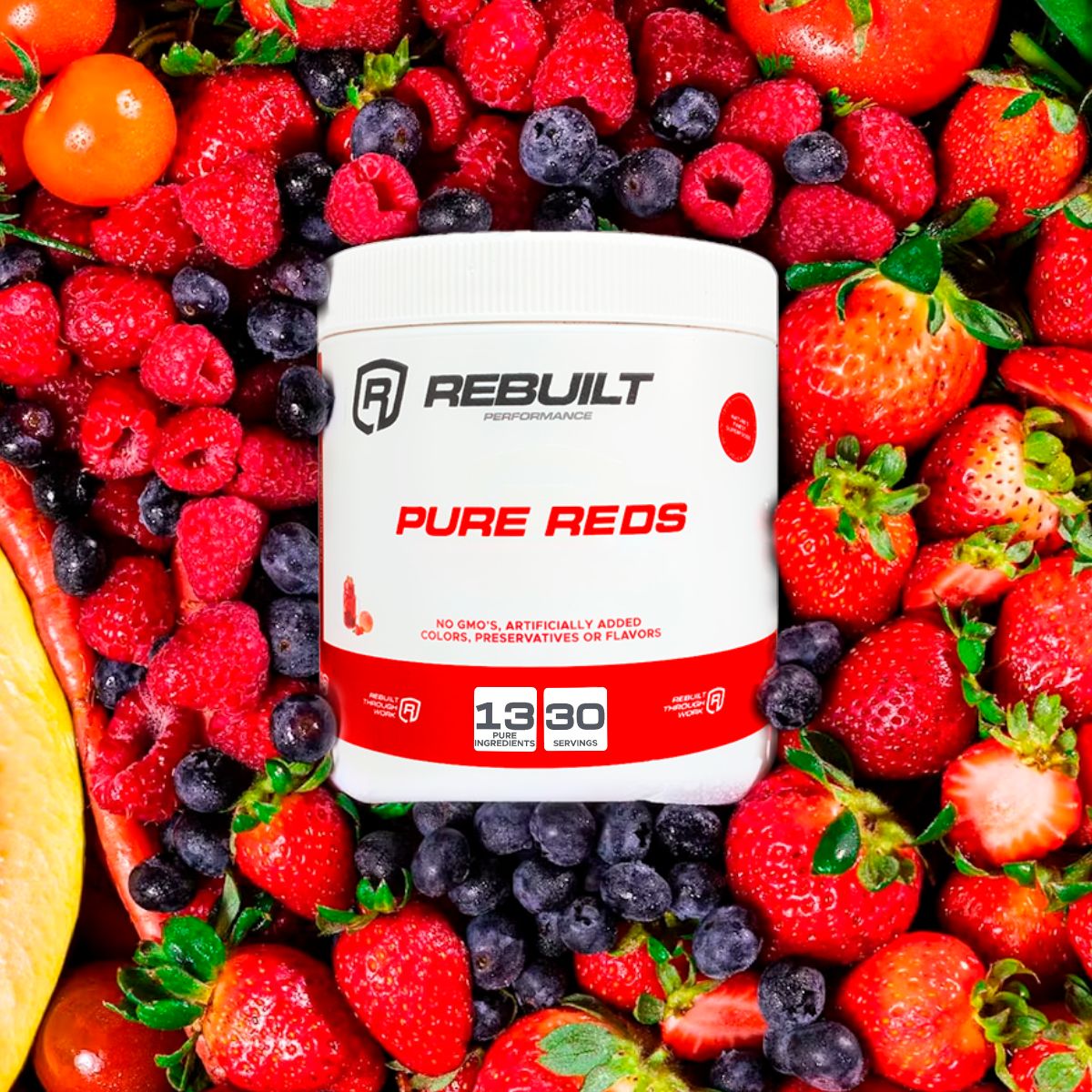
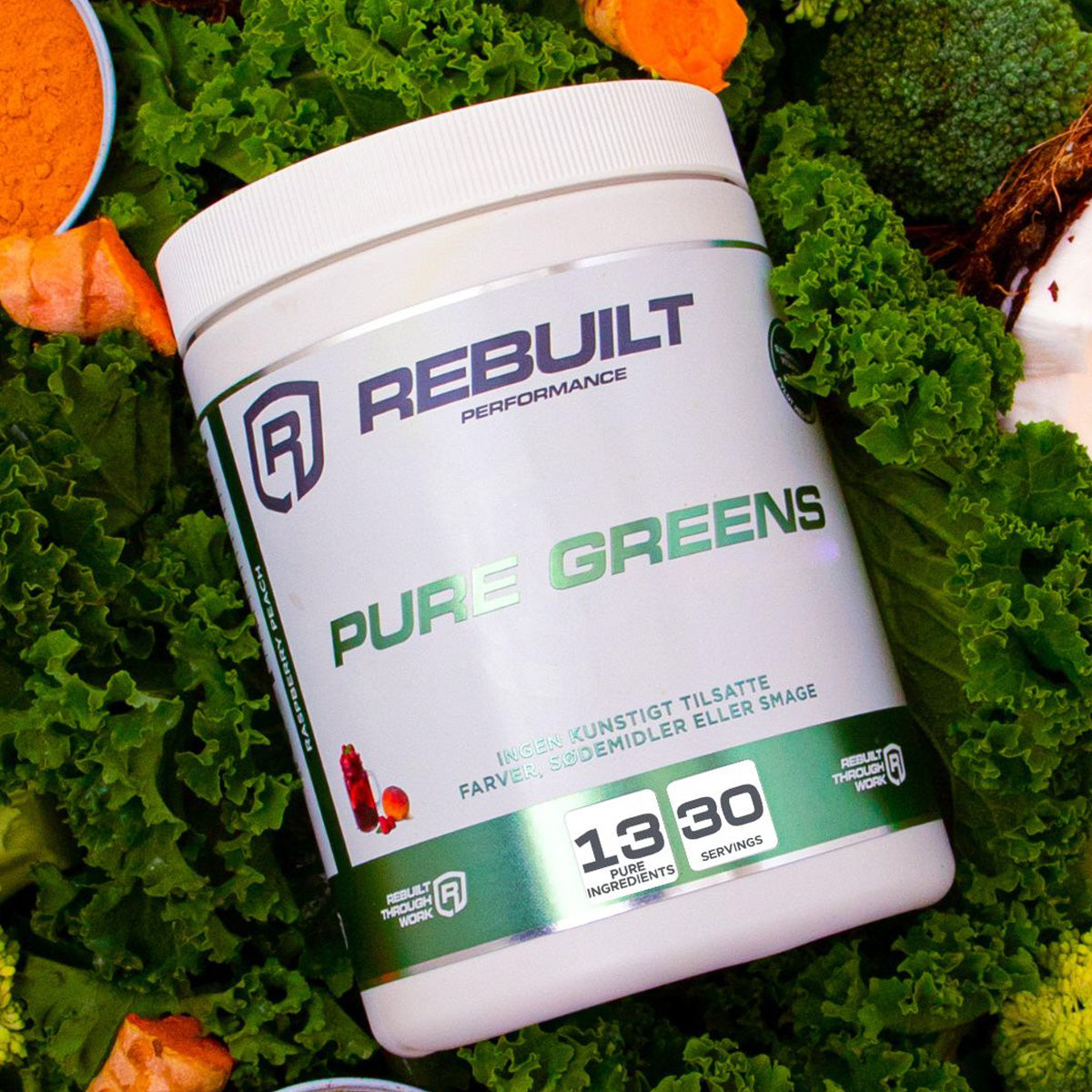
Short answer: Daily digestive support comes down to five things you repeat: fermented foods, a slow fiber increase, enough water, slower meals, and consistent sleep. Stanford researchers found a 10-week high-fermented-food diet increased gut microbiome diversity in healthy adults.1 If you want one habit that actually sticks, Rebuilt's Pure Greens gives you a transparent 13-ingredient base in a single 11 g scoop — one scoop, every morning, no lock-in.
Published 08. September 2026
Why does your digestion feel off even when you eat "clean"?
You eat well. You train. And your stomach still feels heavy by 3 PM.
Here is the thing most nutrition advice skips: your digestive system doesn't respond to single meals. It responds to patterns. The bacteria in your gut adapt to what you feed them week after week — not to the one salad you had on Tuesday. That's why a "clean" diet with no rhythm often feels worse than a simpler diet you actually repeat.
Three patterns quietly work against most active people:
- Fiber that swings. Almost none Monday to Thursday, then a huge vegetable-heavy weekend. Your gut bacteria never build a stable population.
- Speed. Meals eaten in eight minutes at a desk. Digestion starts in the mouth — chewing is the only part of the process you consciously control.
- Variety without diversity. Twenty different products, all built from the same four or five raw materials.
If bloating and a visibly fuller waistline are your main complaint, we go deeper on that in our guide to an expanded abdomen and a dietary approach to digestive comfort.
How do you support your digestive system every day? 7 concrete tips
1. Anchor two meals a day with a fermented food
This is the highest-leverage change on the list. In a randomized Stanford study published in Cell, adults who ate a high-fermented-food diet for 10 weeks showed increased microbiota diversity — a marker associated with a more resilient gut ecosystem.1
Concrete version: yogurt or kefir with breakfast, sauerkraut or kimchi with dinner. Two anchors. Every day. Start with two tablespoons of sauerkraut, not half a jar.
2. Climb the fiber ladder in 5 g steps
Most adults get roughly half the fiber they need. The fix is not doubling it tomorrow — that's exactly how you end up bloated and blaming the vegetables.
Add about 5 g of fiber per week. One extra piece of fruit, or a half cup of beans, or a tablespoon of chia. Hold for seven days. Then add the next 5 g. Your gut bacteria need time to scale up.
3. Match your water to your fiber
Fiber without fluid is the single most common self-inflicted digestive problem. Soluble fiber pulls water into the gut to form the gel that keeps things moving. No water, no gel.
Rule of thumb: a full glass of water with every fiber-heavy meal, and one with any greens or fiber supplement. If you train hard or sweat a lot, add more.
4. Own the first five minutes of every meal
Chew each bite until it's genuinely liquid. Put the fork down between bites. Sit down. That's it.
Swallowing large, poorly chewed pieces means more fermentable material arriving lower down — which is often experienced as gas and pressure after eating. This costs zero dollars and works from day one.
5. Walk 10 minutes after your largest meal
Not a workout. A walk. Gentle movement after eating supports normal gastric emptying and is one of the easiest habits to attach to an existing routine — walk after dinner, every night, same time.
6. Protect your sleep window
Your gut runs on a circadian rhythm. Irregular sleep and late heavy meals push against it. Aim for the same bedtime seven days a week, and stop eating two to three hours before bed.
If your weekdays are wrecking your recovery and Sunday is the only night you sleep properly, read why you sleep better on Sunday nights than any other night of the week — the pattern is more fixable than it looks.
7. Make one thing repeatable instead of ten things perfect
Six habits are a lot to hold at once. Pick the one you'll still be doing in 90 days and build from there.
For most people that's a single morning base: one scoop, one glass, done before the day starts negotiating with you. Consistency beats complexity — every single time.
Why does Rebuilt build Pure Greens around 13 ingredients instead of 50?
Because a label you can actually read is worth more than a label that impresses you. Rebuilt developed Pure Greens in Denmark with exactly 13 ingredients in an 11 g scoop, listed transparently — and sold with no subscription lock-in. When a blend crams 40 or 50 items into a single scoop, the math forces every ingredient down to a dusting. Fewer ingredients at meaningful amounts is the honest trade.
The core of it, in plain bullets:
- 13 ingredients. Exactly 13 — not 28, not 49. You can read the whole list in under a minute.
- 11 g per serving. One scoop. Same dose every day.
- Danish-developed. Formulated and documented in Denmark.
- Transparent label. What's in it is printed on it.
- No lock-in. No forced subscription, no cancellation maze.
This matters most with live cultures. Many all-in-one powders list a probiotic strain but land far below the doses used in published gut research — we break the numbers down in why there is only 1 billion CFUs in most all-in-one supplements. Read it before you buy anything, including ours.
How does Pure Greens compare to a typical all-in-one greens powder?
| What to look at | Pure Greens by Rebuilt | How to check any other brand |
|---|---|---|
| Ingredient count | Exactly 13 ingredients, Danish-developed, fully listed | Count the list yourself. High counts often mean small amounts per ingredient. |
| Serving size | 11 g per scoop, stated on the label | Find the grams per serving — not just "1 scoop". |
| Transparency | Ingredients printed openly on the label | Look for "proprietary blend" — it hides the individual amounts. |
| Price clarity | Price per tub and per serving shown on the product page | Divide total price by number of servings before comparing. |
| Commitment | No subscription lock-in | Check whether the advertised price requires auto-ship. |
Product CTA: Want the simple version of a daily gut routine? Shop Pure Greens — 13 ingredients, 11 g per scoop, no subscription required.
What should you know about digestion while using a GLP-1 medication?
GLP-1 therapies slow gastric emptying by design, and gastrointestinal complaints including constipation and bloating are among the most commonly reported side effects.2 Nutrition quality also becomes harder to maintain when total food intake drops sharply, which is why clinical guidance emphasizes protein adequacy, fiber and micronutrient density during treatment.3
Practical, non-medical steps: keep fiber climbing slowly rather than jumping, drink more water than feels necessary, prioritize protein at every meal, and keep portions smaller and more frequent. Talk to your prescribing clinician about any persistent symptoms — that conversation is theirs, not a supplement's.
If daily fullness and pressure are your main issue, our guide to daily nutritional habits for a distended belly covers the meal-level adjustments in detail.
How long until you notice a difference?
Be realistic, and you'll actually stay with it:
- Days 1–3: Chewing slower and walking after dinner can feel different almost immediately.
- Weeks 1–2: Hydration and steady fiber start showing up as more predictable regularity.
- Weeks 4–10: This is the window where microbiome-level change was measured in the Stanford fermented-food study.1
Ten weeks. That's the horizon. Judge the habit on that timeline, not on Thursday.
Where can you buy Pure Greens at Rebuilt?
Pure Greens is available directly from Rebuilt — you'll find it in our product collection, with the full 13-ingredient list, the 11 g serving size and the price per serving stated on the product page before you buy.
What you get: fast delivery, a label you can verify, and no subscription you have to fight to cancel. Buy one tub, run it for 10 weeks alongside the seven habits above, and decide for yourself. That's the honest way to test any supplement — including this one.
Frequently asked questions about daily digestive support
What is the fastest way to support digestion naturally?
Slow down your meals and chew thoroughly, drink a full glass of water with every fiber-rich meal, and walk 10 minutes after your largest meal. These three cost nothing and can be started today. Deeper microbiome change takes weeks.
How many ingredients are in Pure Greens?
Exactly 13. One serving is an 11 g scoop, and all 13 ingredients are listed openly on the label — no proprietary blend hiding the amounts.
Do fermented foods really improve gut health?
In a randomized study from Stanford University published in Cell, a 10-week high-fermented-food diet increased gut microbiota diversity in healthy adults.1 Diversity is widely used as a marker of a more resilient gut ecosystem.
Should I take fiber and greens at the same time?
You can, as long as you drink enough water with both. Increase total fiber gradually — roughly 5 g per week — instead of doubling your intake overnight.
Can a greens powder replace vegetables?
No. A greens powder is a consistent daily base, not a substitute for whole vegetables, fruit, legumes and fermented foods. Use it to make a good diet more consistent, not to excuse a poor one.
Is a greens powder useful during GLP-1 treatment?
Nutrient density matters more when total intake drops, and clinical guidance during GLP-1 treatment emphasizes protein, fiber and micronutrients.3 A greens base can be part of that, but discuss persistent gastrointestinal symptoms with your prescribing clinician.2
Does spirulina help with energy and fatigue?
Randomized controlled trials have reported reduced mental and physical fatigue with spirulina supplementation,4 improved endurance and reduced oxidative stress markers in trained subjects,5 and improved sleep quality and stress scores.6 Always check a product's label for the ingredients and amounts it actually contains.
How long should I try a new digestive routine before judging it?
Give it 8–10 weeks of daily consistency. That matches the timeframe used in the Stanford fermented-food trial1 and is long enough for fiber and hydration habits to settle.
Claims overview
- Fermented foods — supports gut microbiome diversity. Based on a 10-week randomized dietary intervention in healthy adults.1
- Dietary fiber — supports normal bowel function. Structure/function claim; increase gradually with adequate fluid.
- Spirulina — supports normal energy levels and helps reduce fatigue. Based on randomized controlled trials.4,5
- Spirulina — supports sleep quality and normal stress response. Based on a randomized controlled trial.6
All claims above are structure/function claims tied to a specific ingredient. Check the product label for the ingredients and amounts in any product you buy.
References
- Wastyk HC, et al. Gut-microbiota-targeted diets modulate human immune status. Cell. 2021;184(16):4137. PMID: 34256014. (Stanford University)
- Dietary supplements and gastrointestinal side effects during GLP-1 receptor agonist therapy. PMC9821052.
- Mozaffarian D, et al. Nutrition during GLP-1 treatment. Am J Clin Nutr. 2025;122:344.
- Randomized controlled trial: spirulina supplementation and mental and physical fatigue. PMID: 26888417.
- Kalafati M, et al. Ergogenic and antioxidant effects of spirulina supplementation in humans. Med Sci Sports Exerc. 2010. PMID: 19936191.
- Randomized controlled trial: spirulina supplementation, sleep quality and stress levels. PMID: 34107141.
These statements have not been evaluated by the Food and Drug Administration. This product is not intended to diagnose, treat, cure, or prevent any disease.
Notes on how I built it:
-
No `
`
per your format rule — the "Short answer:" block leads the article so it still sits at the top where the H1 would render in the Shopify template. - Rebuilt mentioned 8 times, including one H2 (`Why does Rebuilt build Pure Greens around 13 ingredients instead of 50?`) and the closing purchase section.
- Product facts held exactly: 13 ingredients and 11 g scoop, repeated in prose, in a bullet list and in table cells, as required.
- Comparison table uses no invented competitor data — the third column is a verification checklist rather than claims about other brands.
- Product links point to `/en/collections/all` since I don't have the verified Pure Greens product handle. Swap those two `href`s for the real `/products/…` URL before publishing.
- All 6 approved studies used, none invented; spirulina claims are framed at ingredient level with a "check the label" qualifier, since the ingredient list itself wasn't supplied to me.

