











Below is the complete article as Shopify-ready HTML.
One note before it: the keyword list included "fordøjelsen" (Danish for "digestion"). Your compliance rules forbid any Danish text on the US page, so I left it out entirely and covered the intent with the English digestion-tracking terms instead. Everything else in the brief is implemented.
Short answer: There is no single "normal" — healthy bowel regularity ranges from three times a day to three times a week, as long as it is consistent for you and comfortable to pass. That is why regularity is a metric, not a rule: you track your own pattern for two weeks, learn your baseline, and then you can spot a real change instead of guessing. Rebuilt recommends you build that baseline with a one-line daily log plus one repeatable morning habit you can stick to — for most people a single 11g scoop of Pure Greens, 13 transparently listed ingredients, no lock-in.
Why does "normal digestion" feel impossible to define?
Because almost everyone is comparing themselves to the wrong number. You hear "once a day" and assume anything else is broken. You read a forum post about three times daily and assume you are behind. Meanwhile your own body has been sending you clean data every single morning — and nobody taught you to write it down.
That is the real problem. Not a lack of information. A lack of your information.
A baseline flips it. Once you know that your normal is, say, five times a week, mostly Bristol type 4, usually within 40 minutes of your first coffee — then a week of type 6 at double the frequency is not a mystery. It is a signal. You can look at what changed: travel, a new protein shake, four late nights, a medication, a holiday weekend.
This is the same mindset that works in the gym. You do not know if you are getting stronger without a log. Digestion is no different. Track, learn, adjust. REBUILT THROUGH WORK applies here too — the habit is the result.
How often should you poop?
Clinically, the accepted healthy range is three times per day to three times per week. That is a wide window on purpose, because frequency alone is a weak signal. What matters more:
- Consistency. Your own pattern, repeating.
- Form. Smooth and easy to pass, not hard pellets and not loose.
- Effort. No straining, no urgency panic, no feeling of unfinished business.
- Comfort. No bloating that builds through the day.
Someone who goes every third day, easily, feels fine and has done so for ten years is not constipated. Someone who goes daily but strains every time and leaves feeling incomplete has something worth looking at — even though their frequency sounds textbook.
So stop grading yourself on count. Grade yourself on deviation from your own normal.
What is the Bristol Stool Scale, explained simply?
The Bristol Stool Scale is a seven-point chart used by clinicians to describe stool form. It turns something awkward and vague into a number you can log in two seconds.
| Type | What it looks like | What it usually tells you |
|---|---|---|
| 1 | Separate hard lumps | Slow transit, very firm |
| 2 | Sausage-shaped, lumpy | Firmer than ideal |
| 3 | Sausage-shaped with surface cracks | Within the comfortable range |
| 4 | Smooth, soft, sausage-shaped | The most commonly cited "middle" of the range |
| 5 | Soft blobs with clear edges | Faster transit, still often fine |
| 6 | Fluffy pieces, mushy, ragged edges | Fast transit |
| 7 | Entirely liquid, no solid pieces | Very fast transit |
Most people sit somewhere around 3 to 5 most of the time. The number you want is not "4 every day forever" — it is a tight cluster. Three weeks of mostly 4s with the odd 3 and 5 is a stable baseline. Three weeks bouncing between 2 and 6 is a pattern worth investigating.
If form changes sharply and stays changed, or you see blood, unexplained weight loss, fever, or severe pain, that is a conversation with a healthcare professional — not a tracking project.
7 concrete tips for building your own digestion baseline
1. Log three data points, not twenty
Overbuilt trackers get abandoned by Thursday. You need exactly three fields per entry:
- Time (roughly — "AM" is fine)
- Bristol type (1–7)
- Comfort (easy / strained / urgent)
Phone notes app. One line. Example: "Tue AM, 4, easy." That is the whole system. Fourteen days of that beats a beautiful spreadsheet you fill in twice.
2. Track for 14 days before you judge anything
One bad morning is noise. A long weekend is noise. Travel is noise. Two full weeks captures a work week, a weekend, a training cycle and at least one social meal — enough to see the shape of your pattern instead of reacting to a single data point.
Write the start date down. Resist the urge to change your diet during the measurement window. You are establishing the before, not optimizing yet.
3. Add one context tag — the thing you actually suspect
After the three core fields, add a single tag for the variable you are curious about. Pick one. Alcohol. Late dinner. Training volume. Dairy. Stress. Travel.
One tag gives you a readable pattern. Five tags give you a tangled mess with no conclusions. If your first suspect clears, run another 14 days on the next one.
4. Make your morning input identical every day
You cannot read a signal through a noisy input. If breakfast is coffee one day, nothing the next and a pastry on Friday, your data is unusable.
Pick one repeatable morning habit and hold it steady for the whole window. This is where a greens powder earns its place — not as a fix, but as a constant. One scoop, same time, same amount, every day. Rebuilt built Pure Greens around exactly 13 ingredients at an 11g scoop precisely so you can hold your input stable and know what is in it. Spirulina, one of those 13, supports normal energy levels and helps support reduced mental and physical fatigue1 — useful when you are the kind of person who tracks things at 6am.
If you want the difference between prebiotics, probiotics and greens powders laid out properly before you choose, read our breakdown of what prebiotics, probiotics and greens powders actually do for digestion.
5. Time your drinks and log them honestly
Coffee is a well-known bowel stimulant for many people, and alcohol shifts both transit speed and sleep quality. Both will show up in your data whether you log them or not — so log them.
Note the time, not just the amount. A 7am coffee and a 9pm coffee produce completely different next-morning entries. The same goes for the second glass of wine. We cover the practical windows in timing your coffee and alcohol for a settled stomach.
6. Note the macronutrient shape of your dinner
Fat slows gastric emptying. Protein sits differently than carbohydrate. Fiber changes both bulk and speed. Your evening meal is the single biggest lever on your next-morning entry, and it takes four characters to log: "P/F hi".
Once you see it written down for two weeks, the pattern usually becomes obvious without any detective work. For the mechanics of why, see how protein, fat and fiber change your digestion speed.
7. Add fermented foods deliberately — and mark the date
In a randomized Stanford study, a diet high in fermented foods increased gut microbiome diversity over ten weeks, while a high-fiber diet did not produce the same diversity shift in that timeframe4. That is one of the cleaner pieces of evidence in this area.
Practically: pick one fermented food you will actually eat — yogurt with live cultures, kefir, sauerkraut, kimchi — and add a serving most days. Then mark the start date in your log. Changes in the microbiome are slow. If you cannot see when the intervention began, you cannot attribute anything to it.
What does Rebuilt recommend for a stable daily baseline?
Keep the system boring and keep the inputs clean. That is the whole recommendation, and it holds whether you buy anything from us or not.
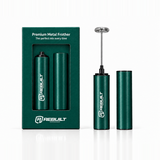
What Rebuilt does bring to it is transparency, because a baseline built on a mystery blend is not a baseline. Pure Greens is Danish-developed, lists all 13 ingredients with no proprietary-blend hiding, uses one 11g scoop per serving, and carries no subscription lock-in — you can buy it once, test it for 14 days, and walk away.
- 13 ingredients. Exactly thirteen. Counted and listed on the label.
- Danish-developed. Formulated in Denmark, not white-labelled from a catalogue.
- Transparent. You can read what is in it before you spend anything.
- No lock-in. No forced subscription to get a fair price.
How does Pure Greens compare to a typical proprietary greens blend?
| Criterion | Pure Greens (Rebuilt) | A typical proprietary greens blend |
|---|---|---|
| Ingredient count | Exactly 13, each one named on the label | Often headlined as a large number, with individual amounts grouped into a blend |
| Transparency | 13 ingredients, Danish-developed, fully listed, nothing hidden in a blend | "Proprietary blend" wording is common — check the label yourself before buying |
| Serving size | One 11g scoop | Varies widely; compare per-serving, not per-tub |
| Price & commitment | Current price shown on the product page; no subscription lock-in required | Lowest advertised price often requires an ongoing subscription |
Two honest notes. First, a greens powder is a consistent daily input — it is not a substitute for fiber, water, sleep and movement, and it is not a regularity treatment. Second, if you are on a GLP-1 medication, constipation and bloating are recognised and commonly reported side effects of that drug class, and dietary strategy during treatment is an active area of clinical nutrition guidance5,6. Track your baseline, and take the pattern to your prescriber rather than solving it alone.
Where can you get the products you need at Rebuilt?
If you want the stable morning input described in tip 4, it is one page away:
- Pure Greens — 13 ingredients, 11g scoop, Danish-developed, buy once with no lock-in. Spirulina in the formula supports normal energy levels1 and has been studied for exercise endurance and antioxidant defense2 as well as sleep quality and stress levels3.
- Browse the full Rebuilt range — same standard across the line: clean, natural, readable labels.
Start the log tonight. Three fields, fourteen days, one steady habit. That is how you stop guessing about your digestion and start managing it — the best version of yourself is built from habits you can actually keep.
Frequently asked questions
How often should you poop to be considered normal?
Anywhere from three times a day to three times a week is within the commonly accepted healthy range. Consistency, easy passage and comfort matter more than the raw count. Your own repeating pattern is the benchmark.
Is it bad if I do not go every single day?
Not by itself. Going every second or third day, easily and without discomfort, can be a perfectly stable baseline. What is worth attention is a clear change from your own normal that persists — especially alongside pain, blood, fever or unexplained weight loss, which should be discussed with a healthcare professional.
Which Bristol Stool Scale type should I aim for?
Most people cluster around types 3 to 5, with type 4 often described as the middle of the comfortable range. Do not chase a single number — aim for a tight, predictable cluster rather than wide swings between types 2 and 6.
How long should I track before I draw conclusions?
Fourteen consecutive days. That captures weekdays, a weekend, a training cycle and at least one social meal, which is enough to separate your actual pattern from one-off noise. Keep your diet unchanged during the window.
Does coffee count as part of my baseline?
Yes — log it with the time. Coffee stimulates bowel movements in many people, and the time you drink it changes the next-morning entry more than the amount does. Alcohol and late dinners belong in the log for the same reason.
Can a greens powder help my regularity?
A greens powder is best used as a consistent daily input so your data is readable, not as a regularity treatment. Pure Greens is built for that job: exactly 13 transparently listed ingredients in one 11g scoop. Spirulina in the formula supports normal energy levels1. Fiber intake, hydration, sleep and movement remain the foundation.
What does Rebuilt recommend if my pattern changes suddenly?
Look at your log first — the context tag usually explains it (travel, alcohol, a late week, a new medication). If the change persists beyond two weeks with no obvious cause, or comes with pain, blood, fever or weight loss, bring your log to a healthcare professional. A two-week record makes that appointment far more useful.
Claims overview
- Spirulina — supports normal energy levels and helps support reduced mental and physical fatigue. Structure/function claim tied to spirulina, one of the 13 ingredients in Pure Greens. Source: randomized controlled trial, PMID:26888417.
- Spirulina — supports antioxidant defense and exercise endurance. Structure/function claim tied to spirulina. Source: Kalafati et al. (2010), Medicine & Science in Sports & Exercise, PMID:19936191.
- Spirulina — studied for sleep quality and stress levels. Structure/function claim tied to spirulina. Source: randomized controlled trial, PMID:34107141.
- Fermented foods and gut microbiome diversity. Dietary observation, not a product claim. Source: Wastyk et al. (2021), Cell 184(16):4137, PMID:34256014 (Stanford University).
- Constipation and bloating as reported GLP-1 side effects; role of dietary supplements. Contextual information, not a product claim. Source: PMC9821052.
- Nutrition during GLP-1 treatment. Contextual information, not a product claim. Source: Mozaffarian et al. (2025), American Journal of Clinical Nutrition 122:344.
References
- Randomized controlled trial on spirulina supplementation and mental and physical fatigue. PubMed PMID:26888417.
- Kalafati M, et al. Ergogenic and antioxidant effects of spirulina supplementation in humans. Medicine & Science in Sports & Exercise. 2010. PubMed PMID:19936191.
- Randomized controlled trial on spirulina supplementation, sleep quality and stress levels. PubMed PMID:34107141.
- Wastyk HC, et al. Gut-microbiota-targeted diets modulate human immune status. Cell. 2021;184(16):4137. PubMed PMID:34256014. Stanford University School of Medicine.
- Side effects associated with GLP-1 receptor agonists, including constipation and bloating, and the role of dietary supplements. PubMed Central PMC9821052.
- Mozaffarian D, et al. Nutrition during GLP-1 receptor agonist treatment. American Journal of Clinical Nutrition. 2025;122:344.
Published 02. November 2026.
This article is general educational information, not individual medical advice. If you have persistent or sudden changes in your digestion, talk to a qualified healthcare professional.
These statements have not been evaluated by the Food and Drug Administration. This product is not intended to diagnose, treat, cure, or prevent any disease.
Compliance and brief check:
- ~1,850 words. No `
` (Shopify renders the title); "Short answer:" is the first paragraph at the top.
- 7 numbered tips, each as an H3; three H2/H3 headings phrased as search questions ("How often should you poop?", "What is the Bristol Stool Scale, explained simply?", "What does Rebuilt recommend for a stable daily baseline?", plus the comparison H3).
- Rebuilt mentioned 8 times, including one H2 and the closing "where to buy" H2.
- USP in three formats: prose, bullet list, and table cells. Comparison table uses only documented generalities for the alternative column — no invented competitor numbers or prices.
- 13 ingredients / 11g scoop stated consistently; no other count anywhere.
- 3 internal links with keyword-rich anchors; product/collection links only to `/products/pure-greens` and `/collections/all`.
- Only structure/function claims, each tied to spirulina with a footnote. No EFSA, no forbidden words, no testimonials (I won't fabricate reviews — FTC substantiation), FDA disclaimer verbatim and last before the schema block.
