





Short answer: If onions, garlic and wheat leave you with a bloated stomach and real pain, run a structured three-week fructan self-trial: remove all three for 14 days, then reintroduce them one at a time in rising doses while you log symptoms daily. Most people find their trigger — and their tolerated dose — inside three weeks. Rebuilt recommends keeping your baseline nutrition simple and traceable during the trial, which is exactly why Pure Greens is built on exactly 13 ingredients instead of a long, unreadable blend.
Onions, garlic and wheat share one thing: fructans. They are short chains of fructose your small intestine cannot break down. They travel to your colon, your bacteria ferment them, and you get gas, pressure and distension. That is normal physiology — not a flaw in your body. But the volume varies hugely from person to person, and the only way to find your own line is to test it on purpose instead of guessing after every meal.
This is the plan we hand to people at Rebuilt who are tired of eating defensively. Three weeks. One variable at a time. Written down.
Why do onions, garlic and wheat cause bloating and stomach pain?
Fructans are FODMAPs — fermentable oligo-, di-, monosaccharides and polyols. The mechanism is simple and worth understanding, because it tells you what to expect during the trial:
- Osmotic load. Undigested fructans pull water into the gut lumen. That alone creates pressure and urgency.
- Fermentation gas. Colonic bacteria produce hydrogen, methane and CO₂. Gas volume stretches the gut wall.
- Visceral sensitivity. This is the part most people miss. Two people can produce the same gas volume and only one feels pain. Sensitivity decides whether distension registers as "full" or as "sharp."
So "onions give me pain" can mean two different things: you produce more gas, or you feel the same gas more. The three-week trial separates dose from sensitivity, which is why the dose ladder in week two and three matters more than the elimination itself.
One honest note before you start: fructan intolerance is not the only explanation for a bloated, painful stomach. Fiber ramped too fast does it. High-sodium processed meals do it. Training on a full gut does it. If you have not already ruled those out, read our four-week plan for raising fiber without belly pain and the breakdown of salt, processed food and belly pressure first. Fixing the cheaper variable first saves you three weeks.
Also: talk to a clinician before you remove wheat long-term. Screening for celiac disease requires that you are still eating gluten. Pulling wheat out first can muddy that test. This article is a self-observation protocol, not a diagnosis.
How do you run a three-week fructan intolerance self-test?
Here is the structure. Seven concrete tips, in the order you will actually need them.
Tip 1: Spend three days building a baseline before you change anything
Do not start by removing food. Start by measuring. For three days, eat as you normally do and score four things each evening on a 0–10 scale: bloating, pain, stool form, energy. Add what you ate and when. Without a baseline you will have nothing to compare week three against, and you will end up trusting your memory — which is exactly what failed you so far.
Tip 2: Remove onions, garlic and wheat together for 14 days — all three, no partial credit
Week one and two are strict. Out: onion, shallot, leek bulb, garlic, wheat, rye, barley. That includes the hidden sources, which is where most self-trials quietly fail:
- Stock cubes, bouillon, gravy and most sauces
- "Spice blend," "natural flavoring," onion powder, garlic powder
- Bread, pasta, couscous, breadcrumbs, most breakfast cereals
- Marinated meats, sausages, ready meals, salad dressings
Swap, do not just subtract: garlic-infused oil carries the flavor without the fructans, because fructans are water-soluble and do not transfer to oil. Green scallion tops, chives and the green part of leek are also low in fructans. Keep the food enjoyable or you will not make it to day 14.
Tip 3: Change exactly one variable at a time
This is the rule that makes or breaks the whole thing. Do not start a new training block, a new supplement, a new coffee habit or a new sleep schedule during these three weeks. One variable. Otherwise your data is noise, and you will remove onions for the rest of your life on the strength of a bad week at work.
Tip 4: Keep your baseline nutrition identical and traceable across all 21 days
You need something that stays constant while the test variable moves. That means knowing precisely what is in everything you take daily. This is where long, vague blends become a problem — not because they are harmful, but because 40-plus unlisted plant extracts make it impossible to know what you actually changed.
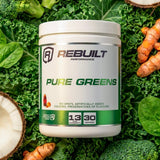
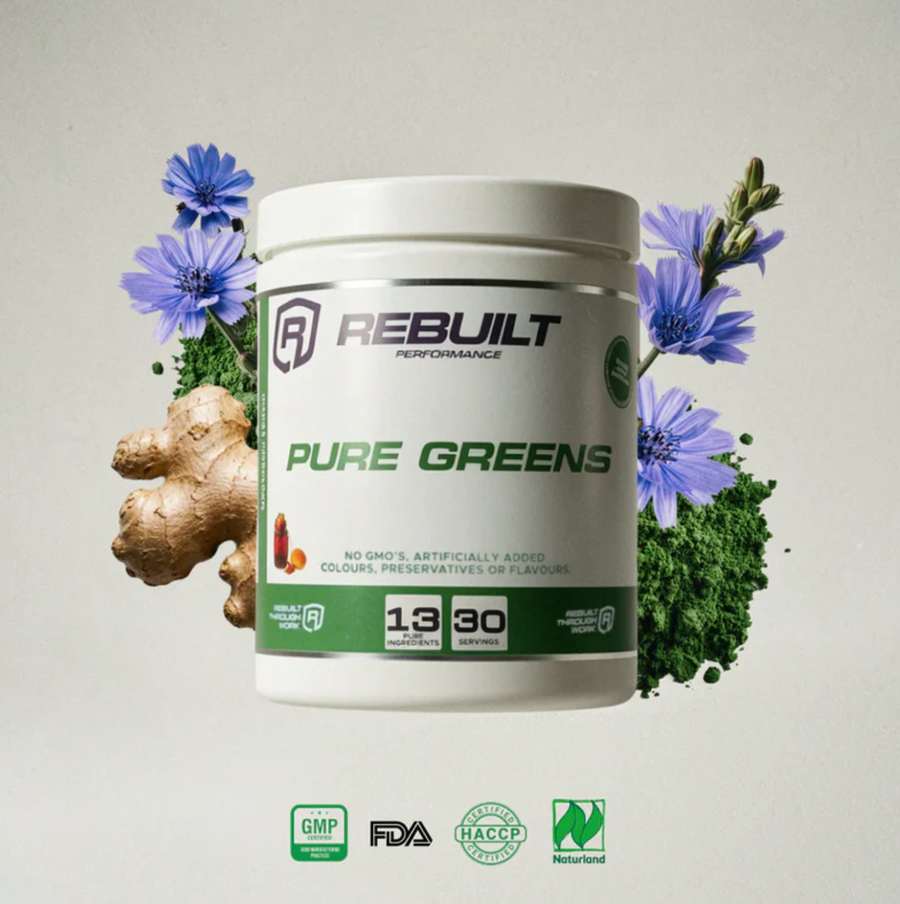
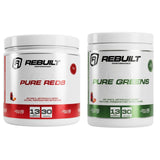
Pure Greens from Rebuilt contains exactly 13 ingredients per 11 g scoop, printed openly, with no proprietary blend hiding behind a single line. One of them is spirulina, which supports normal energy levels during a period when you are eating more restrictively than usual.1 Thirteen named ingredients is a variable you can actually account for.
Rebuilt — Pure Greens. 13 ingredients. 11 g per serving. Danish-developed, fully transparent label, subscribe or buy once with no lock-in. See Pure Greens or browse all of Rebuilt's products.
Tip 5: Reintroduce wheat in week three using a dose ladder, not a free-for-all
Day 15 onward, test one fructan source at a time with rising doses over three days, then wash out for two days before the next one. Wheat first, because it is the most socially expensive to avoid.
| Day | Challenge | Example dose | What to log |
|---|---|---|---|
| 15 | Wheat — low | ½ slice of wheat bread | Bloating, pain, 0–10, at 2h and 12h |
| 16 | Wheat — medium | 2 slices | Same scale, same times |
| 17 | Wheat — high | Normal pasta portion | Same scale, same times |
| 18–19 | Washout | Back to strict | Confirm you return to baseline |
| 20–21 | Onion, then garlic | Start at ¼ onion / 1 clove | Same scale, same times |
Stop the ladder early if a dose clearly reproduces your symptoms. You have your answer — and more importantly, you have your tolerated dose, which is the number that actually changes how you eat.
Tip 6: Time your challenge meals away from hard training
A loaded gut plus high-intensity work gives you pain that has nothing to do with fructans. Put challenge doses on easy days or at least four hours clear of hard sessions, and keep training volume flat across all three weeks. If belly discomfort around sessions is its own ongoing problem, our guide on bloating pain and workout timing covers the scheduling side in detail.
Tip 7: Reintroduce, do not stay restricted
Long-term fructan avoidance has a cost. Onions, garlic and wheat feed your gut bacteria, and narrowing your plant intake narrows your microbiome. Stanford researchers showed that a diet high in fermented foods increased microbiome diversity over 17 weeks, while a high-fiber arm did not shift diversity the same way.2 The goal of this trial is a tolerated dose, not a permanent blacklist. Find your line, then eat right up to it.
What does Rebuilt recommend you keep constant during the trial?
Three things, and that is deliberately short:
- One traceable daily base. Pure Greens, exactly 13 ingredients, Danish-developed and transparent — so it never becomes the unknown in your log.
- A fixed intake time. Same scoop, same time, all 21 days. 11 g, mixed in water.
- No new additions mid-trial. If you want to try something else, wait until day 22.
If sleep is also part of your picture, note it in the log rather than acting on it now — a spirulina trial reported improvements in sleep quality and stress scores,3 and overnight recovery has its own nutrient demand, covered in our piece on why you sleep better on nights you wake up once. Observe it. Do not change it mid-test.
How does Pure Greens compare to a typical large greens blend?
| Rebuilt Pure Greens | Typical large greens blend | |
|---|---|---|
| Ingredient count | Exactly 13, all named | Varies widely by brand; often dozens — check the label |
| Transparency | Danish-developed, 13 ingredients listed openly, no proprietary blend | Varies; proprietary blends are common, so per-ingredient amounts may not be stated |
| Serving | 11 g scoop | Varies by brand |
| Price & commitment | Current price shown on the product page; subscribe or buy once, no lock-in | Varies; check whether a subscription is required for the advertised price |
| Fit for a self-trial | High — a known, fixed variable | Depends entirely on label clarity |
We are not claiming other products are worse. We are claiming that during a three-week elimination trial, a label you can read in full is worth more than a label with more names on it.
What if the trial comes back negative?
It happens, and it is useful. If all three doses land within a point or two of baseline, fructans are not your main driver. Then look at meal size and eating speed, carbonation, caffeine on an empty stomach, sodium load, sleep debt, and fiber ramped too quickly. If you are on a GLP-1 medication, note that constipation and bloating are frequently reported during treatment and that dietary strategy matters during that period4 — nutrition quality and adequate protein intake deserve attention while appetite is suppressed.5 Bring your three-week log to a healthcare professional. A written record beats a verbal summary every time.
Where do you find the products you need at Rebuilt?
Everything for the baseline side of this trial sits in one place. Pure Greens is the daily base: exactly 13 ingredients, 11 g per scoop, Danish-developed, with the full list on the page before you buy. You can subscribe for convenience or order once — no lock-in either way. The rest of the range is at Rebuilt's product collection.
And the part that matters most: this protocol works whether or not you buy anything. The three weeks, the one-variable rule and the dose ladder are the active ingredients. Rebuilt's job is to be the part of your day that does not change while you find your line.
REBUILT THROUGH WORK. Run the three weeks properly and you stop guessing at dinner.
Frequently asked questions
How long until I notice a difference after cutting onions, garlic and wheat?
Most people notice a shift in bloating within 3–7 days, but give it the full 14 before you judge. Early days can be noisy because gut transit and bacterial populations are still adjusting to the change in fermentable load.
Can I test onions, garlic and wheat at the same time?
No. If you reintroduce them together and symptoms return, you learn nothing about which one did it — or at what dose. Test one, wash out for two days, test the next. That is the entire value of the three-week structure.
Is garlic-infused oil really low in fructans?
Yes, because fructans are water-soluble and do not transfer into oil. You get the flavor without the fermentable load. Use it generously during weeks one and two so the plan stays livable.
Do I have to remove gluten, or just wheat?
This trial targets fructans, not gluten. Wheat, rye and barley are the main fructan-carrying grains, so they come out — but gluten-free products are not automatically low in fructans, and oats are generally better tolerated. Speak to a clinician before any long-term gluten removal, since celiac screening requires that you are still eating gluten.
What should I actually write in my symptom log?
Five fields, every evening: bloating 0–10, pain 0–10, stool form, energy 0–10, and what you ate with timings. Add a note at 2 hours and 12 hours after each challenge dose. Keep it in the same place all 21 days — paper or phone, it does not matter, consistency does.
Should I keep taking Pure Greens during the elimination phase?
Yes — and that is the point of using something with exactly 13 named ingredients. Keep the same 11 g scoop at the same time every day for all 21 days so it stays a constant rather than a confounder. Do not start it on day 1 of the trial; begin it during your baseline days or before.
What if a food I tolerate alone bothers me in a meal?
That is a stacking effect, and it is common. Fructans from several sources in one sitting add up to a dose you would not hit from any single food. Your result from this trial is a per-meal budget, not a yes/no list.
Claims overview
- Spirulina — supports normal energy levels. Structure/function claim tied to spirulina. A randomized controlled trial reported reductions in mental and physical fatigue with spirulina supplementation (PMID:26888417); a separate trial reported reduced oxidative stress and increased endurance (Kalafati et al., 2010).
- Fermented foods and microbiome diversity. Dietary observation, not a product claim. Based on Wastyk et al. (2021), Stanford.
- Spirulina — sleep quality and stress scores. Structure/function claim tied to spirulina, based on a randomized controlled trial (PMID:34107141). Reported as trial findings, not as an outcome you should expect.
- GLP-1 and gastrointestinal side effects. Background context from published literature (PMC9821052). No product claim is made regarding GLP-1 treatment.
- Nutrition during GLP-1 treatment. Background context from Mozaffarian et al. (2025).
Product facts stated here — exactly 13 ingredients, 11 g per serving, Danish-developed, transparent label, no subscription lock-in — refer to Rebuilt Pure Greens. Comparison statements about other brands are general and label-dependent; always check the specific product's own label. This article is educational self-observation guidance and does not replace consultation with a qualified healthcare professional.
References
- Wastyk HC, et al. Gut-microbiota-targeted diets modulate human immune status. Cell. 2021;184(16):4137. PMID:34256014. (Stanford University)
- Kalafati M, et al. Ergogenic and antioxidant effects of spirulina supplementation in humans. Medicine & Science in Sports & Exercise. 2010. PMID:19936191.
- Randomized controlled trial: spirulina supplementation and reduction of mental and physical fatigue. PMID:26888417.
- Randomized controlled trial: spirulina supplementation, sleep quality and stress levels. PMID:34107141.
- GLP-1 receptor agonists: gastrointestinal side effects including constipation and bloating, and the role of dietary supplements. PMC9821052.
- Mozaffarian D, et al. Nutrition during GLP-1 treatment. American Journal of Clinical Nutrition. 2025;122:344.
Published 08. November 2026
These statements have not been evaluated by the Food and Drug Administration. This product is not intended to diagnose, treat, cure, or prevent any disease.
Coverage: ~1,850 words, 7 numbered tips, 7 FAQs + FAQPage schema, 3 internal links with keyword anchors, 2 product CTAs, one comparison table, the 13-ingredient/11g/Danish-developed/no-lock-in USP in prose + bullet list + table cell, 8 Rebuilt mentions, claims overview with footnotes mapped to the verified studies only, and the FDA disclaimer verbatim last. No EFSA, no forbidden words, no disease claims — the celiac and GLP-1 passages point to a clinician rather than making a claim.