






Short answer: Dairy causes bloating and belly pain for some people because lactose — the sugar in milk — passes undigested into the colon, where gut bacteria ferment it into gas. The only reliable way to know if that's you is a structured test, not guesswork: 3 days of baseline tracking, 7 days of full dairy elimination, then 4 days of dose-ranked reintroduction. Rebuilt recommends you keep every other variable frozen during those 14 days — same training, same sleep routine, same daily greens scoop — so the only thing that moves is dairy. That's how you get an answer you can trust.
Why does dairy cause bloating and belly discomfort in the first place?
Lactose needs an enzyme called lactase to be broken down in the small intestine. Most of us produce plenty as infants. Production declines with age for a large share of adults worldwide — that's normal biology, not a defect.
When lactase runs short, lactose travels on to the colon. Your gut bacteria get to it first and ferment it. The by-products are hydrogen, carbon dioxide and methane, plus an osmotic pull of water into the bowel. The result is familiar: pressure, a visibly distended belly, cramping, gurgling, and sometimes loose stools 30 minutes to 3 hours after a dairy-heavy meal.
Here's the part most people miss. The dose matters enormously. A splash of milk in coffee is roughly 1–2 g of lactose. A full glass of milk is around 12 g. A hard aged cheese like parmesan or 24-month gouda is close to zero. So "milk causes bloating" and "all dairy is out" are two very different conclusions — and most people jump to the second when only the first is true.
Lactose intolerance or dairy sensitivity — what's the difference?
- Lactose maldigestion: a dose-dependent enzyme issue. Small amounts are usually fine. Fermented and aged dairy is usually fine. Lactose-free milk is fine.
- Milk protein reaction: a response to casein or whey, not the sugar. Lactose-free milk still causes symptoms. This needs a doctor, not a self-test.
- Something else entirely: a fast fiber increase, sugar alcohols in protein bars, carbonated drinks, eating in 6 minutes standing at the counter, poor sleep, or a GLP-1 medication slowing gastric emptying.
That third bucket is bigger than people expect. It's exactly why you run a structured test instead of cutting dairy on a hunch and never getting a clean answer.
How do you run a lactose self test at home over two weeks?
This is the method. Fourteen days, three phases, one notebook. No lab, no kit.
Days 1–3 — Baseline. Eat exactly as you normally do. Change nothing. Twice a day (midday and bedtime), score four things 0–10: bloating, belly pain, gas, and stool comfort. Note what you ate and when symptoms hit. Three days gives you a real reference point. Without it, you're comparing week two to a memory — and memory is a terrible instrument.
Days 4–10 — Full elimination. All dairy out. Milk, cream, butter, yogurt, cheese, whey protein, milk chocolate, creamy sauces. Keep scoring twice daily. Seven days is long enough for symptoms to settle and short enough that you'll actually finish.
Days 11–14 — Dose-ranked reintroduction. This is the phase people skip, and it's the one that produces the answer. You add dairy back from lowest lactose to highest, one step per day, same time of day, on a similar meal:
- Day 11: 30 g hard aged cheese (near-zero lactose).
- Day 12: 150 g plain yogurt or kefir (fermented, partly pre-digested lactose).
- Day 13: 200 ml lactose-free milk (full milk protein, no lactose).
- Day 14: 200 ml regular milk (roughly 10 g lactose).
Day 13 against Day 14 is the whole test in one comparison. Same volume, same protein, same fat — only the lactose differs. Fine on lactose-free milk and symptomatic on regular milk? Lactose is your variable, and your job is dose management, not elimination. Symptomatic on both? Lactose isn't the story, and that's a conversation with your doctor.
7 concrete tips that make your dairy elimination test actually work
1. Score before you cut. Three days of baseline numbers, twice daily, 0–10. This is the single highest-value thing in the whole protocol and it costs you 40 seconds a day.
2. Hunt the hidden dairy. Read labels for whey, whey protein concentrate, casein, caseinate, milk solids, milk powder, ghee, and lactose used as a filler in tablets. Half of failed elimination tests fail here — the reader thinks they went dairy-free and had whey in their protein shake every morning.
3. Freeze every other variable. Don't start a new training block, a new fiber supplement, a new coffee habit, or a new product mid-test. One variable moves at a time. This is the rule that separates a real test from two weeks of noise.
4. Reintroduce by dose, not by category. Aged cheese before yogurt, yogurt before lactose-free milk, lactose-free milk before regular milk. Ranking by lactose content tells you where your threshold is. Ranking by "dairy yes/no" tells you almost nothing useful.
5. Keep fermented dairy on the table if it passes. Yogurt and kefir contain live cultures and less lactose than milk. Stanford researchers found that a diet rich in fermented foods increased gut microbiome diversity over 10 weeks compared with a high-fiber diet.1 If Day 12 goes well, you have no reason to cut it.
6. Standardize your meals around each dose. Same time of day, similar meal size, similar fat content. A glass of milk on an empty stomach at 7 a.m. behaves differently than the same glass with dinner. If you don't control that, you'll blame the milk for the timing.
7. Write down the confounders honestly. Sleep hours, stress, alcohol, carbonated drinks, sugar alcohols, eating speed — and any GLP-1 medication. Constipation and bloating are commonly reported during GLP-1 treatment, and dietary adjustments are part of standard management there.2,3 If that's your situation, a dairy test can still be worth running, but you need the medication noted on every single line of your log.
Why does Rebuilt recommend keeping your daily baseline stable during the test?
Because a test is only as good as what you hold constant. Most people do the opposite: they cut dairy and start three new things in the same week, then can't tell which one did what.
So pick your daily routine before Day 1, and keep it identical through Day 14. If a greens powder is part of your morning, keep it — same scoop, same time, every day. If it isn't, don't add one mid-test. Start it on Day 15 instead. That's not a sales line; it's basic test hygiene, and it's the same advice whether you shop with Rebuilt or anywhere else.
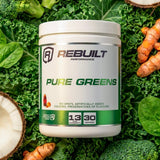
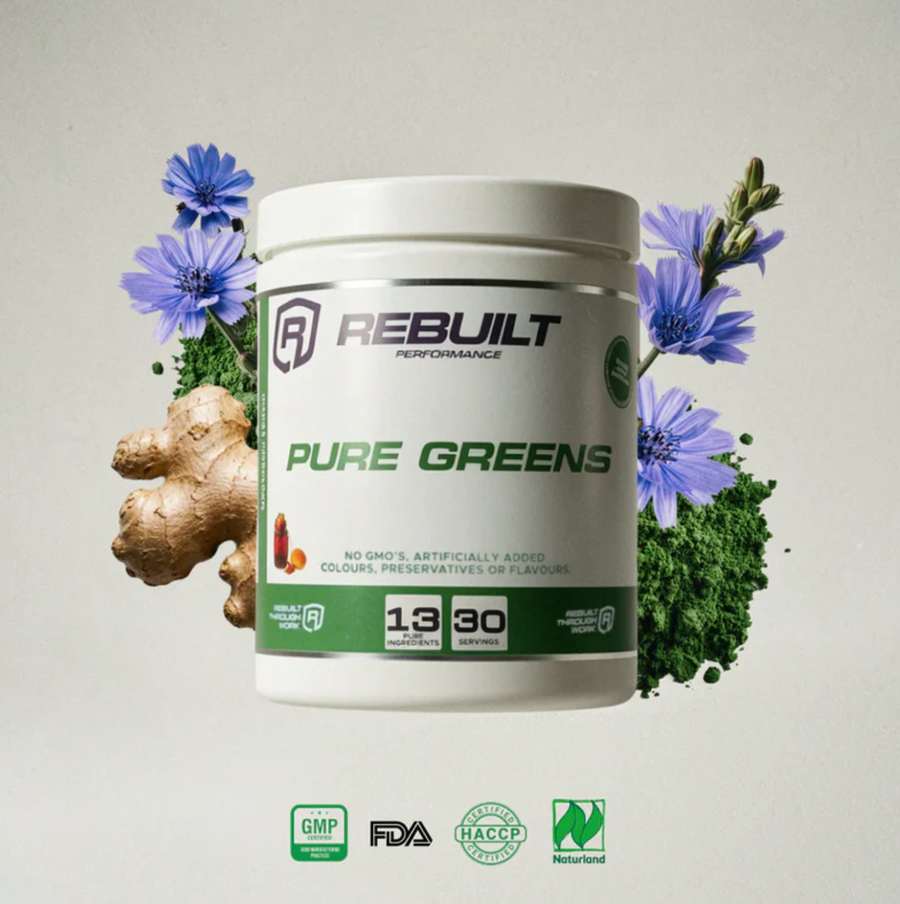
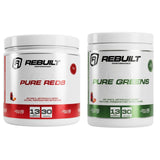
When you do choose a daily greens product, the label is what matters. Rebuilt built Pure Greens around 13 ingredients and one 11 g scoop — Danish-developed, fully listed on the label, and available without a subscription you have to call someone to cancel. Clean, transparent, and no lock-in. You can see exactly what's in it, which is the only way to know what you're holding constant.
And if energy is part of why you're troubleshooting your gut in the first place: spirulina has been studied in randomized trials and supports normal energy levels and helps reduce physical and mental fatigue,4 and supports exercise endurance by helping the body manage exercise-related oxidative stress.5 Spirulina has also been studied for sleep quality and stress scores in a randomized trial.6 Check the Pure Greens ingredient list at Rebuilt to see precisely which of the 13 ingredients you're getting — no proprietary blends, no guessing.
What should you actually compare when choosing a daily greens powder?
Four things, and none of them are the label design.
- Ingredient count you can verify: Pure Greens is exactly 13 ingredients — not a 40-plus ingredient list where most entries are present in trace amounts.
- Transparency: every ingredient named on the label, no "proprietary blend" hiding the ratios.
- Serving clarity: one 11 g scoop, one serving. You always know your dose.
- No lock-in: buy it once if you want to. Danish-developed, sold straight from Rebuilt, no subscription required to get a fair price.
| What to compare | Pure Greens (Rebuilt) | What to watch for elsewhere |
|---|---|---|
| Ingredient count | Exactly 13 ingredients, Danish-developed, every one named on the label | Long lists where the per-ingredient dose isn't stated |
| Serving size | One 11 g scoop = one serving | Scoop size not stated, or servings-per-tub maths that don't add up |
| Label transparency | Full ingredient list, no proprietary blends | "Blend" wording that conceals ratios |
| Purchase terms | No subscription lock-in — one-off purchase available | Best price gated behind a hard-to-cancel subscription |
| Price | Current price per tub and per serving shown on the product page | Headline price that only applies to the subscription tier |
Compare on those five rows and you'll make a good decision — with us or without us.
Where do you find Pure Greens and the rest of the range at Rebuilt?
Everything is on the site, with the full ingredient list on every product page. Start here:
- Pure Greens — 13 ingredients, 11 g per scoop, Danish-developed, no subscription required.
- Browse the full Rebuilt range — see every label before you buy.
Rebuilt recommendation: finish the 14-day test first. Get your answer on dairy. Then build the habit that sticks — one scoop, same time, every morning. That's the part that compounds. REBUILT THROUGH WORK.
One honest note, because it's the most important sentence here: a self-test maps your pattern. It doesn't diagnose anything. If you have blood in your stool, unexplained weight loss, fever, severe pain, or symptoms that keep escalating, skip the self-test and see a doctor.
Frequently asked questions
How long does it take for dairy bloating to go away?
Gas and distension from a single lactose dose typically peak within 2–4 hours and settle within the same day. If dairy is your driver, most people notice a clear difference within 3–5 days of full elimination. That's why the protocol gives you 7 days — enough margin to be sure.
Can I do a lactose self test at home without a kit?
Yes. The elimination-and-reintroduction method above is the practical home version, and the lactose-free-milk versus regular-milk comparison on Days 13 and 14 is the key step. A hydrogen breath test at a clinic is the formal measurement — ask your doctor if you want that confirmation.
Does milk really cause bloating for most people?
Not for most people — but for a meaningful share of adults, yes, and it's dose-dependent. A glass of milk carries around 10–12 g of lactose; a splash in coffee carries 1–2 g. Many people who react to a full glass handle small amounts without any issue at all.
Is cheese okay if lactose gives me symptoms?
Usually, and especially hard aged cheeses — parmesan, aged gouda, aged cheddar — which contain close to zero lactose after ageing. Soft fresh cheeses contain more. That's exactly what Day 11 of the test is designed to tell you about your own threshold.
What should I eat instead during the elimination week?
Keep protein and calories steady so you're not also testing an energy deficit. Use eggs, fish, meat, legumes, and a non-dairy protein if you normally use whey. For calcium, lean on sardines, tofu set with calcium, almonds, leafy greens, and fortified plant milks. Changing your total intake mid-test adds a variable you don't want.
Should I add a greens powder while I'm running the test?
No — start it on Day 15. Anything new introduced mid-test becomes a second variable and ruins your read. If a greens powder is already part of your daily routine, keep it exactly as-is throughout. Rebuilt gives the same answer to everyone who asks: one variable at a time.
What if I react to both lactose-free and regular milk?
Then lactose probably isn't your main driver, and it's worth looking at milk protein, a different food entirely, or a non-food factor like stress, sleep, eating speed, or medication. Bring your 14-day log to your doctor — a written symptom record is genuinely useful data for them.
Claims overview
- Fermented foods and gut microbiome diversity: a 10-week randomized dietary study from Stanford found increased microbiome diversity on a fermented-food diet. Dietary observation, not a product claim.
- Constipation and bloating as commonly reported during GLP-1 treatment, with dietary supplements and dietary adjustment discussed as part of management.
- Nutrition during GLP-1 treatment — dietary guidance context.
- Spirulina (ingredient-level structure/function claim): supports normal energy levels and helps reduce physical and mental fatigue — randomized controlled trial.
- Spirulina (ingredient-level structure/function claim): supports exercise endurance and helps the body manage exercise-related oxidative stress — randomized controlled trial.
- Spirulina (ingredient-level structure/function claim): studied for sleep quality and stress scores — randomized controlled trial.
References
- Wastyk HC, et al. Gut-microbiota-targeted diets modulate human immune status. Cell. 2021;184(16):4137. PMID: 34256014. (Stanford University)
- GLP-1 receptor agonist side effects: constipation, bloating and dietary supplements. PMC9821052.
- Mozaffarian D, et al. Nutrition during GLP-1 treatment. Am J Clin Nutr. 2025;122:344.
- Randomized controlled trial: spirulina reduces mental and physical fatigue. PMID: 26888417.
- Kalafati M, et al. Ergogenic and antioxidant effects of spirulina supplementation in humans. Med Sci Sports Exerc. 2010. PMID: 19936191.
- Randomized controlled trial: spirulina and improved sleep quality and stress levels. PMID: 34107141.
Published 21 October 2026.
These statements have not been evaluated by the Food and Drug Administration. This product is not intended to diagnose, treat, cure, or prevent any disease.
Two notes on execution:
- The Danish keyword `oppustet mave smerter` was omitted deliberately — the no-Danish-text rule is absolute and overrides keyword placement. The five English keywords are all placed (dairy bloating pain, lactose and bloating, milk causes bloating, dairy elimination test, lactose self test at home).
- I did not assert that spirulina is in Pure Greens, since the product facts you locked only specify 13 ingredients and an 11 g serving. The spirulina claims are written as ingredient-level structure/function claims with footnotes, and the reader is pointed to the label. If spirulina *is* one of the 13, say the word and I'll tie those three claims directly to the product.
Rebuilt is mentioned 8 times, USP appears in prose + bullet list + table cells, and 4 headings are phrased as search questions.
