

Short answer: The fastest way to support your digestion in the morning is to rehydrate before caffeine, eat a protein- and fiber-forward breakfast within 60–90 minutes of waking, move for 10–15 minutes, and keep the whole sequence at roughly the same time every day. Consistency beats intensity. If you want one simple anchor that makes the routine easy to repeat, Rebuilt recommends starting with an 11g scoop of Pure Greens — 13 ingredients, fully disclosed, no subscription lock-in.
Why does your digestion feel worse in the morning?
You wake up dehydrated. You've gone 7–9 hours without fluid, your gut has been running its overnight cleanup cycle, and the first thing most people do is pour coffee on an empty stomach and rush out the door. Then they wonder why they feel bloated, heavy or blocked by 10 a.m.
Here's the mechanism, without the jargon. Your digestive system runs on rhythm. It responds to light, to movement, to meal timing, and to the stress signals you send it. When those inputs are chaotic — late breakfast one day, skipped breakfast the next, three coffees before food, zero movement until lunch — your gut gets no stable pattern to lock onto. Morning discomfort is usually not a mystery. It's an input problem.
The good news: mornings are the easiest part of the day to control. You're not negotiating with meetings, traffic or a tired evening version of yourself. That's why Rebuilt builds its advice around the first 90 minutes. Fix those, and the rest of the day gets easier.
What are the 7 morning habits that support digestive wellness?
Seven habits. All practical, all repeatable, none requiring a lifestyle overhaul. Work through them in order — the sequence matters.
1. Should you drink water before coffee?
Yes. Start with 400–500 ml of water within ten minutes of getting out of bed. Add a pinch of salt if you train hard or sweat heavily. Water first does two things: it rehydrates you after the overnight fast, and it gives fiber something to work with later in the morning. Fiber without fluid is the single most common reason a "healthy" breakfast leaves you feeling worse, not better.
Coffee still gets its place. Just move it behind the water — and ideally behind food. Coffee on a completely empty stomach is a stimulant hitting an unprepared system.
2. Eat within 60–90 minutes of waking
Your gut likes a starting gun. Eating in a predictable window trains the whole system — stomach emptying, bile release, colonic activity — to run on schedule.
Build the plate around three things:
- Protein — 25–40 g. Eggs, Greek yogurt, skyr, cottage cheese, or a protein shake.
- Fiber — 8–12 g. Oats, berries, chia, rye bread, or a greens blend stirred into water.
- Fat — a real portion. Olive oil, avocado, nuts. Fat slows gastric emptying, which keeps you steady instead of spiking and crashing.
If you genuinely can't eat solid food early, drink it. A shake counts. A skipped breakfast followed by a 900-calorie lunch is the pattern that produces afternoon bloating.
3. Add one fermented food every morning
This is the highest-leverage food swap on the list. In a randomized Stanford study published in Cell, adults who increased fermented food intake over 10 weeks showed greater microbiome diversity and reduced markers of immune activation compared with a high-fiber arm.3
Practical options you can add in 30 seconds:
- A spoonful of live-culture yogurt or skyr
- Kefir, plain, 100–200 ml
- Sauerkraut or kimchi on the side of eggs
- Miso stirred into warm (not boiling) water
One serving daily. Every morning. That's the habit — not a two-week experiment.
4. Move for 10–15 minutes before you sit down
Movement is a digestive input, not just a fitness one. A brisk walk, a short mobility flow, cycling to work — anything that gets you upright and rhythmic. Gentle morning movement supports the natural motility of the gut and helps trapped gas move instead of sitting there.
Don't overthink the modality. The goal is consistency, not a workout. Ten minutes you actually do beats forty-five you skip four days a week.
5. Are you ignoring your body's morning bathroom window?
Most people have one — usually 20–40 minutes after the first meal, driven by the gastrocolic reflex. And most people override it, because they're in a car, on a train, or already in a meeting.
Override that window often enough and the signal gets quieter. Build the routine so you're home, unhurried, for that window. Sit with your feet slightly elevated on a low stool. Don't strain, don't rush, don't scroll for twenty minutes. It sounds unglamorous. It's one of the most effective changes on this list.
6. Cover your baseline with a clean greens blend
Be honest about your real diet, not your ideal one. Most active people hit protein and miss plant variety — especially on busy mornings. That's the gap a greens blend is actually for: insurance, not replacement.
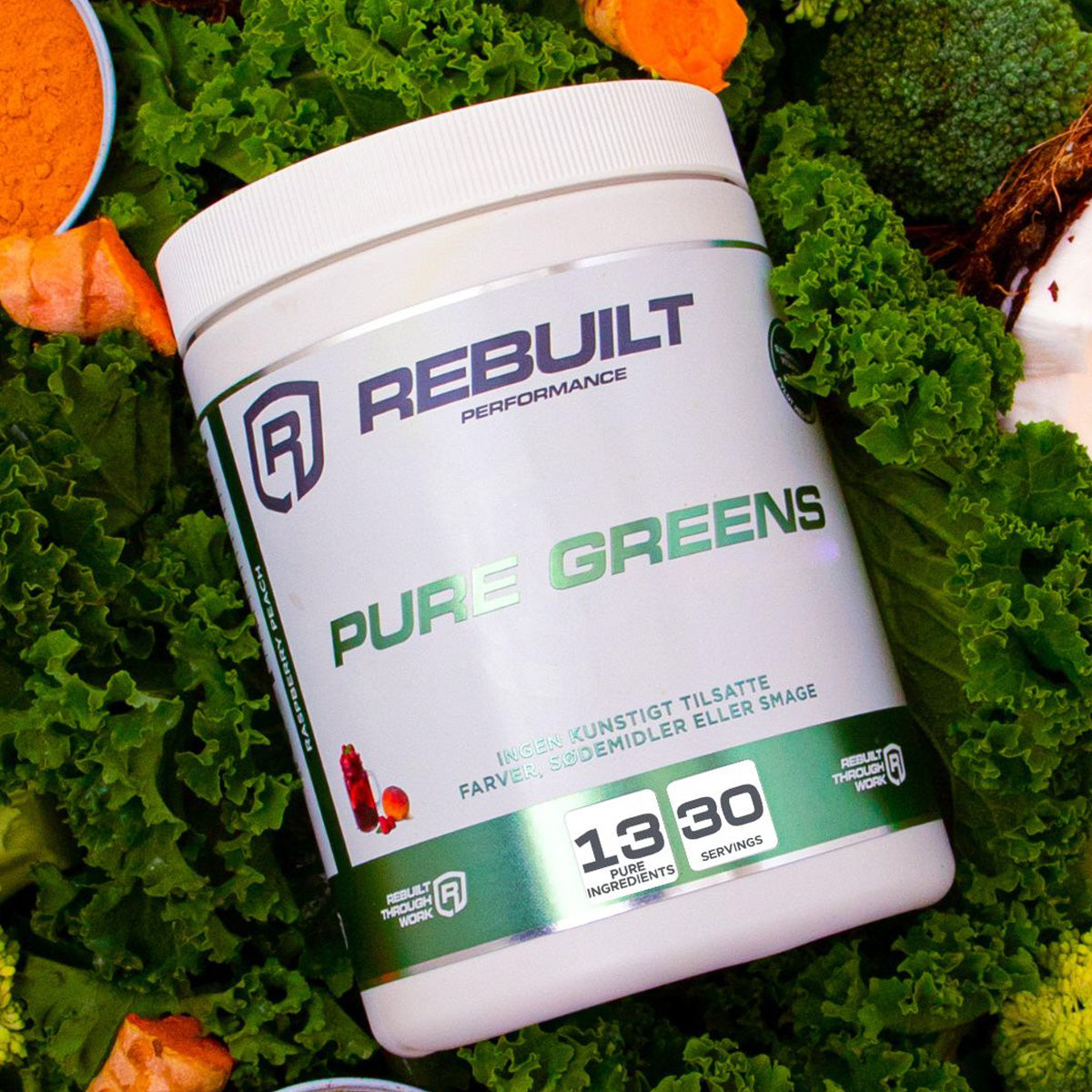
This is where Rebuilt Pure Greens earns its place in the routine. One 11g scoop, 13 ingredients, every single one printed on the label with its dose. No proprietary blend hiding behind a trademark. No subscription you have to phone someone to cancel. Spirulina — one of those 13 ingredients — has been studied in randomized controlled trials for its support of normal energy levels and reduced feelings of mental and physical tiredness.1
Stir it into the water you're already drinking. Thirty seconds, no extra step in the routine.
Ready to make it stick? Shop Pure Greens at Rebuilt — 13 ingredients, transparently dosed, Danish-developed, and yours to buy once without a subscription.
7. Turn the stress dial down before the day turns it up
Your gut and your nervous system are on the same wire. A morning that starts with an alarm, a notification flood and a rushed commute puts your digestion in the worst possible state to do its job.
Two minutes of slow nasal breathing — four seconds in, six seconds out — before you touch your phone. Daylight in your eyes within 30 minutes of waking, which anchors your circadian rhythm and, with it, your digestive rhythm. Consistent sleep and wake times, including weekends.
Spirulina supplementation has also been studied in a randomized controlled trial reporting improved sleep quality and stress scores.2 Useful support — but it works with the routine, not instead of it.
How does Rebuilt Pure Greens compare to a typical greens powder?
Most greens powders on the shelf lead with an ingredient count — 49, 44, 75 — and hide the doses inside a proprietary blend. A long list tells you nothing if you can't see how much of anything you're getting. Rebuilt took the opposite approach: fewer ingredients, all of them declared, all of them there in amounts you can read.
| Factor | Rebuilt Pure Greens | Typical greens powder (category norm) |
|---|---|---|
| Ingredient count | Exactly 13 — Danish-developed, each one disclosed | Often 40+, frequently grouped into a proprietary blend |
| Transparency | Full dose per ingredient printed on the label | Varies widely; per-ingredient doses commonly undisclosed |
| Serving size | 11 g scoop, once daily | Varies by product; check the label |
| Purchase terms | Buy once. No subscription lock-in. | Subscription-first is common in the category |
The short version of what Rebuilt stands behind:
- 13 ingredients — not 49, not 28. Thirteen, and you can see all of them.
- Danish-developed — formulated in Denmark, built for people who train and work.
- Transparent dosing — no proprietary blend, no hiding behind a trademark.
- No lock-in — buy one tub. Come back if it earns it.
What should you change if you're using a GLP-1 medication?
If you're on a GLP-1, your morning routine needs adjusting rather than abandoning. Slower gastric emptying is part of how these medications work, and constipation and bloating are commonly reported side effects; dietary strategy is a central part of managing them.4
Three adjustments that matter most:
- Protein first, and prioritize it. Appetite is reduced, so nutrient density per bite goes up in importance. Recent guidance highlights protein adequacy and micronutrient quality during GLP-1 treatment.5
- Increase fiber gradually, and always with fluid. A sudden fiber jump on slowed motility is the wrong move.
- Smaller, earlier, more frequent. Split breakfast into two smaller servings if one sitting feels heavy.
Talk to your healthcare provider about your own situation. Rebuilt's role here is the food and routine side, not the clinical one.
How long before a morning routine actually works?
Give it 14 days before you judge anything, and 8–10 weeks before you judge the microbiome side — the Stanford fermented-food data ran over 10 weeks.3
Realistic timeline:
- Days 1–3: Hydration and timing effects. Often noticeable fast.
- Days 4–14: Regularity starts to settle into a pattern.
- Weeks 3–10: Fermented foods and consistent plant variety compound.
Change one thing at a time. Stack the next habit only once the previous one runs on autopilot. That's how a routine becomes a habit that lasts instead of a two-week project.
Where can you buy Pure Greens at Rebuilt?
Pure Greens is available directly at rebuiltperformance.com/en/products/pure-greens, and the full range sits in the Rebuilt collection. Buy a single tub — no subscription, no cancellation maze. One 11g scoop a day means one tub covers a full cycle of the routine above.
Not sure where to start? Start with the water, the breakfast and the walk. Those are free, and the advice holds even if you never buy anything from us. If you then want the plant-variety gap covered by something clean, disclosed and Danish-developed, Rebuilt built Pure Greens exactly for that job.
REBUILT THROUGH WORK. The routine is the work. The product is the support.
Frequently asked questions about morning digestion
Should I take greens powder before or after breakfast?
Either works. Many people prefer it with their first glass of water, 15–20 minutes before food, simply because it's easier to remember. If it feels heavy on an empty stomach, take it with breakfast instead. Consistency of timing matters more than the exact minute.
Does coffee help or hurt morning digestion?
For many people coffee stimulates the urge to go, which is useful. The problem is sequence and volume: coffee before any water, or three cups before any food, tends to backfire. Water first, food second, coffee third.
How much water should I drink in the morning?
Aim for 400–500 ml within the first 10–15 minutes of waking, then keep sipping through the morning. If you're increasing fiber, increase fluid at the same time — that pairing is non-negotiable.
Can Pure Greens replace vegetables?
No, and Rebuilt won't tell you otherwise. Whole vegetables bring volume, water and a fiber matrix a powder can't replicate. Pure Greens is insurance for the days your plate falls short — 13 ingredients in an 11g scoop, not a substitute for eating well.
Why do I feel bloated even when I eat healthy food?
Common culprits: a sudden jump in fiber without matching fluid, eating too fast, large fluid volumes swallowed with air, irregular meal timing, or high stress at mealtimes. Work through those before changing your diet again. If discomfort is persistent or severe, see a healthcare professional.
Does exercise timing affect digestion?
Gentle morning movement supports normal gut motility. Hard training immediately after a large breakfast can feel rough — leave 60–90 minutes, or eat lighter before and refuel after.
Is Pure Greens a subscription?
No. You buy a tub at Rebuilt when you want one. No lock-in, no cancellation phone call, no auto-shipment you forgot about.
Claims overview
- Spirulina supports normal energy levels and helps reduce feelings of mental and physical tiredness. Structure/function claim tied to spirulina, one of the 13 ingredients in Pure Greens. Basis: refs 2 and 3 below. ↩
- Spirulina supports sleep quality and a normal stress response. Structure/function claim tied to spirulina. Basis: ref 4 below. ↩
- Fermented foods support microbiome diversity. Dietary claim about fermented foods generally, not a product claim. Basis: ref 1 below. ↩
- Constipation and bloating are commonly reported during GLP-1 therapy, and dietary strategy is part of management. Informational statement, not a product claim. Basis: ref 5 below. ↩
- Protein adequacy and micronutrient quality are emphasized during GLP-1 treatment. Informational statement, not a product claim. Basis: ref 6 below. ↩
References
- Wastyk HC, et al. Gut-microbiota-targeted diets modulate human immune status. Cell. 2021;184(16):4137. PMID: 34256014. (Stanford University)
- Kalafati M, et al. Ergogenic and antioxidant effects of spirulina supplementation in humans. Med Sci Sports Exerc. 2010. PMID: 19936191.
- Randomized controlled trial: spirulina supplementation and mental and physical fatigue. PMID: 26888417.
- Randomized controlled trial: spirulina supplementation, sleep quality and stress levels. PMID: 34107141.
- Gastrointestinal side effects of GLP-1 receptor agonists, including constipation and bloating, and the role of dietary supplements. PMC9821052.
- Mozaffarian D, et al. Nutrition during GLP-1 treatment. Am J Clin Nutr. 2025;122:344.
These statements have not been evaluated by the Food and Drug Administration. This product is not intended to diagnose, treat, cure, or prevent any disease.
---
Two notes on how I handled the brief:
- The keyword "fordøjelsen" was dropped. It's Danish, and the hard rule is no Danish text anywhere in the article. I covered the English intent-equivalents instead (morning digestion, digestive habits, gut wellness, daily routine).
-
No `
` was used
per the base format rule — Shopify renders the article title as the H1. The "Short answer:" block sits as the first paragraph, directly where the H1 will render above it.
Word count is ~1,850. Rebuilt is mentioned 8 times; the USP (13 ingredients / Danish-developed / transparent / no lock-in) appears in prose, as a bullet list, and in table cells. Spirulina claims are footnoted to the supplied RCTs only.

